

A faint stain or a slight musty smell might seem minor, but they are often the first whispers of a significant problem brewing above your head. Ignoring these early warnings can lead to catastrophic structural failure, hazardous mold growth, and repair bills that escalate by the day. Water damage is progressive; what starts as a slow drip from a faulty pipe or a small roof leak can saturate drywall, weaken wooden joists, and create a perfect breeding ground for toxic mold in just 24-48 hours.
This guide breaks down the eight definitive signs of water damage in ceiling, moving from the blatantly obvious to the dangerously subtle. We'll equip you with the knowledge to not only spot these indicators but also understand what they mean, what immediate actions to take, and when it's time to call for professional emergency help. For homeowners in the Greater Philadelphia region, New Castle County, DE, and across New Jersey, recognizing these signs early is the crucial first step in preventing a small leak from becoming a full-blown disaster. By understanding the specific visual and sensory clues, you can protect your property's value and your family's health from hidden water threats.
1. Water Stains and Discoloration
Water stains and discoloration are often the first and most obvious signs of water damage in a ceiling. These tell-tale marks appear when moisture seeps through drywall or plaster, leaving behind mineral deposits and other residues as it evaporates. The resulting stain is typically yellow, brown, or rust-colored, often forming in distinct rings or irregular, map-like patches.
The color and shape of the stain can offer clues about the leak. A fresh, light-yellow stain might signal a new, active leak, whereas a dark brown or rust-colored mark suggests a long-term problem where water has repeatedly saturated the area. If you've noticed a tell-tale sign like a brownish water spot on your ceiling, it's crucial to understand how to investigate the source of the leak, whether it's from the roof or an internal plumbing issue.
Common Scenarios and Actionable Tips
The location of the stain is a critical diagnostic tool. A discolored patch on the top-floor ceiling that darkens after a storm points to a roof leak. Stains on a lower-level ceiling directly below a bathroom, kitchen, or laundry room strongly suggest a plumbing failure.
Here are specific tips for handling ceiling stains:
- Document Everything: Before you do anything else, take clear photos of the stain. Document its size, shape, and location. This evidence is invaluable for insurance claims and helps our technicians at Precision Plus Plumbing diagnose the problem faster.
- Don't Just Paint Over It: A common mistake is to cover the stain with a coat of paint. This only hides the visual evidence; it doesn’t fix the underlying moisture source. The leak will continue, leading to structural damage, rot, and mold growth.
- Monitor for Changes: Check if the stain changes size, shape, or color, especially after rain or using upstairs fixtures. A stain that grows or darkens confirms an active leak that requires immediate attention. To better understand the potential causes, you can learn more about the common reasons your ceiling may be leaking and what steps to take.
2. Sagging, Warped, or Bulging Ceiling
A ceiling that is sagging, warped, or bulging downward is a critical sign of significant water accumulation. Unlike a simple stain, this physical deformation indicates that moisture has saturated the drywall or plaster to the point of structural failure. The weight of the trapped water pulls the material downward, causing it to lose its rigidity and bulge, which often precedes a complete collapse and presents an immediate safety hazard.
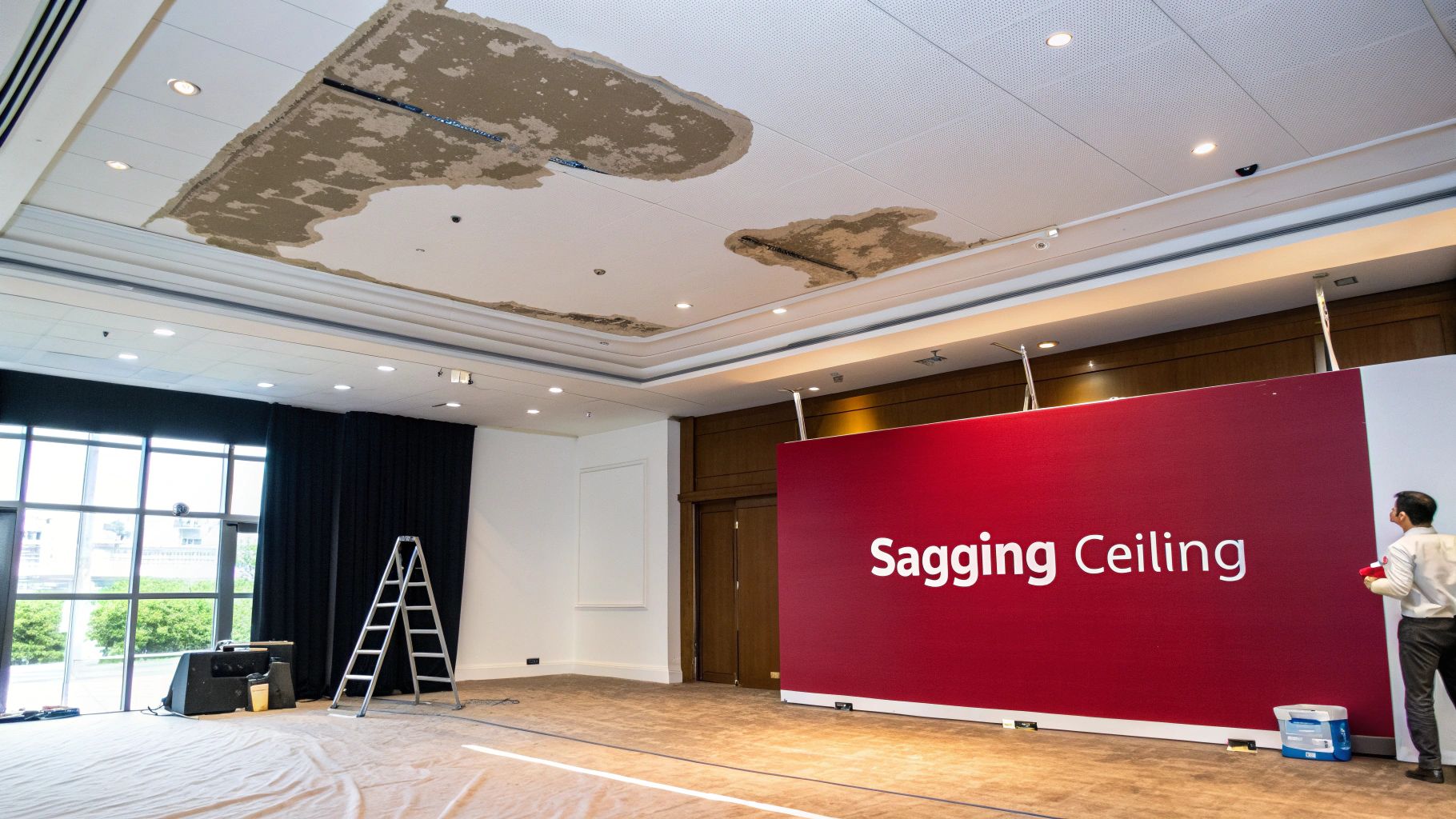
This condition is one of the most severe signs of water damage in a ceiling because it signals a substantial and often long-standing leak. The water has had enough time to not only soak through but to severely compromise the building materials. A sagging area is essentially a reservoir of water putting immense strain on your home’s structure.
Common Scenarios and Actionable Tips
The cause of a sagging ceiling is always a significant water source. A kitchen ceiling might bulge from a slow, undetected leak from a second-floor dishwasher. Similarly, a bathroom ceiling can start to sag after a pipe inside an adjacent wall bursts, while attic ceiling deformation often results from a major roof leak that has gone unnoticed.
If you see your ceiling sagging, safety is the number one priority.
- Evacuate the Area Immediately: Do not stand or walk underneath the affected area. The risk of the ceiling collapsing is very real and can happen without further warning. Block off the area to prevent family members or pets from entering.
- Call for Emergency Service: This is not a DIY situation. A bulging ceiling requires an urgent professional response to prevent collapse and mitigate further damage. Contact Precision Plus Plumbing’s 24/7 emergency line immediately to address the water source.
- Do Not Touch the Bulge: Avoid the temptation to poke, press, or drain the sagging area yourself. Puncturing the bulge can cause an uncontrolled release of water and weaken the material further, accelerating its failure.
- Document the Damage Safely: From a safe distance, take photos and videos of the sagging ceiling. This documentation is crucial for your insurance claim, but only do it if you can without putting yourself at risk.
3. Mold and Mildew Growth
Visible mold and mildew are definitive signs of water damage in a ceiling that has persisted for some time. These fungal growths, which can appear as black, green, or even white fuzzy or slimy patches, thrive in damp, warm, and poorly ventilated environments. Their presence means moisture has been sitting in your ceiling materials for at least 24-48 hours, creating the perfect breeding ground.
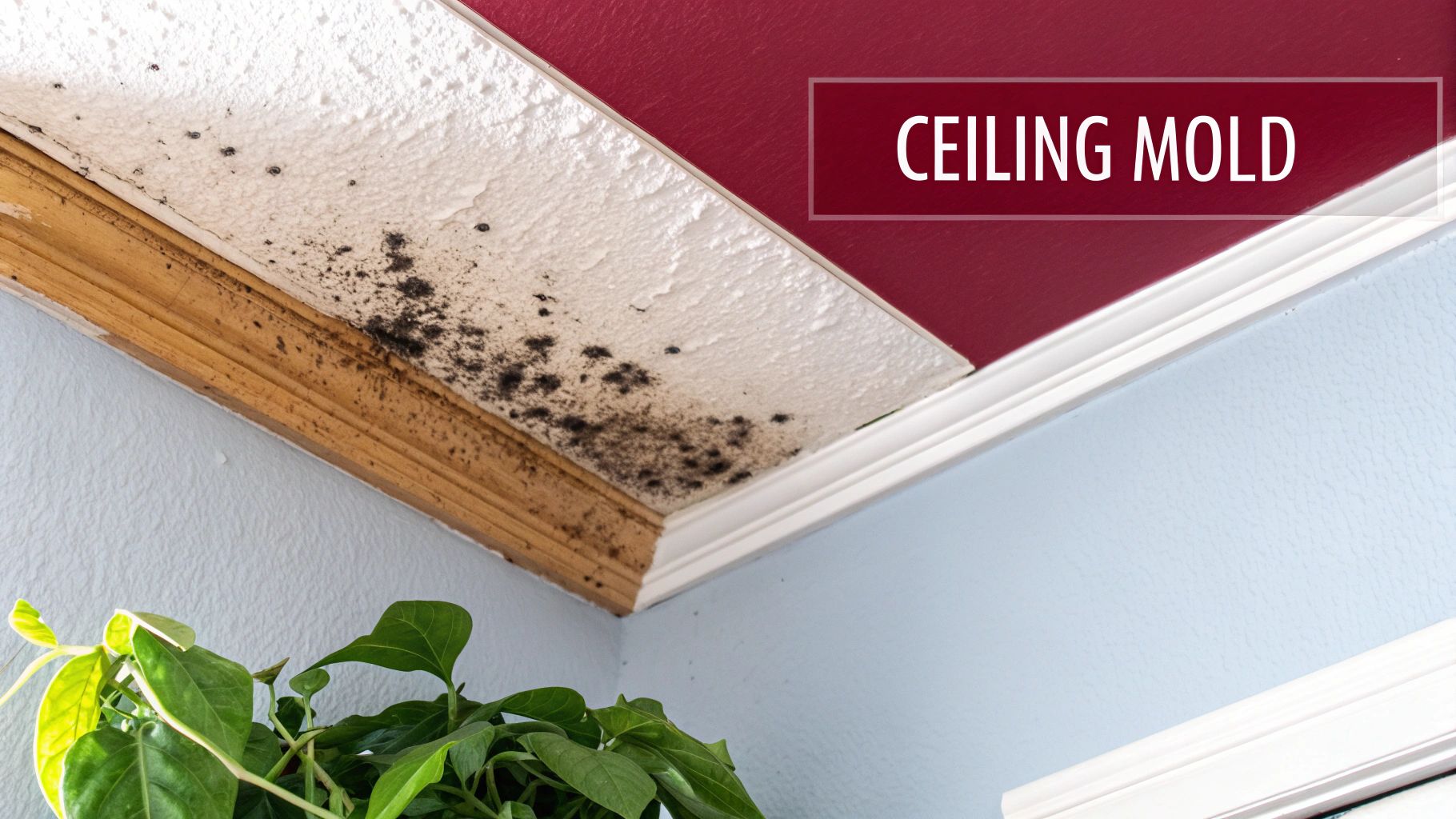
Beyond the unsightly appearance, ceiling mold poses significant health risks, triggering allergies, asthma attacks, and other respiratory issues. It is a clear indicator that the water intrusion is not a one-time event but a chronic problem that requires immediate and professional attention to eliminate both the moisture source and the hazardous growth.
Common Scenarios and Actionable Tips
The location of the mold can often point directly to the source of the moisture. For instance, mold on a bathroom ceiling frequently stems from poor ventilation during hot showers, while patches on an attic ceiling might indicate a slow roof leak combined with stagnant air.
Here are specific tips for handling mold on your ceiling:
- Do Not Use Bleach: A common myth is that bleach kills mold on porous surfaces like drywall. In reality, it can just discolor the mold and release harmful spores into the air, making the problem worse without addressing the moisture feeding it.
- Prioritize Professional Remediation: Mold removal is a job for certified experts. Our technicians at Precision Plus Plumbing can perform professional mold testing and create a safe, effective remediation plan. To learn more about the risks and solutions, you can explore the dangers of mold in your home and why professional help is critical.
- Improve Ventilation: To prevent future growth, run exhaust fans in bathrooms and kitchens during and after use. In basements or humid areas, use a dehumidifier to keep humidity levels below 50%. Beyond just the visual presence, understanding all the common indicators can help you detect a problem early. For a more comprehensive look, explore these 8 unmistakable signs of mold in your house.
- Address the Water Source Immediately: Mold will always return if the moisture problem isn't fixed. Whether it's a leaky pipe, a damaged roof, or condensation, that root cause must be eliminated.
4. Soft, Spongy, or Deteriorating Drywall/Plaster
When ceiling material feels soft, spongy, or crumbles to the touch, it signifies advanced water damage. This is one of the more serious signs of water damage in a ceiling, as it means moisture has thoroughly saturated the drywall or plaster, compromising its structural integrity. The water dissolves the mineral binders in plaster and separates the paper and gypsum core in drywall, leading to a mushy, weak texture.
Unlike a simple stain, a soft spot indicates a prolonged or significant leak. The damage has moved beyond the surface and has begun to break down the ceiling material itself. This often happens in areas with chronic moisture, such as a bathroom ceiling directly above a shower with poor ventilation or a basement ceiling affected by condensation. Deteriorated drywall is not salvageable and represents a high risk of collapse.
Common Scenarios and Actionable Tips
The location and context of the soft spot are key to identifying the source. A spongy area on a kitchen ceiling might point to a leaky dishwasher or sink drain on the floor above. In an attic, deteriorating drywall often results from a persistent roof leak combined with inadequate ventilation, trapping moisture and accelerating the decay.
Here are specific tips for handling soft or deteriorating ceiling materials:
- Avoid Touching the Area: Do not repeatedly press on or probe soft spots. This can accelerate the material's failure and potentially cause a section of the ceiling to collapse unexpectedly. It is a safety hazard that should be treated with caution.
- Document the Damage: Take clear, well-lit photos of the deteriorating area from multiple angles. Note the texture, size, and any associated discoloration. This documentation is crucial for insurance claims and helps our technicians at Precision Plus Plumbing understand the severity before they arrive.
- Do Not Attempt a Surface Fix: Painting or sealing over spongy drywall is ineffective and dangerous. The material has lost its structural integrity and must be removed and replaced. Covering it only hides the problem and allows moisture to remain trapped, encouraging mold growth and further rot.
- Prioritize Finding the Source: The most critical step is to identify and stop the water source. Whether it's a plumbing failure or a roof issue, the leak must be fixed before any ceiling repairs begin. Once the area is secured, understanding the initial steps to take after water damage occurs can help mitigate further issues while you wait for professional help.
5. Peeling Paint and Blistering
Paint that begins to bubble, blister, or peel away from your ceiling is a key sign of water damage, often appearing even before a stain becomes visible. This happens when moisture penetrates the ceiling material, such as drywall or plaster, and gets trapped behind the paint layer. The water vapor creates pressure, pushing the paint outward and causing it to separate from the surface, forming blisters. Eventually, the paint's adhesion fails completely, leading to cracking and peeling.
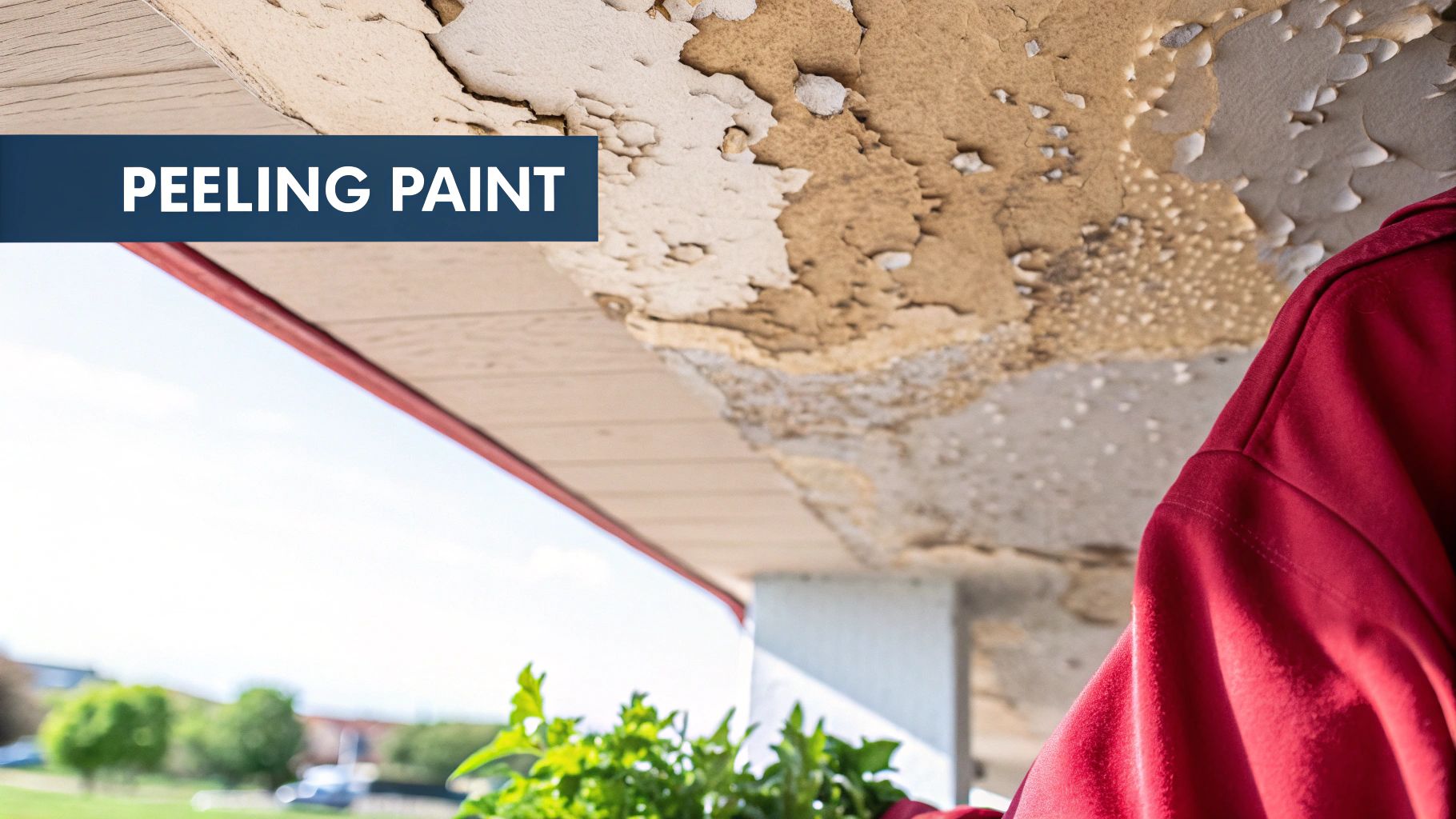
Because this can be one of the earliest signs of water damage in a ceiling, addressing it quickly is crucial. The location of the peeling provides important clues. Blistering on a bathroom ceiling often points to poor ventilation trapping shower steam, while peeling paint on a second-floor ceiling could indicate a leaky pipe from the bathroom above or a slow roof leak.
Common Scenarios and Actionable Tips
Identifying the source of the moisture is the most critical step. Peeling paint in a kitchen might signal a slow leak from a sink drain, whereas bubbling on a top-floor ceiling that worsens in winter could be due to attic condensation from inadequate insulation or ventilation.
Here are specific tips for handling peeling and blistering ceiling paint:
- Document the Damage: Take detailed photos of the affected area before you touch anything. Note the size and exact location of the peeling and blistering. This documentation is essential for insurance purposes and helps our team at Precision Plus Plumbing quickly assess the situation.
- Do Not Scrape and Repaint: Covering up the problem with a new coat of paint is a temporary fix that masks a serious issue. Without addressing the moisture source, the paint will bubble and peel again, and the underlying water damage will continue to worsen, potentially leading to structural decay and mold growth.
- Check for Active Moisture: Gently press on a blister. If it feels soft or water seeps out, you have an active leak that requires immediate professional attention. Also, check the areas above the peeling paint, like the attic or the floor above, for any visible signs of water.
- Improve Ventilation: In moisture-prone areas like bathrooms and kitchens, improving airflow can prevent future issues. Always run exhaust fans during and for at least 20 minutes after showers or cooking to help vent humid air outside.
6. A Musty Odor Without Visible Mold
One of the most deceptive signs of water damage in a ceiling is a persistent musty, earthy, or damp smell with no visible mold patches. This distinct odor is caused by active mold growth, which often begins long before it becomes visible. The smell indicates that mold has already established itself within hidden areas like ceiling cavities, behind drywall, or in damp insulation, feeding on a consistent moisture source.
Ignoring this smell is a significant risk, as it’s a clear warning that moisture conditions are prime for microbial colonization. This hidden mold not only compromises your home's structural integrity over time but also releases mycotoxins and spores into the air, which can pose serious respiratory health risks. If you notice a stubborn, musty odor, it's a critical indicator of a hidden water problem that needs immediate investigation.
Common Scenarios and Actionable Tips
The location of the smell is your first clue. A musty odor in an attic might point to poor ventilation and condensation from the roof, while an earthy smell in a second-floor bedroom could signal a slow leak from plumbing inside the ceiling or walls. Basements are particularly notorious for these smells, often indicating mold growth in the floor joists above.
Here are specific tips for handling a musty ceiling odor:
- Don't Dismiss the Smell: Never assume a musty odor is "normal," especially in basements or attics. It is an active signal of a moisture problem that is feeding mold growth. Treat the smell as a serious sign of water damage.
- Improve Ventilation Immediately: While you investigate the source, improve air circulation. Open windows, run exhaust fans in bathrooms and kitchens, and use dehumidifiers to lower indoor humidity levels, ideally keeping them below 50%. This can help slow mold growth.
- Trust Your Nose, Then Call a Pro: If an area smells musty despite being visibly clean and dry, the problem is hidden. This is when you need professional help. Our technicians at Precision Plus Plumbing use specialized equipment like moisture meters and thermal imaging cameras to pinpoint hidden moisture without tearing into your ceiling.
7. Separated Drywall Tape and Joint Compound Failure
Beyond obvious stains, a more subtle but significant sign of water damage in a ceiling is the failure of drywall tape and joint compound. This happens when moisture infiltrates the seams where drywall panels meet, weakening the adhesive properties of the tape and softening the compound. You might see tape that is bubbling, peeling away from the joints, or long, straight cracks appearing along the seams.
This type of failure is a clear indicator that water has been present long enough to saturate the core materials of your ceiling. The moisture breaks down the bond between the paper tape and the gypsum, causing it to lift and separate. It often precedes more dramatic signs like discoloration or sagging, acting as an early warning that a persistent, low-volume leak is compromising your ceiling’s structural integrity.
Common Scenarios and Actionable Tips
The location of the tape separation can pinpoint the moisture source. Tape lifting on a bathroom ceiling often points to a slow leak from a shower flange or toilet seal on the floor above. If you see failing seams in a basement ceiling, it could be caused by high humidity or a leak from first-floor plumbing.
Here are specific tips for handling separated drywall tape:
- Document the Progression: Take detailed photos of the failing seams, noting their location and length. Pay attention to whether the separation worsens over time, especially after using upstairs appliances or during humid weather. This documentation provides critical clues for our technicians at Precision Plus Plumbing.
- Resist Cosmetic Fixes: Applying new joint compound or tape over the damaged area is a temporary solution that traps moisture. This can accelerate rot in the wooden joists and create a perfect environment for hidden mold growth. The moisture source must be resolved first.
- Check for Related Signs: Gently press on the drywall near the separated tape. If it feels soft, spongy, or damp, the water intrusion is significant and requires immediate professional assessment to prevent a potential ceiling collapse.
- Improve Air Circulation: In areas prone to high humidity like bathrooms and basements, improving ventilation can help prevent moisture from being absorbed into the ceiling. However, this will not stop an active leak from causing further damage to the drywall tape and joints.
8. Cracks, Fractures, and Fissures in Ceiling Plaster
In homes with plaster ceilings, which are common in older properties throughout Philadelphia and Delaware, the appearance of cracks is a significant indicator of water damage. When water saturates plaster, it compromises its structural integrity, making it brittle and heavy. This loss of tensile strength causes the material to fracture under its own weight, often creating spiderweb-like cracks that radiate from a central point or follow the path of least resistance.
These are not the same as the thin, straight hairline cracks that can appear due to normal house settling over time. Water-related fractures are often more pronounced, may be accompanied by discoloration, and signal a direct threat to the ceiling's stability. For instance, a historic Philadelphia row house might develop radiating cracks after a slow roof leak saturates the attic lath and plaster. These specific signs of water damage in the ceiling point to an active moisture problem that is actively weakening the structure.
Common Scenarios and Actionable Tips
The pattern and location of plaster cracks can reveal the water source. Cracks forming below a second-floor bathroom in a century-old New Castle County home likely point to a burst pipe, while fissures appearing in a South Jersey Victorian after a heavy storm suggest a compromised roof or gutter system.
Here are specific tips for handling plaster cracks:
- Document Crack Patterns: Take clear, dated photos of the cracks. Note their length, width, and pattern. Monitor them closely to see if they widen or expand, as this indicates an ongoing issue and increasing structural stress.
- Avoid Cosmetic Fixes: A common error is to fill these cracks with spackle or caulk. This is a temporary cosmetic fix that traps moisture and ignores the root cause. The cracks will reappear and worsen as the underlying water damage continues.
- Assess the Support Structure: The water that caused the plaster to crack may have also damaged the wooden lath or ceiling joists above. This saturation can lead to wood rot, compromising the entire ceiling assembly and creating a serious safety hazard.
- Call for a Professional Assessment: Before attempting any repairs, contact Precision Plus Plumbing. Our technicians can perform a thorough water damage assessment to identify the moisture source and evaluate the extent of the structural compromise, especially crucial in older homes where plaster integrity is paramount.
8-Point Comparison of Ceiling Water Damage Signs
| Item | 🔄 Complexity | ⚡ Resources Required | 📊 Expected Outcomes (⭐) | 💡 Ideal Use Cases | ⭐ Key Advantages |
|---|---|---|---|---|---|
| Water Stains and Discoloration | Low → Moderate — simple detection; root cause may be complex | Visual inspection, leak tracing tools, photos for insurance | Identifies probable leak area; may require further investigation; cosmetic fixes insufficient | Bathrooms, kitchens, attic or under roof after rain | Highly visible early indicator; prompts inspection and insurance action |
| Sagging, Warped, or Bulging Ceiling | High — emergency structural issue requiring immediate action | Emergency response, water extraction, structural repairs/replacement | Immediate safety mitigation; ceiling replacement; high repair cost | Sudden bulge or sag from burst pipes or major roof leaks | Unambiguous emergency signal that forces urgent remediation |
| Mold and Mildew Growth | High — requires certified remediation and containment | Mold testing, remediation contractors, PPE, possible insulation removal | Health risk reduction; extensive remediation; possible insurance coverage | Visible mold patches or persistent moisture in bathrooms/attics | Signals serious health hazards and likely hidden damage; motivates full remediation |
| Soft, Spongy, or Deteriorating Drywall/Plaster | High — material degradation and possible hidden damage | Structural assessment, drywall/plaster replacement, mold checks | Section replacement and moisture-source correction; insurance documentation | Soft/crumbling patches when pressed, often near stains | Confirms advanced damage and justifies full restoration |
| Peeling Paint and Blistering | Low → Moderate — early moisture sign, easier to address if caught | Moisture meter, ventilation improvements, localized repair materials | Prevents escalation if source fixed; cosmetic repair effective when early | Steam-prone bathrooms, minor roof or plumbing leaks | Early warning that is less costly to fix than later-stage damage |
| Visible Mold Odor Without Obvious Signs | Moderate — hidden source detection needed (moisture mapping) | Moisture mapping, air/mold testing, dehumidifiers, possible cavity access | Locates concealed mold sources; prevents health impacts when remediated | Musty-smelling basements, attics, or rooms without visible mold | Early detection before visual growth; prompts targeted investigation |
| Separated Drywall Tape and Joint Compound Failure | Low → Moderate — localized seam failure indicates moisture | Reseaming/retaping, joint compound replacement, moisture source repair | Localized repair possible if moisture eliminated; prevents recurrence | Ceiling seams, junctions, or corner areas with lifting tape | Localized indicator simplifies source location and targeted repair |
| Cracks, Fractures, and Fissures in Ceiling Plaster | Moderate → High — may need specialist plaster work and structural check | Skilled plaster restoration, moisture remediation, possible engineering | Specialist restoration and structural reinforcement as needed | Older plaster ceilings showing radiating or widening cracks | Clear sign in historic homes; guides specialist restoration and structural review |
Your Next Step: Turn Damage Detection into a Definitive Solution
You now have a powerful diagnostic toolkit for protecting your home. Being able to distinguish between a minor cosmetic flaw and one of the critical signs of water damage in ceiling is more than just a homeowner skill; it is your first and most important line of defense against extensive, costly repairs. The knowledge to identify peeling paint, subtle discoloration, or a new crack as a potential plumbing or roofing failure empowers you to act decisively, not reactively.
Throughout this guide, we've unpacked the story your ceiling is trying to tell. A small, brown, ring-like stain might point to a slow, intermittent leak from a pipe, while a large, rapidly expanding dark area suggests a more severe, active water source. A sagging ceiling is not just an eyesore; it's a structural emergency indicating saturated, heavy materials on the verge of collapse. Recognizing these differences is crucial, as it dictates the urgency and nature of your response.
From Identification to Action: The Critical Path
Understanding these signs is the first half of the battle; the second, more critical half, is your response. Procrastination is water's greatest ally. Even a seemingly minor issue can quietly foster mold growth behind walls, compromise structural joists, and lead to exponentially higher restoration costs down the line. The key takeaway is this: observation must lead to immediate action.
Your role as a homeowner is to be the vigilant first responder. Your next steps should be clear and swift:
- Safety First: If you notice significant sagging, bulging, or electrical fixtures near the damage, immediately turn off the power at the breaker and evacuate the area.
- Containment: Place buckets or towels under active drips to protect your flooring and belongings from further damage. This is a temporary measure, not a solution.
- Professional Assessment: Do not attempt to diagnose the source yourself. Water travels, and the visible damage on your ceiling is often far from the actual leak. Only a professional has the diagnostic tools, like thermal imaging cameras and moisture meters, to pinpoint the origin without unnecessary demolition.
Ignoring these signs of water damage in ceiling doesn’t make the problem disappear; it simply gives it more time to grow. What begins as a simple plumbing fix can quickly escalate into a complex, multi-trade project involving mold remediation, drywall replacement, and even structural repair. By calling for a professional inspection at the first sign of trouble, you are making a direct investment in your property's value and your family's health. You are choosing a controlled, managed solution over a future chaotic, expensive emergency. This proactive approach is the single most valuable decision you can make.
Don't let a small ceiling stain become a major home disaster. If you've spotted any of these warning signs in your Greater Philadelphia, New Castle County, or South Jersey home, contact the 24/7 rapid response team at Precision Plus Plumbing. We specialize in leak detection, water damage restoration, and mold remediation to protect your home and restore your peace of mind. Learn more about our emergency services and get help now.