
A quiet sump pump is a homeowner's best friend, silently guarding against thousands of dollars in water damage, flooded basements, and the need for extensive sewage cleanup. But this crucial device isn't a 'set it and forget it' appliance. Neglect is its greatest enemy, especially for homeowners in regions like Greater Philadelphia, New Jersey, and New Castle County, Delaware, where seasonal storms and heavy rainfall can turn a dry basement into an indoor pool overnight. Proactive care is the only way to ensure your pump functions when you need it most.
This detailed sump pump maintenance checklist is your task-by-task guide to ensuring your system is ready for any weather event. Think of it as a specialized version of a broader rental maintenance checklist; just as a comprehensive plan protects an entire property, this focused checklist safeguards your home’s foundation from water intrusion. It is the number one alternative to reactive, expensive emergency calls.
We will break down the essential checks that transform routine upkeep into powerful prevention. You will learn the exact steps for:
- Monthly activation tests and float switch checks.
- Discharge line and pit inspections.
- Backup battery system maintenance.
- Knowing when to call a professional like Precision Plus Plumbing for service.
Following this plan diligently will not only extend the life of your pump but also provide the invaluable peace of mind that comes from knowing your home is protected from costly water damage. Let's begin fortifying your first line of defense against basement flooding.
1. Monthly Water Level and Activation Test
The most fundamental task on any sump pump maintenance checklist is the monthly activation test. This simple procedure is your first line of defense against a flooded basement, as it directly confirms whether your pump will turn on when water levels rise. By manually triggering the system, you can catch mechanical failures, float switch issues, or blockages before the next storm hits the Greater Philadelphia region.
How to Perform the Test
Executing this test is straightforward. Slowly pour a five-gallon bucket of water directly into the sump pit. The goal is to raise the water level enough to lift the float switch, which in turn should activate the pump.
Observe the full cycle:
- The pump should start automatically without hesitation.
- It should run smoothly, expelling the water through the discharge pipe.
- Once the water level drops, the pump should shut off on its own.
This entire process mimics a real-world flooding event, giving you direct confirmation that your primary defense is operational.
Why This Test Is Critical
Waiting for a heavy downpour to find out your pump has failed is a costly mistake. Proactive testing transforms a potential emergency into a manageable repair. For instance, many Philadelphia homeowners who performed this test before Hurricane Ida discovered failing units. They were able to arrange for repairs and avoided the catastrophic water damage and expensive claims that affected their neighbors.
Pro Tip: If your pump fails to activate during a test, do not wait. A non-responsive pump is a clear sign of a critical issue with the float switch, motor, or electrical connection. Contact Precision Plus Plumbing immediately for a professional diagnosis to ensure you're protected.
Actionable Tips for Monthly Testing
- Schedule It: Mark your calendar for the first Saturday of each month to create a consistent habit.
- Observe the Discharge: Before you pour, walk outside and ensure the discharge pipe outlet is clear of debris, animal nests, or landscaping overgrowth.
- Keep a Log: Note the date and result of each test. This log can help you track performance and spot subtle signs of degradation over time.
- Listen Closely: Pay attention to unusual noises like grinding or rattling, which could indicate worn bearings or a jammed impeller. If you're unsure, you can learn more about how to tell if a sump pump is working correctly and what sounds to listen for.
2. Discharge Line Inspection and Clearance
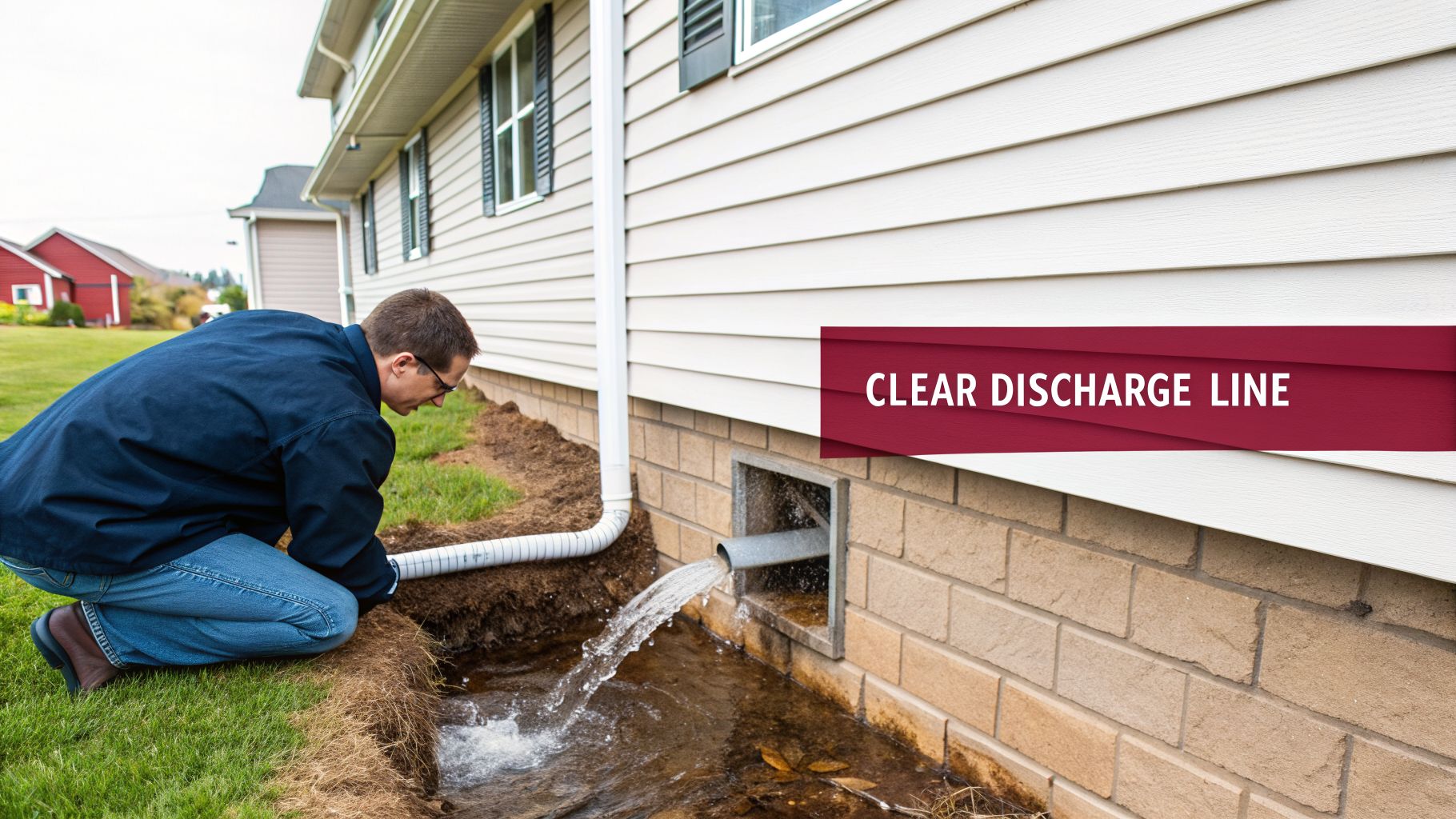
A sump pump is only as effective as its discharge line. This pipe carries water away from your home, but if it's blocked, that water has nowhere to go but back into your basement. Sediment, ice, animal nests, and overgrown landscaping can easily clog this critical pathway, rendering your pump useless and causing it to burn out from overwork. A regular inspection is a non-negotiable part of any sump pump maintenance checklist.
How to Perform the Inspection
This inspection is a visual and auditory check that should be done quarterly, especially in the fall before leaves accumulate and in winter before freezing temperatures arrive.
Here’s what to look for:
- Clear Exit Point: Walk to where the discharge line exits your home. Ensure the opening is completely free of leaves, mulch, animal nests, or dirt.
- Check for Backflow: After performing your monthly water test, listen carefully at the sump pit after the pump shuts off. A gurgling sound or water rushing back into the pit indicates a faulty check valve, which needs immediate attention.
- Trace the Line: If the line is buried, make sure there are no visible signs of damage, depressions, or erosion on the ground above it.
This process confirms that water has a clear, unobstructed path to a safe distance away from your foundation.
Why This Inspection Is Critical
A clogged discharge line is one of the most common, and most preventable, causes of basement flooding. In New Jersey, some homeowners have faced over $15,000 in basement restoration costs from a single storm simply because a frozen or debris-clogged discharge line caused their sump pump system to fail. Property managers in Philadelphia who install secondary drainage routes often do so after learning a hard lesson about check valve failure and backflow.
Pro Tip: In the winter, discharge lines are highly susceptible to freezing, especially in Delaware and northern New Jersey. If your line exits onto a flat, snowy surface, the water can easily freeze and create an ice dam. Ensure the line is pitched for good drainage and consider adding insulation or professionally installed heat tape for protection.
Actionable Tips for Discharge Line Maintenance
- Walk the Perimeter: After every monthly pump test, walk outside to confirm that water is flowing freely from the pipe and at least 10 feet away from your foundation.
- Install a Guard: A simple screen or grate over the discharge opening can prevent animals and large debris from getting inside.
- Mind Your Landscaping: Keep plants, shrubs, and mulch at least a foot away from the discharge point to prevent roots and debris from causing a blockage.
- Understand Your Drains: Preventing clogs in your sump pump line follows similar principles to your home's other drains. You can discover more on how to prevent drain clogs and apply those lessons here.
3. Pit Cleaning and Sediment Removal
While the pump itself gets most of the attention, the sump pit where it sits is just as critical to its function. Over time, the pit naturally collects silt, sand, gravel, and other debris carried in by groundwater. This accumulation reduces the pit's water-holding capacity and, more dangerously, can be sucked into the pump, clogging the intake screen, jamming the impeller, and causing premature failure. Annual or semi-annual pit cleaning is a vital part of any sump pump maintenance checklist.
How to Perform the Cleaning
Safely cleaning the pit involves removing the pump to access the basin. First, unplug the pump from its power source and disconnect it from the discharge pipe. Lift the pump out and set it aside on a tarp or plastic sheet.
Once the pit is accessible:
- Use a shop-vac or a small bucket to remove any remaining water.
- Scoop out all the loose sediment, mud, and debris from the bottom.
- Use a stiff brush to clean the pump's intake screen and remove any caked-on gunk.
- Inspect the pit walls and floor for any signs of cracks or deterioration.
This process ensures the pump has a clean environment to operate in, free from obstructions that could cause a sudden breakdown during a storm.
Why This Task Is Critical
A pit filled with sediment is a pump failure waiting to happen. The debris not only physically blocks the pump's intake but also acts like sandpaper, abrading internal components and reducing the unit's service life. For example, homeowners near the New Jersey shore with high sand and silt intrusion have found that semi-annual cleaning can effectively double their pump's lifespan. Similarly, some Delaware residents have discovered cracks in their pit liners during a routine cleaning, allowing them to make repairs and prevent a major basement leak.
Pro Tip: Before placing the pump back in the pit, make sure the float switch can move freely without catching on the pit walls or the pump's power cord. A snagged float switch is one of the most common reasons a perfectly good pump fails to activate. If you find significant cracks or damage to the pit liner, call Precision Plus Plumbing for a professional assessment and repair.
Actionable Tips for Pit Cleaning
- Safety First: Always disconnect the pump from its power outlet before reaching into the pit.
- Time It Right: Schedule this task for a dry period or before the heavy rain seasons in the Northeast (early spring and late fall).
- Inspect the Walls: While the pit is empty, run your hand along the walls to feel for cracks or crumbling material that could indicate structural problems.
- Keep a Photo Log: Take pictures of the pit's condition each year. This documentation can be useful for tracking deterioration over time and for potential insurance claims.
- Consider a Filter: If your pit collects a lot of sediment quickly, ask a professional about installing a pit filter or sediment barrier to reduce buildup between cleanings.
4. Backup Power System Testing and Battery Maintenance
Your primary electric sump pump is your main guard against basement flooding, but it becomes completely ineffective during a power outage. Intense storms, common in the Greater Philadelphia and New Jersey regions, often knock out power when you need your pump the most. This is where a battery backup system becomes essential, ensuring water removal continues uninterrupted.
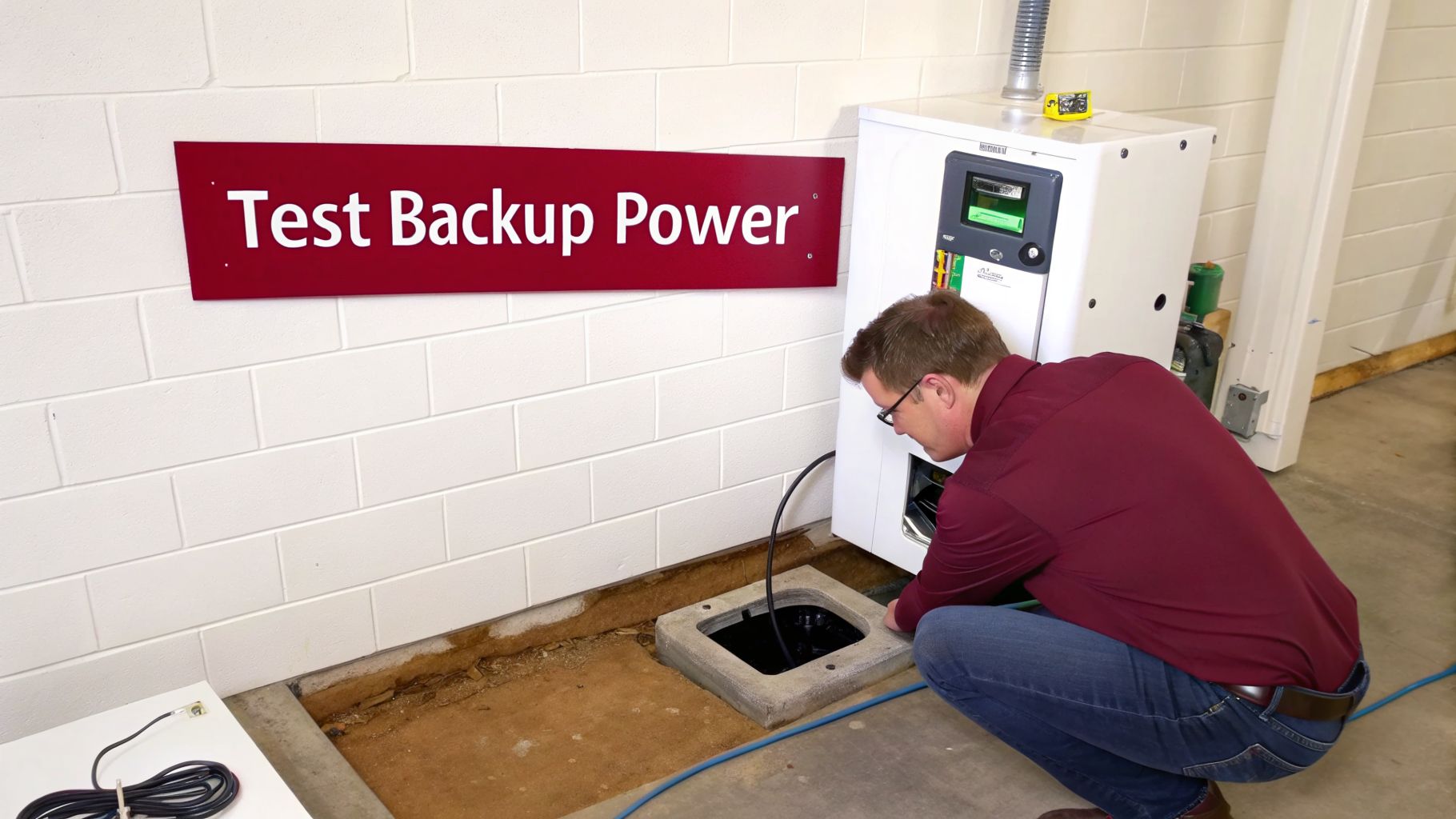
These systems, which consist of a secondary pump running on battery power, require their own regular checks. Monthly testing is necessary to confirm the battery holds a charge, all connections are secure, and the automatic failover function works as designed. Finding a dead battery during an outage is the same as having no backup at all.
How to Perform the Test
Simulating a power failure is the only way to know for sure that your backup will engage. First, unplug your primary sump pump from its wall outlet. This action mimics a power loss and forces the system to rely on its backup.
Next, just like with the primary pump test, pour water into the sump pit:
- Fill the pit with a five-gallon bucket of water until the float switch for the backup pump is triggered.
- The backup pump should kick on and begin removing water.
- Observe it until it shuts off, then plug your primary pump back in.
This test validates that the battery, pump, and switch are all ready for a real emergency.
Why This Test Is Critical
Peace of mind during a severe storm is invaluable. Many Philadelphia homeowners with tested battery backups remained dry during the 2021 nor'easters, while some neighbors without them faced flooding and damages exceeding $30,000. Similarly, in coastal New Jersey, properties with robust backup systems weathered Hurricane Ida power outages lasting over two days, preventing catastrophic losses.
Pro Tip: If the backup pump fails to activate, the issue could be a dead battery, a corroded terminal, or a faulty float switch. These systems are complex; call Precision Plus Plumbing for a professional inspection to diagnose and restore your critical line of defense.
Actionable Tips for Backup System Maintenance
- Check the Lights: Most modern backup systems, like those from Zoeller or Liberty Pumps, have LED status lights. Glance at the control box weekly to ensure the "Charged" or "Ready" light is green.
- Test Monthly: Perform the full failover test described above every month. This simple step is a key part of any complete sump pump maintenance checklist.
- Document Everything: Keep a log of the battery's installation date. Most deep-cycle batteries last 3-5 years. Knowing its age helps you plan for a replacement before it fails.
- Keep Terminals Clean: Annually, disconnect the battery (after unplugging the unit) and clean any corrosion from the terminals with a wire brush and a mixture of baking soda and water. Ensure they are dry before reconnecting.
5. Float Switch and Pressure Sensor Inspection
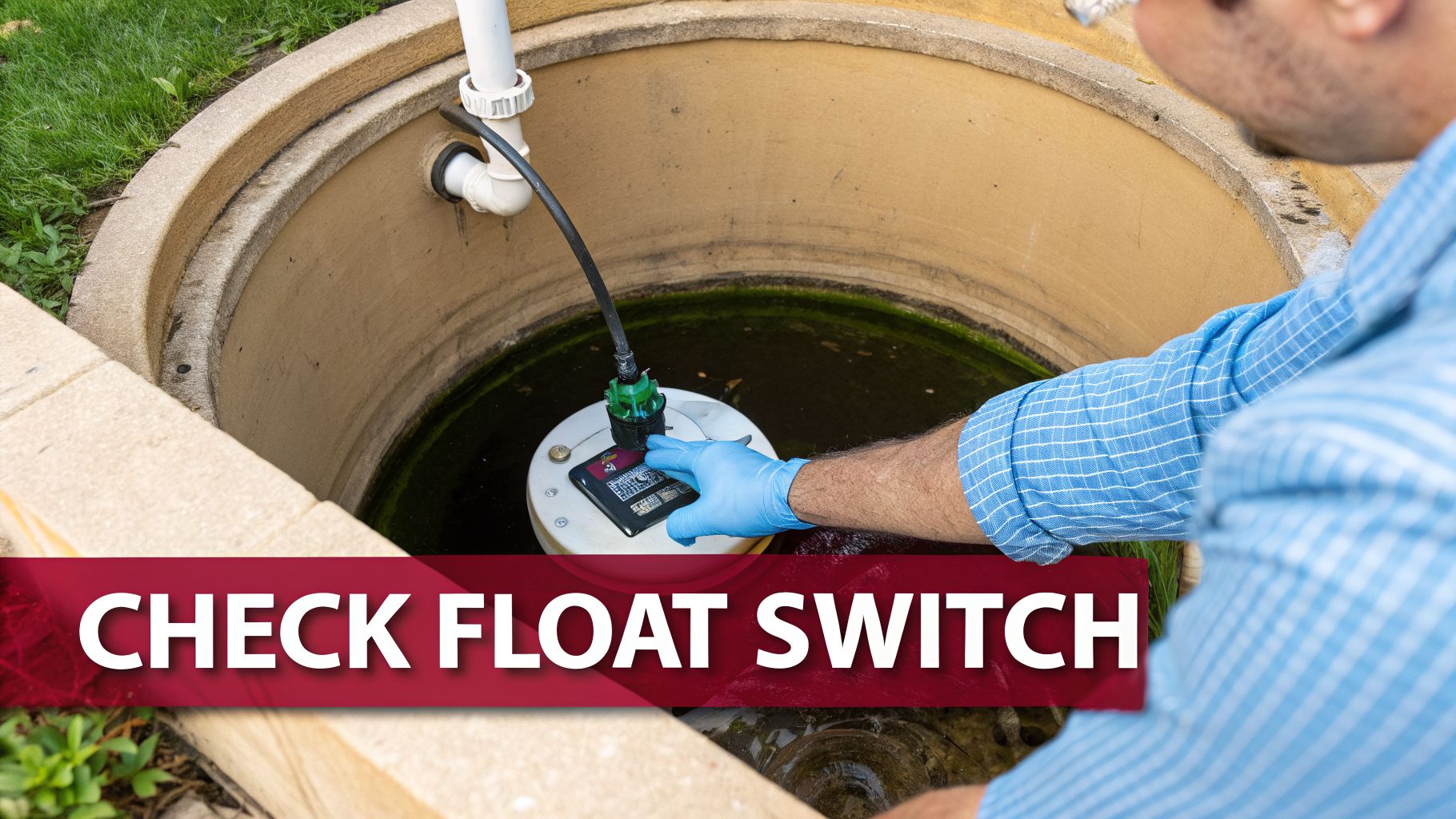
If the pump motor is the heart of your system, the float switch or pressure sensor is its brain. This component is solely responsible for detecting rising water and signaling the pump to activate. A quarterly inspection is a non-negotiable part of any complete sump pump maintenance checklist, as sensor failure is one of the most common reasons a pump fails to turn on, runs continuously, or activates too late.
How to Perform the Inspection
As you perform your monthly water test, pay close attention to the float mechanism. The float, which is typically a tethered ball or a vertical rod, should rise freely and smoothly with the water level. It must not get caught on the pump, the pit walls, or any wiring.
Observe the switch's action:
- The float should move without obstruction as the pit fills.
- You should hear a distinct 'click' as the switch engages, just before the pump starts.
- As the water recedes, the float should lower smoothly and shut the pump off.
This direct observation confirms the mechanical and electrical integrity of this critical trigger.
Why This Inspection Is Critical
A stuck or malfunctioning float switch renders your pump useless, no matter how powerful its motor is. Sediment, debris, or simple mechanical wear can cause the float to jam in the "off" position, leaving your basement vulnerable. For example, a New Jersey homeowner we served discovered a stuck float switch during a routine check just before a nor'easter. A simple adjustment prevented catastrophic flooding. Similarly, we found a corroded pressure sensor connector in a Philadelphia property during pre-storm season maintenance that would have kept the pump from ever turning on.
Pro Tip: A pump that runs constantly (short cycling) or not at all is often a sign of a sensor issue. If the float is free but the pump still misbehaves, it's time for a professional diagnosis. Contact Precision Plus Plumbing to have our technicians accurately identify the problem and prevent a future emergency.
Actionable Tips for Sensor Inspection
- Listen for the Click: The audible 'click' of the switch activating is a key indicator of its health. Silence often points to an electrical failure inside the switch.
- Clean Gently: Use a soft brush or cloth to wipe away any grime or sediment buildup on the float and its guide rod.
- Check Connectors: Visually inspect any visible electrical connectors for signs of corrosion, moisture, or looseness.
- Never Force It: If a float seems stuck, do not bend or force it. This can cause permanent damage. It's better to investigate the obstruction or replace the switch if it no longer moves smoothly.
- Document Failures: If your switch fails a test, note exactly what happened (e.g., "didn't activate," "didn't shut off"). This information is invaluable for our service technicians, helping them perform a faster, more accurate repair.
6. Power Cord and Electrical Connection Verification
A sump pump's power supply is its lifeline, yet it's often overlooked during routine maintenance. The electrical system, from the power cord and outlet to the GFCI breaker, is essential for both operation and safety. In the consistently damp and humid basement environments common throughout the Greater Philadelphia and New Jersey regions, moisture can corrode connections, cause outlets to fail, and degrade power cords over time. A thorough electrical inspection is a non-negotiable part of any sump pump maintenance checklist.
How to Perform the Inspection
Verifying your electrical components is a straightforward visual and functional check. Start by unplugging the pump. Carefully examine the entire length of the power cord, looking for any signs of cracking, fraying, or discoloration, which can indicate heat damage or physical wear.
Next, inspect the outlet itself:
- Ensure it is a Ground Fault Circuit Interrupter (GFCI) outlet, identifiable by the "TEST" and "RESET" buttons.
- Press the "TEST" button. The "RESET" button should pop out, cutting power to the outlet.
- Press the "RESET" button to restore power. The outlet is functioning correctly if it resets.
This simple process confirms that your electrical safety mechanisms are working, preventing shock hazards and potential pump failure during a critical moment.
Why This Inspection Is Critical
A compromised electrical connection isn't just a performance issue; it's a serious fire and safety hazard. Proper electrical connections are vital, and understanding the role of robust safety mechanisms like ground fault protection (GFCI) can prevent serious hazards. For example, a New Jersey homeowner recently discovered a cracked power cord during a routine inspection, allowing them to replace the pump before the exposed wiring could cause an electrical fire in their damp basement. Similarly, a Philadelphia resident identified a failed GFCI outlet during a monthly check, preventing a dangerous electrical fault during the next storm.
Pro Tip: Never use an extension cord as a permanent solution for a sump pump. This is a common code violation and a significant fire risk. The pump must be plugged directly into a dedicated, properly grounded GFCI outlet to ensure safe and reliable operation.
Actionable Tips for Electrical Verification
- Test the GFCI Monthly: Press the "TEST" and "RESET" buttons on your GFCI outlet every month. If it fails to trip or reset, replace the outlet immediately.
- Keep the Cord Elevated: Use cord clips or ties to keep the sump pump's power cord up and away from any potential standing water in the sump pit.
- Dedicate the Circuit: Your sump pump should be on a dedicated circuit. Avoid plugging other appliances into the same outlet to prevent circuit overloads, especially during a storm when you need the pump most.
- Label Your Breaker: Clearly mark the circuit breaker that controls the sump pump in your home's main electrical panel. This ensures you or a family member can quickly identify it in an emergency.
7. Pit Liner and Structural Integrity Assessment
Beyond the pump itself, the sump pit or basin is a critical component of your waterproofing system. This pit, typically made of plastic or concrete, can degrade over time. Constant groundwater pressure, harsh freeze-thaw cycles common in Delaware and northern New Jersey winters, and soil settlement can cause cracks, punctures, or deterioration. A compromised pit allows water to bypass the pump and seep into your foundation, undermining your home's structural integrity and rendering the pump less effective.
How to Perform the Assessment
A thorough visual inspection is your primary tool for evaluating the pit's condition. This should be performed at least annually, ideally during your semi-annual cleaning when the pit is empty and the walls are visible.
Follow these steps for a complete check:
- Carefully examine the interior walls of the liner for any cracks, punctures, or signs of bowing.
- Inspect the concrete floor and walls surrounding the pit for water stains, seepage, or white, chalky mineral deposits (efflorescence).
- Check that the lid fits snugly and is properly sealed to prevent debris and surface water from entering.
This assessment helps you catch small issues before they escalate into major foundation problems or basement flooding events.
Why This Assessment Is Critical
A damaged sump pit is a hidden threat. For example, one New Jersey homeowner noticed their pump was running more frequently. During an inspection, they discovered a small puncture in their plastic liner that was allowing excessive groundwater to pour in, overworking the pump. By patching the liner, they prevented premature pump failure and a potential flood. Similarly, a Delaware homeowner found hairline cracks in their concrete pit, allowing them to schedule a replacement before any structural damage occurred.
Pro Tip: If you notice any cracks in the pit liner or persistent dampness around the pit's perimeter, it signifies a breach. This allows groundwater to enter your basement around the pump instead of into it, creating a perfect recipe for water damage. Contact Precision Plus Plumbing for a professional evaluation to determine the severity and best course of action.
Actionable Tips for Pit Integrity
- Look for Shifts: Pay attention to any settling or heaving of the basement floor immediately surrounding the pit opening.
- Photograph Anomalies: Take clear pictures of any cracks, stains, or damage you find. This provides a valuable record for a professional assessment.
- Check the Seal: Ensure the pit lid is airtight. This not only keeps out radon gas and moisture but also prevents debris from falling in and jamming the pump.
- Monitor Nearby Walls: Keep an eye out for new wet spots on basement walls near the sump pit, as this can indicate a leak. Learning how to stop basement flooding often starts with ensuring the entire system, including the pit, is sound.
8. Sump Pump Service and Professional Inspection
While the homeowner-focused tasks on this sump pump maintenance checklist are vital, they primarily address external and operational functions. An annual professional service by a licensed plumber provides a deep, internal inspection that is crucial for long-term reliability and something homeowners cannot safely or effectively perform themselves. This service is the difference between proactive prevention and reactive, expensive emergency repairs.
How a Professional Inspection Works
During a professional service call, a technician goes beyond a simple activation test. They will typically unplug and remove the pump from the pit for a hands-on evaluation of its core components.
A thorough inspection includes:
- Internal Component Check: Examining the impeller for damage or clogs, checking the bearings for wear and tear, and inspecting seals that prevent water from entering the motor housing.
- Motor and Electrical Assessment: Testing the motor's amperage draw to ensure it's operating within manufacturer specifications and inspecting the power cord for any signs of damage or corrosion.
- System-Wide Evaluation: The technician will also assess the check valve, the entire length of the discharge line, and the condition of the sump pit itself.
This detailed examination identifies subtle wear and tear long before it can lead to a catastrophic failure during a heavy storm.
Why This Service Is Critical
In areas like Greater Philadelphia, New Jersey, and Delaware, where heavy rainfall and high humidity place significant stress on pumps, an annual inspection is your best insurance policy. For example, some Philadelphia homeowners with documented annual service records were able to avoid pump failures entirely during major storms. In contrast, neighbors who skipped this crucial step often faced basement floods and water damage repairs costing over $20,000.
Pro Tip: Keep all your service records and receipts. In some cases, New Jersey property owners with documented annual maintenance have received faster insurance claim approvals and even higher payouts for storm-related damage, as the records serve as proof of due diligence and preventative care.
Actionable Tips for Professional Service
- Schedule Strategically: Book your annual service in late spring before the summer storm season or in early fall to prepare for autumn and winter precipitation.
- Request a Detailed Report: Ask the technician for a written report outlining their findings, including any noted wear or potential issues. This creates a valuable performance history for your unit.
- Discuss Your Specific Model: Ask the plumber about common failure points for your pump's make and model and what signs you should watch for.
- Inquire About Upgrades: If you don't have a backup system, your annual service visit is the perfect time to discuss options and get a professional recommendation. A technician from Precision Plus Plumbing can provide an expert assessment of your home's needs.
Sump Pump: 8-Point Maintenance Comparison
| Maintenance Item | Complexity 🔄 | Resource Requirements ⚡ | Expected Outcomes 📊 | Ideal Use Cases 💡 | Key Advantages ⭐ |
|---|---|---|---|---|---|
| Monthly Water Level and Activation Test | Low — quick manual test (5–10 min) | Minimal — water, basic tools, log | Confirms pump activation and shutoff; catches many failures early | Routine monthly check for homeowners in storm-prone areas | Low cost; early detection; peace of mind |
| Discharge Line Inspection and Clearance | Medium — outdoor inspection, possible clearing | Moderate — clearing tools, outdoor access, occasional camera inspection | Prevents backflow and clog-induced pump cycling/failure | Homes with long or seasonal discharge lines; after storms/winter | Keeps water away from foundation; prevents pump burnout |
| Pit Cleaning and Sediment Removal | Medium–High — pump shutdown and cleanout | Moderate — wet-vacuum, PPE, disposal; pro service if needed | Restores pit capacity; reduces wear and clogging; extends pump life | High sediment/groudwater areas; annual or semi-annual maintenance | Extends pump lifespan; improves efficiency |
| Backup Power System Testing & Battery Maintenance | Medium — battery and failover testing | High — battery units, replacements, possible generator integration | Ensures operation during outages; reduces catastrophic flood risk | Areas with frequent outages or critical basement protection needs | Critical outage protection; prevents major water damage |
| Float Switch & Pressure Sensor Inspection | Low–Medium — movement and electrical checks | Low — basic tools, electrical safety; replacement parts if needed | Detects common sensor failures; ensures reliable activation | All systems; integrate into monthly/quarterly checks | Catches most common failure point; inexpensive repairs if early |
| Power Cord & Electrical Connection Verification | Medium — GFCI/outlet and wiring checks; electrician if needed | Moderate — GFCI test, visual inspection, licensed electrician for repairs | Reduces electrical hazards; ensures steady power to pump | Basements with moisture, older wiring, or shared circuits | Prevents shocks/fires; improves reliability |
| Pit Liner & Structural Integrity Assessment | High — visual/professional inspection; may require repair | High — specialized tools, pro assessment, potentially costly repairs | Identifies cracks/seepage that can undermine foundation and pump | Aging systems, freeze-thaw climates, post-construction activity | Detects structural problems early; avoids foundation damage |
| Sump Pump Service & Professional Inspection | High — comprehensive professional diagnostics | High — licensed technician, service fee, parts as needed | Finds internal wear, extends pump life, provides documented history | Annual service for all homeowners; before storm season | Thorough prevention, longer pump life, insurance documentation |
From Checklist to Confidence: When to Call the Pros at Precision Plus Plumbing
Following this detailed sump pump maintenance checklist shifts you from a concerned homeowner to a proactive guardian of your property. By regularly testing your pump's activation, inspecting the discharge line, cleaning the pit, and verifying your backup power source, you build a powerful first line of defense against water damage. You've learned not just what to do, but why each step is critical, from ensuring the float switch moves freely to checking the structural integrity of the pit liner itself. This is more than a simple to-do list; it's a framework for confidence, giving you the skills to manage your home's most vital water protection system.
The true value of this knowledge isn't just in the tasks you perform, but in the problems you can now spot. Recognizing the early signs of trouble, like a pump that runs constantly (short-cycling) or unusual grinding noises, empowers you to act before a minor issue becomes a major disaster. A flooded basement isn't just a mess; it's a costly, stressful event that can lead to structural damage, mold growth, and the loss of irreplaceable belongings. Your diligence with this checklist directly translates into peace of mind, especially when the skies darken and the rain begins to fall in the Greater Philadelphia area, New Castle County, or South Jersey.
Bridging the Gap Between DIY and Professional Expertise
While this guide equips you for routine care, it also clarifies the boundaries of DIY maintenance. Confidence comes from knowing what you can handle and, just as importantly, when to call for professional support. Certain symptoms are clear signals that a deeper, more complex problem exists, one that requires specialized tools and diagnostic experience.
It's time to call a professional if you encounter any of the following:
- Persistent Strange Noises: You've cleared the pit of debris, but you still hear grinding, rattling, or excessively loud humming. This often points to worn-out motor bearings or a damaged impeller that requires professional disassembly and repair or replacement.
- Electrical Concerns: If you notice a frequently tripping circuit breaker, a frayed or damaged power cord, or any signs of electrical malfunction near the pump, do not attempt a DIY fix. Water and electricity are a dangerous combination, and our trained technicians can safely diagnose and resolve these hazards.
- Recurring Clogs or Blockages: You clear the discharge line, but it seems to get blocked again quickly. This could indicate a problem with the line's pitch, a partial collapse underground, or an issue with the check valve that is best diagnosed by a professional.
- Pump Fails a Manual Test: You've poured water into the pit, the float switch has lifted, but the pump remains silent. After confirming it has power, this failure to activate suggests a seized motor, a faulty switch, or a failed capacitor, all of which demand an expert's attention.
Key Insight: The goal of your maintenance is not to become a master plumber overnight, but to become an expert on your own system. Knowing its normal sounds and behaviors allows you to immediately recognize when something is wrong and call for backup before the system fails completely.
The expert technicians at Precision Plus Plumbing are your dedicated partners in this effort. We don't just show up to fix a broken pump; we arrive ready to provide a complete system analysis. Our team serves homeowners across New Jersey, the Greater Philadelphia region, and New Castle County, Delaware, offering 24/7 emergency services for everything from sudden pump failures to basement flooding and sewage cleanup. With our On-Time Guarantee and trucks stocked with necessary parts, we resolve over 90% of issues on the very first visit. Don't wait for a forecast of heavy rain to wonder about your sump pump. Turn your checklist knowledge into lasting security.
When your sump pump maintenance checklist uncovers an issue beyond your scope, or you want the absolute assurance of a professional inspection, our team is ready to help. For expert repairs, annual servicing, or 24/7 emergency response, trust Precision Plus Plumbing to keep your basement dry and protected. Visit our website or call us today to schedule your service and experience the precision and care your home deserves.