
Have you spotted a mysterious water stain spreading across your ceiling? In the Philadelphia area, with our unique mix of historic rowhomes and older plumbing, a small, hidden leak isn't just an annoyance. It's a serious threat. Finding the source fast is the only way to prevent thousands of dollars in damage, and professional leak detection in Philadelphia is the quickest, most accurate way to do it.
The High Cost of Waiting for a Water Emergency

It’s easy to write off that tiny drip under the sink or a faint musty smell in the basement. Many homeowners cross their fingers and hope it goes away on its own. But in the world of plumbing, a small leak is a quiet warning before the real trouble starts. Water is relentless, and what seems like a minor issue today can silently grow into a full-blown disaster.
Think of a hidden leak like an invisible force working against your home. Every single drop that soaks into your walls, floors, or foundation is weakening wood, corroding pipes, and turning drywall to mush. This slow-motion destruction happens out of sight, which is precisely what makes it so much more dangerous than a sudden, obvious pipe burst.
From Drip to Disaster: A Timeline of Damage
The journey from a minor leak to a major headache happens much faster than you might think. It’s a domino effect where one problem triggers the next, and each step gets more expensive to fix. That slow drip is just the first domino.
That initial leak creates a constantly damp environment—the perfect breeding ground for mold. In just 24 to 48 hours, mold can start growing inside your walls or under floors, pumping spores into the air you breathe and creating potential health risks.
As the moisture keeps spreading, the real structural damage kicks in.
- Structural Wood Rot: The wooden joists, subfloors, and studs holding your house up can begin to rot and lose their integrity.
- Foundation Damage: For Philly rowhomes and houses with basements, constant water exposure can lead to cracks in the foundation—an incredibly expensive and complicated repair.
- Electrical Hazards: Water and electricity are a dangerous mix. If water gets near your home’s wiring, it can cause short circuits and create a serious fire risk.
Proactive leak detection isn't an expense; it's an essential investment in your home's health, safety, and long-term value. Waiting for the ceiling to collapse is a gamble you can't afford to take with your biggest asset.
Protecting Your Investment and Your Wallet
The financial hit goes beyond just the repair bill. Undetected water damage can lead to complicated insurance claims that often get denied. By being proactive, homeowners can sidestep not only the costly repairs but also the headaches of figuring out their property damage coverage after the fact.
When you invest in professional detection services, you’re doing more than just fixing a pipe; you're protecting your property value. You can learn more about how small leaks can turn into big problems fast in our detailed guide. It's all about shifting your mindset from reacting to emergencies to preventing them, turning that homeowner anxiety into empowerment.
The Sneaky Signs of a Water Leak in Your Home
A burst pipe is impossible to ignore—it’s loud, messy, and demands immediate attention. But most water leaks aren't nearly so dramatic. They're quiet and insidious, creeping behind your walls or under your floors, causing slow-but-steady damage long before you realize anything is wrong. The key is learning to spot the subtle clues.
Think of it this way: a big leak is like a sudden injury, but a small, hidden leak is like a chronic illness. It doesn't announce itself, but it can weaken the entire structure over time. By knowing what to look for, you can catch these problems early and prevent a catastrophe down the road.
Your First Clue: An Unexpectedly High Water Bill
Long before you see a stain or smell that musty odor, your water bill might be trying to tell you something. A sudden spike in your monthly statement that you can't explain with extra laundry or more showers is a classic red flag for a hidden leak.
This isn't a small jump we're talking about, but a noticeable increase that makes you do a double-take. It means water is running somewhere, 24/7, even when all your faucets are tightly shut. A single drip per second might not sound like much, but it adds up to over 3,000 gallons of water per year. That's enough for more than 180 showers! When your wallet sounds the alarm, it's time to listen.
Common Leak Symptoms and What They Could Mean
To help you connect the dots, here’s a quick guide to some of the most common signs of a leak and where the problem might be hiding.
| Symptom Observed | Potential Leak Source | Recommended Action Urgency (Low, Medium, High) |
|---|---|---|
| Sudden spike in water bill | Hidden pipe leak (in wall, slab, or underground) | High |
| Musty or earthy smell | Slow leak inside a wall, under a floor, or in a basement | Medium to High |
| Visible water stains on ceiling/walls | Leaking pipe, roof issue, or failing fixture on floor above | High |
| Peeling or bubbling paint/wallpaper | Moisture saturating the drywall from a nearby pipe leak | Medium |
| Warped wood floors or baseboards | Appliance leak (dishwasher, fridge) or bathroom fixture leak | Medium |
| Sound of dripping with no taps on | Active leak inside a wall cavity or ceiling space | High |
| White, chalky powder on masonry | Water seeping through foundation walls (efflorescence) | Low to Medium |
This table is a starting point. If you spot any of these signs, especially those marked with high urgency, it's best to investigate further right away.
Following the Sensory Trail
Your own eyes, ears, and nose are some of the best leak detectors you have. You just have to pay attention to the subtle signals your home is sending.
- The Sound of Dripping: Late at night, when the house is quiet, do you ever hear a faint dripping? Or the sound of water running when you know everything is off? Those phantom sounds are often coming from a pipe inside a wall or a toilet that's constantly refilling.
- Persistent Musty Odors: A damp, earthy smell that won't go away is a dead giveaway. That "old basement" smell is often the scent of mold and mildew, which only grow where there's a source of moisture. If you smell it, there's a leak nearby.
- Visible Water Stains or Discoloration: Brown or yellow spots on your ceiling are one of the most obvious signs that water is coming from somewhere it shouldn't. To understand what these stains mean, take a look at the common signs of water damage in your ceiling.
Even a small patch of dampness can indicate a much larger problem, making prompt leaky home repairs critical. Never ignore these clues—they’re your earliest warnings.
Physical Evidence Around Your Philadelphia Home
Leaks also leave physical evidence you can see and feel if you know where to look. These changes to your home's surfaces are direct results of moisture damage happening just out of sight.
A classic sign we see in Philadelphia basements is efflorescence. It's a chalky, white powder that forms on concrete or brick walls. This happens when water seeps through the masonry, carrying mineral salts to the surface and leaving them behind as it evaporates.
Keep an eye out for other physical changes, too. Paint or wallpaper that starts to bubble, peel, or crack is often separating from drywall that's become saturated with water. The same goes for warped or buckling floorboards, especially near bathrooms and kitchens. In our region's older homes, radiator systems are common culprits, so always check for small puddles or water stains around their valves and fittings. Catching these physical signs can save you a world of headaches.
How Philadelphia's Aging Pipes Fuel Household Leaks
Ever wonder why it seems like every other week there’s news about a massive water main break flooding a Philly street? It’s not just your imagination, and it’s certainly not bad luck. The truth is buried right under our feet, and it connects the city’s long history directly to the plumbing headaches so many of us face in our own homes.
Simply put, much of Philadelphia's water infrastructure is old. Really old. A huge portion of the pipes that bring water to our neighborhoods was installed during the city's big growth spurt after the Civil War, between 1870 and 1920. They were engineering marvels back then, but they were never meant to last this long. Now, they're far past their expiration date, brittle and ready to fail.
A City-Wide Problem Hits Home
The numbers are pretty shocking. The Philadelphia Water Department pushes out about 250 million gallons of clean water every day. But an incredible 60 million gallons—almost a quarter of the total—disappears into the ground before it ever reaches a tap. That's a massive amount of water lost daily to thousands of tiny cracks and breaks in the city’s 3,000 miles of mains, a fact you can explore in more detail through WHYY's reporting on the city's water infrastructure.
This isn't just some abstract city problem; it directly impacts you. All the pressure and strain that causes those dramatic street floods also puts a constant tax on the smaller service line running into your house. When the city’s main lines are fragile, that weakness gets passed right down the line to your own plumbing.
From Main Line to Your Living Room
So how does a shaky city grid lead to a puddle in your basement or a stain on your ceiling? It happens in a few key ways:
- Pressure Spikes: Old, fragile mains create unpredictable water pressure. When the pressure suddenly surges or drops, it sends a shockwave through your home's pipes, stressing joints and fittings until they give out.
- Corrosion and Decay: The cast iron pipes used a century ago are prone to rust and corrosion from the inside out. Over decades, they get thinner and weaker, making them ripe for developing pinhole leaks or even catastrophic breaks.
- Vibrations and Ground Shifts: This is a historic city, and that means constant vibrations from traffic, new construction, and the ground naturally settling. For an old, brittle pipe, a little shake can be the last straw.
The infographic below shows the first warning signs that this city-wide issue might have finally reached your front door.
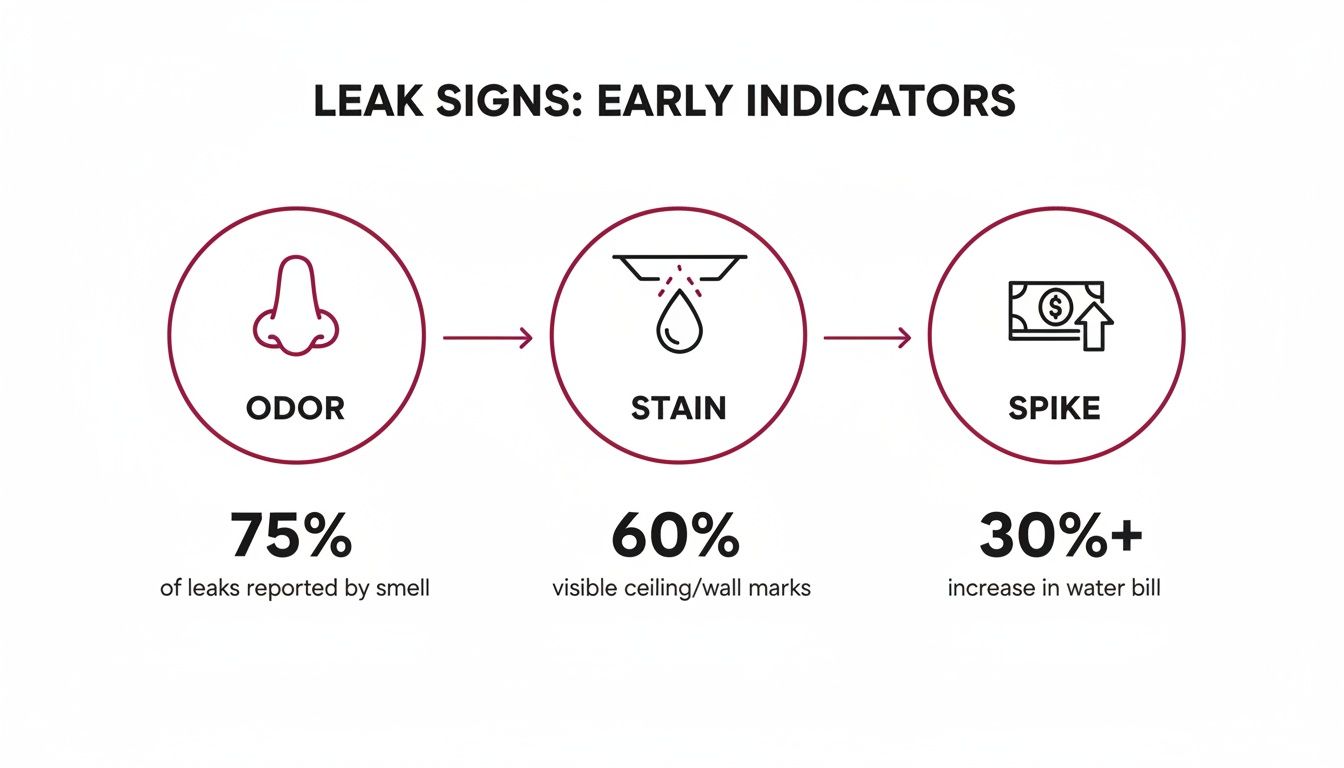
That musty smell, the new water spot, or a water bill that makes you do a double-take—these are your home's early warning system. They're telling you that a hidden problem needs attention, now.
Because our homes are connected to this aging system, we're all at a higher risk of leaks. Being proactive about leak detection isn't just a good idea here in Philly; it's essential self-defense for your property.
Living in a city with this much history has its quirks. In this case, the very pipes that allowed Philadelphia to boom are now a major source of stress for homeowners. Understanding this context helps explain why a seemingly small drip can turn into a big problem so fast, and it’s the number one reason why having a pro you can trust for leak detection in Philadelphia is so important.
How Professionals Find Leaks With Advanced Technology
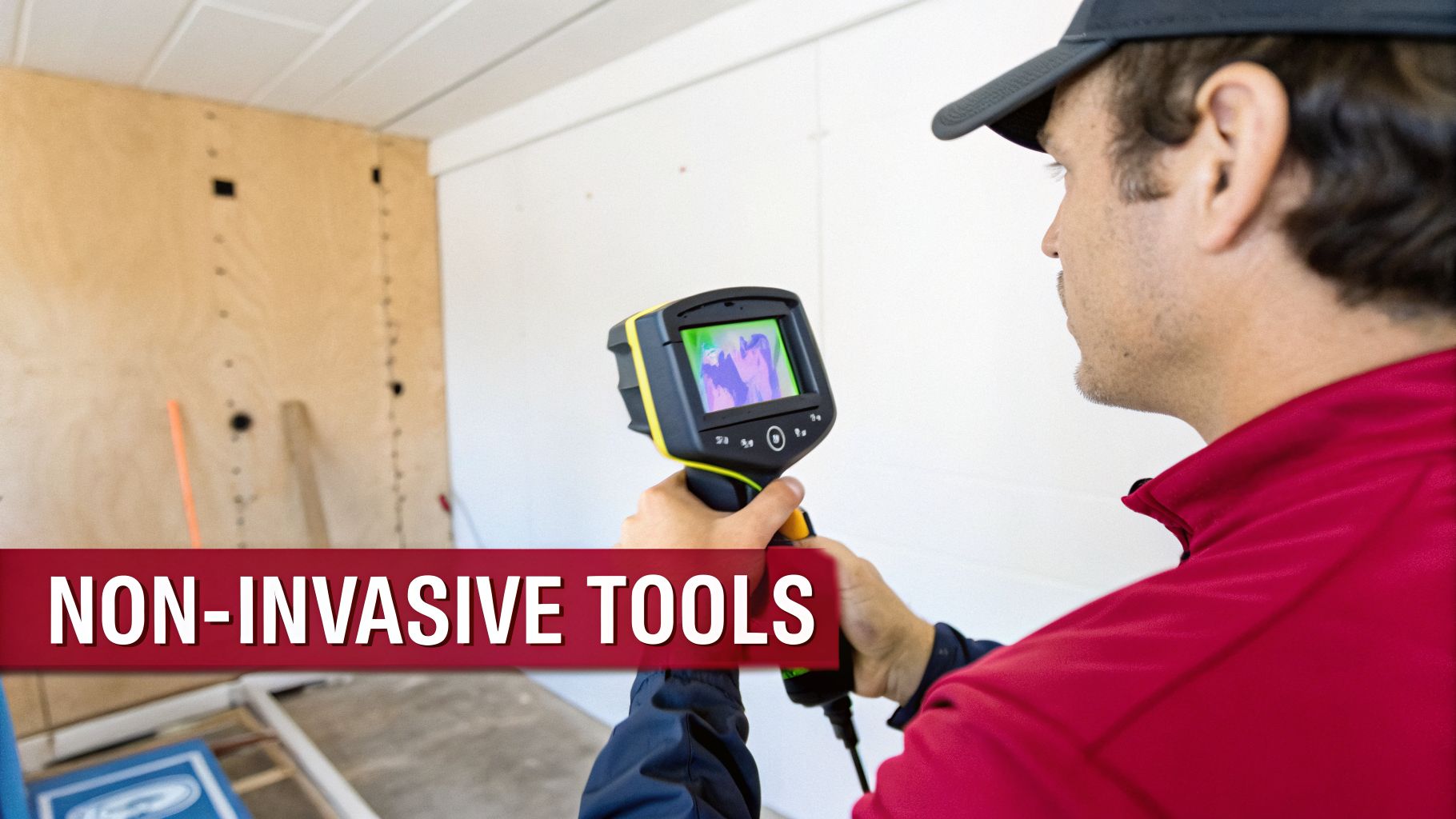
When a mysterious water stain appears on your ceiling, the last thing you want is a plumber showing up ready to tear open walls on a hunch. Fortunately, the days of destructive, guesswork-based leak hunting are over. Today’s professional plumbers are more like detectives, using specialized tools to pinpoint a leak’s exact location without turning your home into a construction zone.
This high-tech approach isn't just neat—it saves you serious time, money, and a massive headache. Instead of swinging a sledgehammer, technicians now rely on gear that lets them “see” and “hear” what's happening behind your drywall and under your floors. It's a precise, scientific process that transforms a chaotic problem into a clear-cut solution.
Hearing the Hidden Drip with Acoustic Listening Devices
Think of a doctor using a stethoscope. That’s the basic idea behind acoustic leak detectors, but they’re built for your home's plumbing. These incredibly sensitive devices are engineered to pick up the specific sound signatures of water escaping a pressurized pipe.
A trained technician will press the electronic sensor against different points—pipes, walls, and even concrete slabs. The equipment amplifies the subtle sounds of a leak, like a faint hiss or a low gurgle that the human ear would never catch. By moving the sensor around, the technician can follow the sound to where it’s loudest, zeroing in on the leak's origin with pinpoint accuracy. This is a game-changer for professional leak detection in Philadelphia, especially in older homes where pipes can fail in the most inaccessible spots.
Seeing Through Walls with Infrared Thermal Imaging
Ever wish you had a pair of "heat-vision" goggles to find out where moisture is hiding? That's essentially what an infrared (IR) thermal imaging camera does. This remarkable tool doesn't actually see water; it sees the minute temperature changes that moisture causes in building materials.
When water seeps into drywall, insulation, or subflooring, it cools the surrounding area through evaporation. An IR camera translates these temperature differences into an easy-to-read color map.
- Cool Blues and Purples: These colors almost always signal colder spots, a dead giveaway for hidden moisture.
- Warm Reds and Oranges: These show the warmer, drier sections of the wall or floor.
By simply scanning a surface, a technician gets an instant thermal "footprint" of the leak. This often reveals the entire path of water damage, which is completely invisible to the naked eye. It’s the perfect non-invasive way to trace leaks from bathrooms, HVAC units, or roofing without leaving a single mark.
This technology is invaluable because it not only confirms a leak but also helps map the full extent of the water damage—a crucial piece of information for both the repair and any insurance claims.
Exploring Your Pipes with Video Inspection Cameras
For problems buried deep within your drain and sewer lines, nothing beats a video pipe inspection. This involves guiding a tiny, high-definition camera attached to a long, flexible rod through your pipes.
As the camera snakes its way through the system, the technician watches a live feed on a monitor, getting a real-time, firsthand look at the condition of your plumbing. The guessing game is over; this is a definitive visual diagnosis.
With the camera, a plumber can spot a wide range of issues with 100% certainty:
- Cracked, broken, or offset pipes
- Tree root intrusion that has punctured the line
- Significant grease buildup and stubborn blockages
- Collapsed or bellied pipe sections
Seeing the problem directly tells us exactly what we're up against, where it is, and what the most effective repair strategy will be. It means we don't have to dig up your entire yard just to find the source of a recurring sewer backup. It's the ultimate tool for precise, efficient problem-solving.
Choosing the Right Partner for Leak Detection
When you’ve got a leak, the last thing you need is more stress. But choosing the right plumber can feel just as overwhelming as the problem itself. It's the one decision that determines whether you get a quick, permanent fix or end up in a frustrating cycle of repeat visits and surprise bills.
You’re not just hiring someone with a wrench; you’re trusting them with your home. That trust has to be earned with clear promises and a history of keeping them.
What to Look for in a Top-Notch Service
The best plumbers distinguish themselves by what they offer beyond the actual repair. They build a real partnership with you, and it all starts with a few key guarantees that give you some breathing room when you need it most.
First off, leaks don’t follow a 9-to-5 schedule. A company offering 24/7 emergency service isn’t just a nice perk—it’s a commitment. It means they’ll be there for you when a pipe bursts at 3 AM on a holiday weekend. That kind of reliability is essential.
Just as crucial is an on-time guarantee. Your time is valuable, especially during a crisis. Waiting all day for a technician who might not even show up adds a whole new layer of anxiety. A firm arrival window, backed by a real promise, shows respect and sets a professional tone from the start.
The Importance of Honesty and Education
Finding a plumber you can trust for leak detection in Philadelphia really comes down to clear communication, especially about money. Look for a company that gives you upfront, transparent pricing. You should know exactly what the job will cost before the work starts. No one wants to be hit with hidden fees on the final bill.
The right technician doesn't just fix the problem; they empower you to prevent it from happening again. Their goal should be to leave your home safer and you more knowledgeable than when they arrived.
A great service experience goes beyond just solving the immediate issue. It’s also about teaching you a thing or two about your home’s plumbing. For example, a quality technician will take a few extra minutes to provide services that add real, long-term value, like:
- Marking your main water shutoff valve so you can act fast in the next emergency.
- Testing your home's water quality to spot potential issues like hard water or other contaminants.
- Treating your drains and checking HVAC systems to head off other problems before they start.
This approach shows a company is invested in a long-term relationship, not just a one-and-done service call. It turns a stressful situation into a chance to better understand and protect your home.
Efficiency and Know-How That Get the Job Done
When you’ve got a plumbing emergency, you need it fixed—fast. This is where on-the-ground efficiency really matters. A premier company makes sure its technicians show up with fully stocked trucks, ready to tackle just about any problem on the spot. Resolving over 90% of issues in a single visit means your life gets back to normal that much quicker.
This level of preparedness is critical in genuinely hazardous situations, like a gas leak. A 2021-2022 survey found an average of four gas leaks per mile on Philadelphia roads, which shows you how common these risks are. You can learn more about the local leak survey findings to see the full picture. For anything from a burst pipe to the mold that follows, you need pros who have seen it all. A company that has been handling these crises since 1999 has the kind of deep experience that truly keeps you safe.
Frequently Asked Questions About Leak Detection
Even after getting a good sense of how leaks happen and how we find them, it’s natural to still have some questions. We get it. Calling in a professional is a big decision, and you deserve to have all the facts before you pick up the phone.
Think of this section as a conversation where we tackle the most common questions we hear from homeowners around Philly. Our goal is to clear up any confusion so you can feel confident about your next steps.
How Much Does Professional Leak Detection Cost in Philadelphia?
This is usually the first thing people ask, and the honest answer is: it varies. The cost for professional leak detection in Philadelphia really depends on how tricky the leak is to find. A simple, easy-to-access leak might start in the low hundreds, but a complex problem that needs thermal cameras or a video inspection is going to be more.
Here’s the most important thing: always work with a company that gives you upfront, transparent pricing. You should never have to guess what the final bill will be. It might feel like just another expense, but that initial investment is a drop in the bucket compared to the thousands you could spend on fixing widespread water damage later on.
Can I Find a Hidden Water Leak Myself?
You can definitely be the first responder on the scene. Homeowners are often the first to notice the tell-tale signs we've talked about, like a surprisingly high water bill, a musty smell from the basement, or a new stain on the ceiling. Running a quick water meter test is another great first step to confirm if you have a leak.
But there’s a world of difference between knowing you have a leak and finding its exact source. When the source is tucked away inside a wall, under a concrete slab, or buried in your yard, you need specialized gear to pinpoint it. Trying to find it yourself by tearing into walls or floors often causes more harm than good, turning a small repair into a huge renovation.
Think of it like this: you can use a thermometer to confirm you have a fever, but you need a doctor to figure out why you have it. Your job is to spot the symptom; our job is to find the cause without performing unnecessary surgery on your home.
How Quickly Should I Act If I Suspect a Leak?
Immediately. A water leak isn't a "wait and see" situation. The damage starts adding up almost right away. In a damp, dark space, mold and mildew can start growing in just 24 to 48 hours. Before you know it, that moisture can start rotting the wood and drywall that hold your home together.
Your reaction should match the leak's severity:
- For a Major Leak (Burst Pipe, Gushing Water): First, shut off your home's main water supply. Then, call an emergency plumber who offers 24/7 service.
- For a Slow, Suspected Leak: Don't ignore it just because it's a small drip or a faint smell. Schedule an inspection as soon as you can. Acting fast is the best way to keep a minor problem from becoming a wallet-draining disaster.
Knowing the typical timeline for repairs can also help; you can check out our guide on how long water damage restoration takes for more details on the process.
Why Are Leaks Such a Big Deal in Philadelphia Specifically?
Philadelphia's history and infrastructure create a perfect storm for plumbing problems. Many of the city's pipes are simply old. We've seen firsthand how this legacy leads to frequent basement floods and ceiling drips for homeowners across the area.
Ongoing efforts to replace old service lines show just how widespread the issue of aging pipes is. For Philly residents, especially those in older homes or rowhouses, having a reliable plumber isn't a luxury—it's essential for keeping your home safe, dry, and structurally sound.