
That relentless drip… drip… drip coming from the shower isn't just a late-night annoyance. It's your home telling you it's time to repair your Moen shower valve. The good news? This is usually a job you can handle yourself. More often than not, the culprit is a worn-out cartridge, especially if you have hard water, which really speeds up mineral buildup and wear on the internal parts.
Your First Steps to Fixing a Leaky Moen Shower
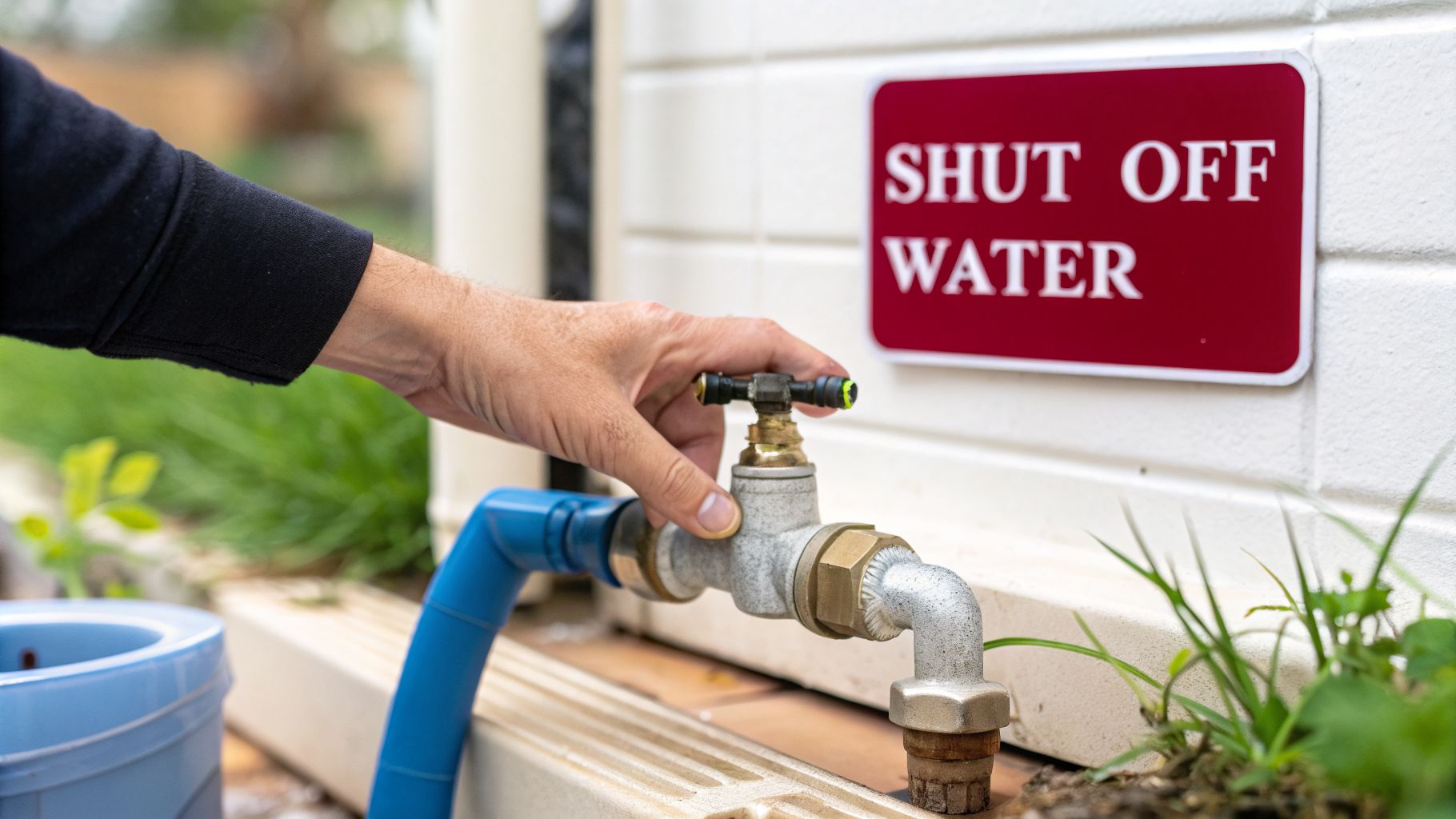
Before you grab a single tool, stop. The first thing you absolutely must do is shut off the water to your entire house. I can't stress this enough. This one step is the only thing standing between a simple repair and a full-blown flood. If you're not sure where your main shut-off is, consider this the perfect opportunity to find it. We have a handy guide for finding the https://precisionserviceexperts.com/blog/shut-off-valve-for-toilet/, and the main valve is often in the same general area, like a basement or utility closet.
Once the water is off, your next mission is to figure out which Moen valve you're dealing with. They mostly fall into two camps: the Posi-Temp and the Moentrol.
- Posi-Temp: This handle only turns left and right to control temperature. It does not pull toward you.
- Moentrol: This handle pulls out to turn the water on and then rotates to set the temperature.
Knowing the difference is critical because they use entirely different replacement cartridges. Getting this right the first time will save you an extra, and very frustrating, trip back to the hardware store.
Why Acting Now Matters
That small drip is a bigger problem than you think. Unchecked leaks are a major cause of water damage, accounting for 10-15% of annual home insurance claims in the U.S. What starts as a drip can quietly travel behind walls, leading to stained ceilings, buckled floors, and mold. It’s worth understanding the basics of general leak repair because the principles of finding and fixing the source apply to many household systems.
Given how popular Moen is, this is valuable knowledge for any homeowner. The global market for shower valves is expected to climb from $830.258 million in 2021 to over $1,083.1 million by 2025, and Moen is a huge player in North America. Here in New Jersey and the Greater Philadelphia area, a dripping shower valve is one of the most common reasons we get calls about wet ceilings.
Key Takeaway: The two non-negotiable first steps are shutting off the main water supply and correctly identifying your Moen valve (Posi-Temp vs. Moentrol). Nail this prep work, and you're set up for a smooth, successful repair.
Luckily, Moen designed its valves to be homeowner-friendly. Replacing the cartridge is one of the most manageable plumbing repairs you can tackle. This guide will walk you through everything you need to know, giving you the confidence to fix it right and protect your home from some seriously expensive damage down the road.
Figuring Out What's Wrong and Which Valve You Have
Alright, before you even think about grabbing a wrench, you need to play detective. Your shower is giving you clues about what’s failing, and nine times out of ten, it’s the cartridge inside the valve. That non-stop drip-drip-drip is the most common culprit, but other symptoms can be a bit more puzzling.
Is the handle wobbly? Or worse, does it just spin around and around? That’s a tell-tale sign the plastic stop tube hiding behind the handle has snapped. You might also be dealing with a sudden dip in water pressure or, the most frustrating of all, no hot water in the shower when it’s working everywhere else in the house. These are classic symptoms of a cartridge that's either gummed up with minerals or has simply given up the ghost.
What Your Shower Is Trying to Tell You
Your shower's strange behavior isn't random—it's pointing directly to a specific problem inside that valve. For instance, a sudden loss of hot water usually means the valve's balancing spool is stuck, a job handled entirely by the cartridge. Low pressure can also be traced back to the cartridge, especially if hard water deposits have broken loose and are now clogging its tiny internal ports. If that sounds familiar, you can learn more about how that happens in our guide on what causes low water pressure.
Here’s a quick guide to help you translate your shower’s symptoms into a solid diagnosis. This table breaks down what you're seeing and what it likely means for your Moen valve.
Moen Valve Symptom and Cause Chart
| Symptom | Likely Cause | Recommended Action |
|---|---|---|
| Constant Dripping or Leaking | The cartridge's internal O-rings and seals have failed. | Replace the shower cartridge. |
| No Hot Water (Shower Only) | The pressure-balancing spool is stuck on the cold side. | Replace the shower cartridge. |
| Handle Spins 360 Degrees | The plastic stop tube behind the handle has broken. | Replace the stop tube and the cartridge at the same time. |
| Stiff or Hard-to-Turn Handle | Mineral buildup is seizing the cartridge inside the valve body. | Remove and replace the cartridge (a cartridge puller may be needed). |
Once you have a good idea of the cause, you can move on to the next critical step: identifying the valve itself.
It’s no surprise that Moen repairs are so common. The brand is everywhere. We're talking about a global faucet market that hit $23.28 billion in 2024 and is on track to hit $36.69 billion by 2030. Right here in the Philadelphia and New Jersey suburbs, builders used Moen in over 150,000 homes constructed after the year 2000. Based on service data, about 1 in 5 of those showers will start having valve issues after about 10 years. We also see a 25% spike in calls for cartridge problems every winter as temperature changes put extra stress on those aging parts. You can get more details on the growing faucet market on futuremarketinsights.com.
Moentrol vs. Posi-Temp: The All-Important Difference
Now for the most important part of your diagnosis: identifying your valve type. This is a step you absolutely cannot skip. Get it wrong, and you'll be heading back to the hardware store with the wrong part in hand.
For most residential showers, Moen uses two main systems:
Posi-Temp: The handle on a Posi-Temp valve only rotates to change the temperature. It doesn't pull out. Think of it as turning a dial from the 9 o’clock (cold) to the 3 o’clock (hot) position.
Moentrol: The handle on a Moentrol valve pulls straight out to turn the water on. Once it's on, you then rotate the handle left or right to set the temperature.
This is the key distinction. Knowing how your handle operates tells you exactly which cartridge you need. A Posi-Temp valve almost always takes a 1222 cartridge. A standard Moentrol valve uses a 1225 cartridge. Just watch how your handle works—it's the most reliable way to know what you have.
While less common, you might run into a more complex Moen valve that has a diverter built in to control multiple showerheads or a tub spout from the same handle. If you suspect you have one of these, double-check your parts or consider calling in a pro to avoid any mix-ups.
Getting Your Tools and Replacement Parts Together
Let's get everything lined up before you turn off a single drop of water. Trust me, nothing kills a Saturday project faster than realizing you're missing a tiny part halfway through, forcing a frantic trip to the hardware store with the water shut off to the whole house.
Think of this step as your mission prep. Having the right tools isn't just for convenience; it’s about protecting your shower. One slip with the wrong kind of pliers can gouge your chrome finish, or worse, crack the valve body hidden in the wall. That turns a simple repair into a major renovation.
The Must-Have Tool List
You don't need to roll up with a full plumber's van, but a few key items are non-negotiable. Most are probably already in your garage, but there's one special tool that can be a real project-saver.
- Screwdrivers: You'll want both a Phillips head and a flathead. The Phillips is usually for the screw holding the handle on, while a thin flathead is perfect for gently prying off the cover plate (the escutcheon) without scratching it.
- Allen Wrench Set: Many modern Moen handles don’t have a visible screw. Instead, they’re fastened with a tiny set screw on the underside, so you'll need a basic Allen wrench set to get it off.
- Needle-Nose Pliers: These are your best friend for dealing with the tiny retaining clip that holds the cartridge in place. Trying to use anything else is an exercise in frustration.
- Silicone-Based Plumber's Grease: Do not skip this. A small dab on the O-rings of the new cartridge helps it slide in without tearing and creates a perfect, watertight seal that will last.
- An Old Towel: This is a simple but brilliant trick. Drape it over the drain to catch any dropped screws or that notoriously slippery retaining clip. It also saves your tub or shower floor from getting scratched by a dropped tool.
The single most important tool, especially for a valve that's been in place for years, is a Moen cartridge puller. Over time, mineral buildup can almost weld the old cartridge into the brass valve body. This inexpensive tool gives you the leverage to pull it straight out without wiggling and potentially damaging the valve. It can turn a nightmare scenario into a two-minute job.
Finding the Right Parts
With your tools laid out, it's time to grab the parts. As we discussed, figuring out if you have a Posi-Temp or Moentrol valve is crucial because it tells you exactly which cartridge you need.
- Moen 1222 Cartridge: This is the replacement for the vast majority of Posi-Temp valves (the kind where the handle only spins to adjust temperature).
- Moen 1225 Cartridge: This one is for the standard Moentrol valves, where you pull the handle out to turn the water on and then rotate for temperature.
When you purchase the new cartridge, you'll notice it comes with a little plastic cap. That's a handy tool designed to fit over the stem of the old cartridge, giving you a way to twist it back and forth to break the seal from all that mineral gunk before you use the puller.
One last pro tip: buy an extra retaining clip. This little U-shaped piece of metal costs about a dollar, is incredibly easy to drop, and seems magnetically drawn to disappearing down drains. Having a spare on hand can turn a project-ending disaster into a non-issue. A little preparation now makes the actual repair on your Moen shower valve go smoothly, getting it back to working like new.
Your Step-by-Step Guide to Replacing the Cartridge
Okay, you’ve done your homework. The water main is shut off, you’ve got your tools ready, and the right replacement cartridge is sitting beside you. Now for the fun part—the actual fix. This is where we swap out that faulty cartridge and get your shower running like new again. Let’s dive in.
First things first, we need to get the handle off. Many older Moen handles have a single screw hidden under a decorative cap on the front. I find a small flathead screwdriver works best to gently pop that cap off without messing up the finish. Then, just a few turns with a Phillips screwdriver and the handle should pull right off.
No screw on the front? Check the underside of the handle. If you see a tiny hole, that means it’s held on by a set screw. You'll need an Allen wrench for this. Find the right size, turn it counter-clockwise, and the handle will slide free.
Exposing the Valve Body
Once the handle is off, you'll see a white plastic sleeve. That's the stop tube, and it just slides right off. Behind that is the escutcheon—the big, round trim plate against the wall. It's typically held on by two long screws. Go ahead and remove them.
Now, a word of caution here. That escutcheon plate is probably sealed to the tile with silicone. To avoid tearing the paint or chipping your tile, I always recommend carefully scoring the edge with a utility knife to break that seal before you start pulling.
With the plate gone, you’ve finally got a clear look at the brass valve body inside the wall. The stem of the old cartridge will be sticking out, held in place by a small, U-shaped retaining clip. That tiny clip is the only thing keeping the cartridge from launching out when the water is on.
Pulling the Old Cartridge
This next part is where your needle-nose pliers are your best friend. The retaining clip slides into a slot right on top of the valve body. Grab the top of the "U" with your pliers and pull it straight up and out. That towel you put over the drain? It’s there for this exact moment, because these clips are notorious for making a run for it.
Here comes the main event. Your new cartridge kit probably included a small plastic tool that fits over the cartridge stem. Use it to twist the old cartridge back and forth a few times. This helps break loose any gunk or mineral buildup that has it stuck.
If that cartridge has been in there for a few years, it's probably not coming out without a fight. This is where a cartridge puller tool is worth its weight in gold. Seriously, don't try to wrestle it out with pliers; you risk damaging the valve body itself, turning a simple DIY job into a much bigger problem.
These three tools are the real heroes of this job.
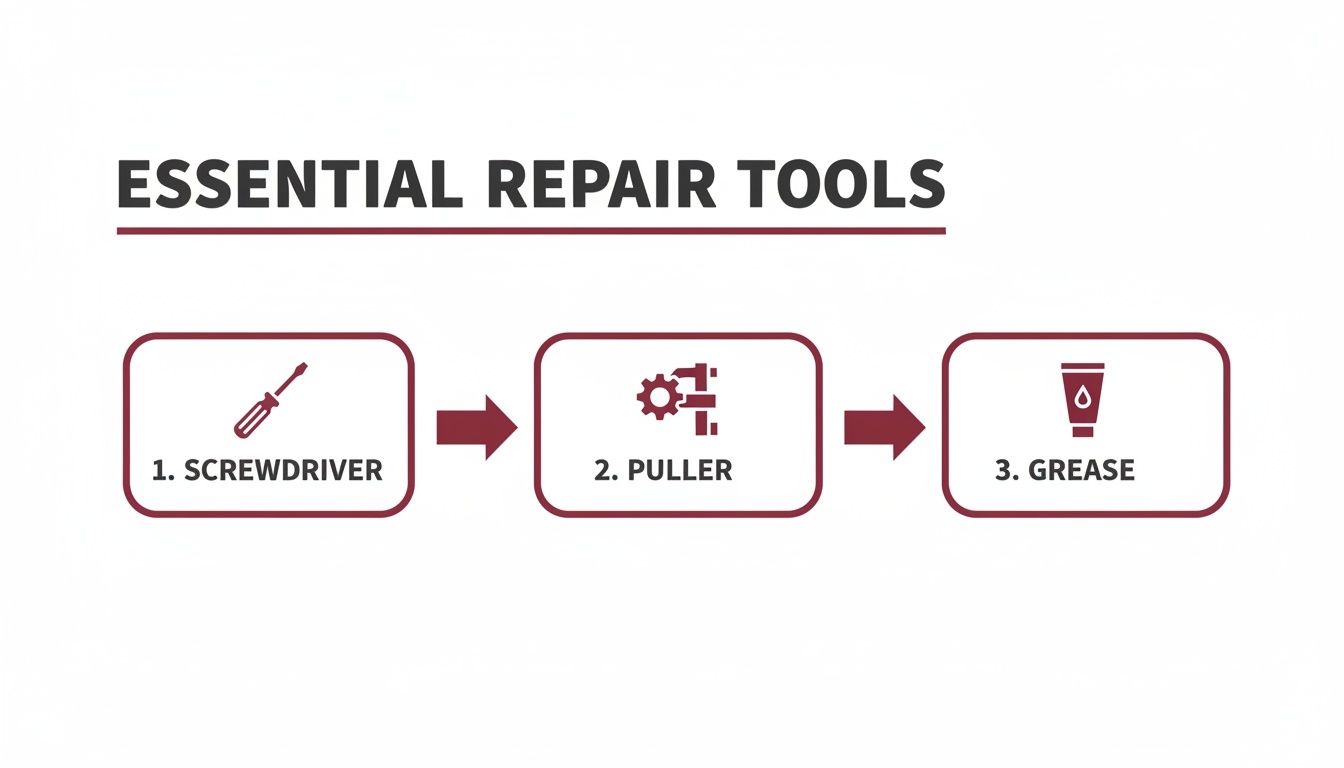
While you need a screwdriver to get started, the puller is what gets the old part out, and the grease is what ensures the new one goes in right and stays sealed.
Installing the New Cartridge
With the old cartridge removed, take a second to clean the inside of the valve body. You'll probably see some crusty white deposits left behind. Use an old rag or a small brush to wipe it clean. A smooth surface is absolutely critical for the new O-rings to create a perfect seal.
Next, grab your new cartridge and a tube of silicone plumber’s grease. Put a light coat of grease on every black rubber O-ring. Don't skip this step. It serves two key purposes:
- It protects the delicate seals from tearing as you slide the cartridge in.
- It helps create a better, longer-lasting watertight seal.
Expert Tip: Before you push the new cartridge in, look for the "H/C" marking on top. This must be facing up. If you install it upside down, your hot and cold water will be reversed. It's a simple mistake, but one you'll notice immediately during your next shower.
Now, carefully slide the greased cartridge into the clean valve body. Push with firm, steady pressure until you feel it seat completely.
Finally, slide that U-shaped retaining clip back into its slot on top of the valve. Give the cartridge stem a little tug to make sure the clip is locked in and the cartridge is secure. You've just tackled the hardest part of the job. All that's left is to put everything back together and check for leaks.
Testing Your Work and Avoiding Common Mistakes
Alright, the new cartridge is in. I know the feeling—you're ready to throw the handle back on and enjoy a drip-free shower. But hold on. Don't rush these final steps. Taking your time here is what turns a quick fix into a permanent repair.
First thing's first: let's turn the water back on. Head to your home's main shut-off valve and open it slowly. Seriously, don't just crank it open. Blasting the pipes with a sudden rush of pressure can create a "water hammer," a jolt that can damage pipe fittings or even the brand-new cartridge you just put in. A few gentle quarter-turns are all you need.
The Leak Test Before You Reassemble
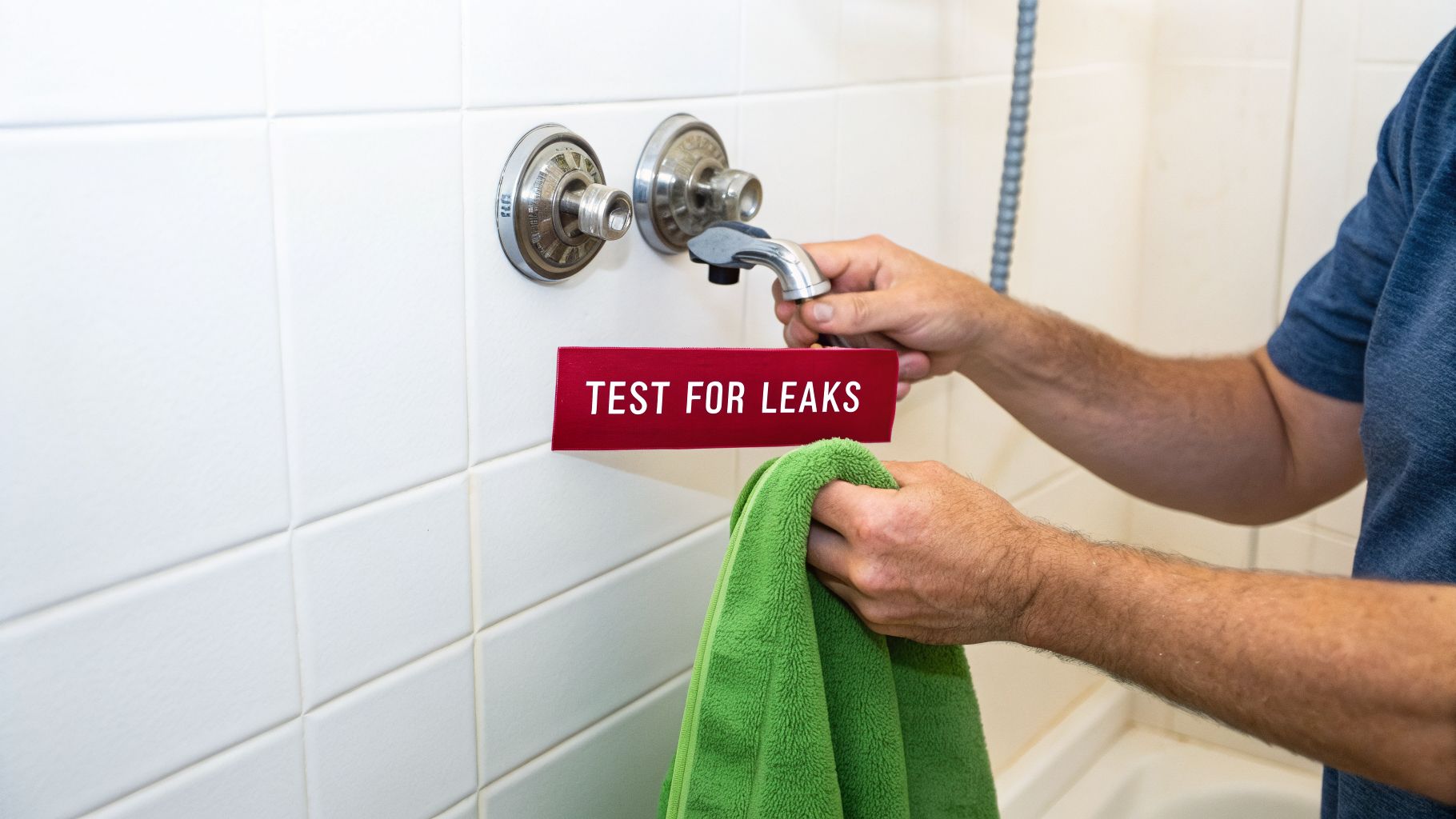
With the water on, walk back to the shower. Before you even think about putting the trim plate and handle back on, just look. Stare at the valve body, right where the new cartridge meets the brass housing. Check all around it and the retaining clip for any hint of moisture. A single drop of water is a bad sign.
Now, grab your pliers and carefully turn the cartridge stem to open the valve. Let the water run for at least 30-60 seconds, then turn it off. Look again, closely, for any drips. This is your one and only chance to catch a problem while it’s easy to fix.
Crucial Checkpoint: If you see a leak, it’s almost always for one of two reasons. Either some gunk was left inside the valve body, preventing a good seal, or one of the cartridge's O-rings got pinched or torn during installation. Don't be tempted to ignore it; a tiny drip today will be a steady leak tomorrow.
If you spot a leak, you know the drill. Shut the water off, pull the cartridge back out, and give both the cartridge O-rings and the inside of the valve body a thorough inspection. It's a frustrating step back, but it's far better than having to open up your wall later to fix water damage.
Setting the Temperature and Avoiding Pitfalls
Once you're 100% sure it's bone dry, you can move on to reassembly. If you have a Posi-Temp valve, there's one quick but vital step: setting the temperature limit stop. This little plastic ring prevents anyone (especially kids) from accidentally turning the handle to full-hot and getting scalded. To set it, simply pull it off the splines, rotate it slightly, and pop it back on. Counter-clockwise allows for hotter water; clockwise makes it cooler.
As you put the escutcheon plate and handle back on, keep these common DIY pitfalls in mind. I've seen these simple mistakes undo an otherwise perfect repair of a Moen shower valve.
- Over-Tightening Screws: Those two screws holding the trim plate just need to be snug. If you crank down on them, you risk cracking the plate. Hand-tight is good enough.
- Forgetting the Grease: We said it before, but it’s the most common mistake. That little packet of silicone grease isn't optional. Installing a cartridge dry is asking for torn O-rings and a leak.
- Installing the Cartridge Upside Down: Look for the "H/C" marking on the cartridge stem—it has to face up. If it's upside down, your hot and cold water will be reversed. It’s an easy thing to miss when you're focused on the repair.
With everything back together, give it one final test. Turn the shower on and cycle it from full cold to full hot. Make sure the pressure feels right and the handle operates smoothly. If you put in a new cartridge but still have issues like poor hot water flow, the problem might be elsewhere in your plumbing. For more on that, you can check out our guide on how to fix low hot water pressure.
If everything checks out, congratulations! You just successfully repaired your shower valve.
When a DIY Fix Becomes a Job for a Pro
There's a ton of satisfaction in fixing something yourself, especially when you save a few bucks in the process. But when it comes to plumbing, there’s a fine line between a successful DIY win and a full-blown disaster. Knowing your limits is the most important tool you have.
Sometimes, the problem isn't the cartridge at all. It's years of hard water and corrosion that have taken their toll on the valve hidden inside your wall. Pushing past these warning signs can turn a simple drip into a catastrophic flood.
Signs You Need to Call a Plumber
The most common roadblock is a cartridge that's completely seized. You've got the cartridge puller tool, you're yanking on it, and it just won't budge. Stop right there. Trying to force it is a recipe for disaster. You can easily snap the cartridge, break the tool off inside the valve, or even crack the brass valve body itself. That's a far more expensive and complicated repair.
Another major red flag appears after you finally get the old cartridge out. Take a flashlight and look inside the brass valve. Do you see significant green or white buildup? Is the metal pitted, flaking, or looking "eaten away"? That corrosion means the valve's integrity is shot. A new cartridge can't form a perfect seal against a damaged surface, so your leak will be back—sometimes worse than before.
The Point of No Return: If you've put in a brand-new Moen cartridge, you're 100% sure the "H/C" marking is at the top, and it still drips or leaks, the problem isn't the cartridge. The issue is deeper in the valve body or the pipes behind it.
These are the moments when a professional from a trusted service like Precision Plus Plumbing earns their keep. They have the experience and tools to handle what's next.
- Forcibly Extracting a Seized Cartridge: Plumbers have heavy-duty pullers and professional tricks to coax out the most stubborn cartridges without damaging the valve.
- Assessing Valve Body Damage: An expert can instantly tell if the valve can be saved or if it needs a full replacement.
- Replacing the Entire Valve Body: This is a major operation. It means cutting open the wall, unsoldering old pipes, and fitting a new valve. This is absolutely not a DIY job.
Trying to tackle these advanced problems yourself is a huge gamble. The cost of repairing a major leak—which can ruin drywall, flooring, subflooring, and even ceilings on the floor below—is exponentially higher than the cost of a service call. If you run into any of these issues while you repair a Moen shower valve, it’s time to call it a day. Let an expert take over and get it done right the first time.
Common Questions We Hear About Moen Shower Repairs
It's natural to have a few questions before you start pulling your shower apart. Even a seemingly simple repair has its "what ifs." We get these calls all the time, so let's clear up a few of the most common concerns we hear from homeowners tackling a Moen valve repair.
How Long Should a Moen Cartridge Last?
The big one we always get asked is: "How long should this cartridge even last?" Under normal conditions, you can expect a Moen shower cartridge to work reliably for 10 to 15 years. But that number can change dramatically depending on your water quality.
If your home has hard water, that lifespan can easily be cut in half. The mineral buildup is tough on the rubber seals and internal components, causing them to fail much sooner. For homes in areas with hard water, we often recommend proactively replacing the cartridge every 5-7 years. It's a small bit of maintenance that can save you from a surprise leak down the road.
Do I Really Have to Shut Off Water to the Whole House?
This question comes up a lot, especially in multi-unit buildings or busy homes. Some Moen valves do have their own shut-offs, known as service stops. You’ll see them as small screw slots right on the valve body. While they're handy, we've seen them fail or leak themselves.
Honestly, the safest bet is always shutting off the main water supply. It’s the only guaranteed way to prevent a geyser in your bathroom if something goes wrong. It might be a minor inconvenience, but it’s far better than an accidental flood.
So, what does a professional charge to replace a Moen cartridge? A typical service call from a licensed plumber will generally cost between $250 and $450. While that might seem steep for a small part, you're paying for expertise, speed, and insurance against a failed DIY attempt.
Think of that professional fee as a fixed-cost insurance policy for a job done right. It's a small price to pay compared to the thousands of dollars in water damage restoration that can result from a cracked valve body or an improper seal.
If you've hit a snag or just decided this job is bigger than you're comfortable with, the expert team at Precision Plus Plumbing is ready to help 24/7. We can solve your shower valve problem quickly and safely. Don't risk the headache of water damage—get professional help by visiting us at https://www.precisionserviceexperts.com.