

Emergency Gas Heater Repair — West Philadelphia
Gas Heater Repair
in West Philadelphia
Multi-Unit Building With No Heat? Victorian Boiler Down? Same-Day Emergency Gas Heater Repair for West Philly's Twins, Conversions, and Rentals.
When a gas heater fails in a West Philadelphia Victorian twin or multi-unit conversion, the problem multiplies — 2, 3, or 4 households go cold at the same time. In a neighborhood where many properties are landlord-owned rentals near University City, tenants expect heat restored fast, and landlords face legal obligations to provide it. Precision Plus Plumbing repairs gas furnaces, boilers, radiator systems, and unit-level heaters across every West Philly neighborhood. We diagnose building-wide heating failures, service individual unit equipment, check gas connections and CO levels on every floor, and restore heat — typically in a single visit. Whether you own the building or rent an apartment, one call gets your heat back.
- 4.9 Star Rating (312+ Reviews)
- Licensed & Insured
- Same-Day Service

Watch How Precision Plus Detects Gas Leaks
Gas Heater Repair in West Philadelphia Homes
If your building has a shared boiler, you’re responsible for all boiler maintenance, repair, and replacement — regardless of which tenant reports the problem. If each unit has its own furnace, you’re still responsible for repair unless the lease explicitly transfers maintenance responsibility to the tenant (rare and often unenforceable for heating).
What to Do When a Tenant Reports No Heat
- Ask how many units are affected (helps diagnose shared vs individual failure)
- Call Precision Plus at (484) 436-4190 — we dispatch same-day for multi-unit no-heat calls
- Coordinate tenant access if we need to enter individual units
- If you're remote, designate a local contact or give us authorization to coordinate directly with tenants
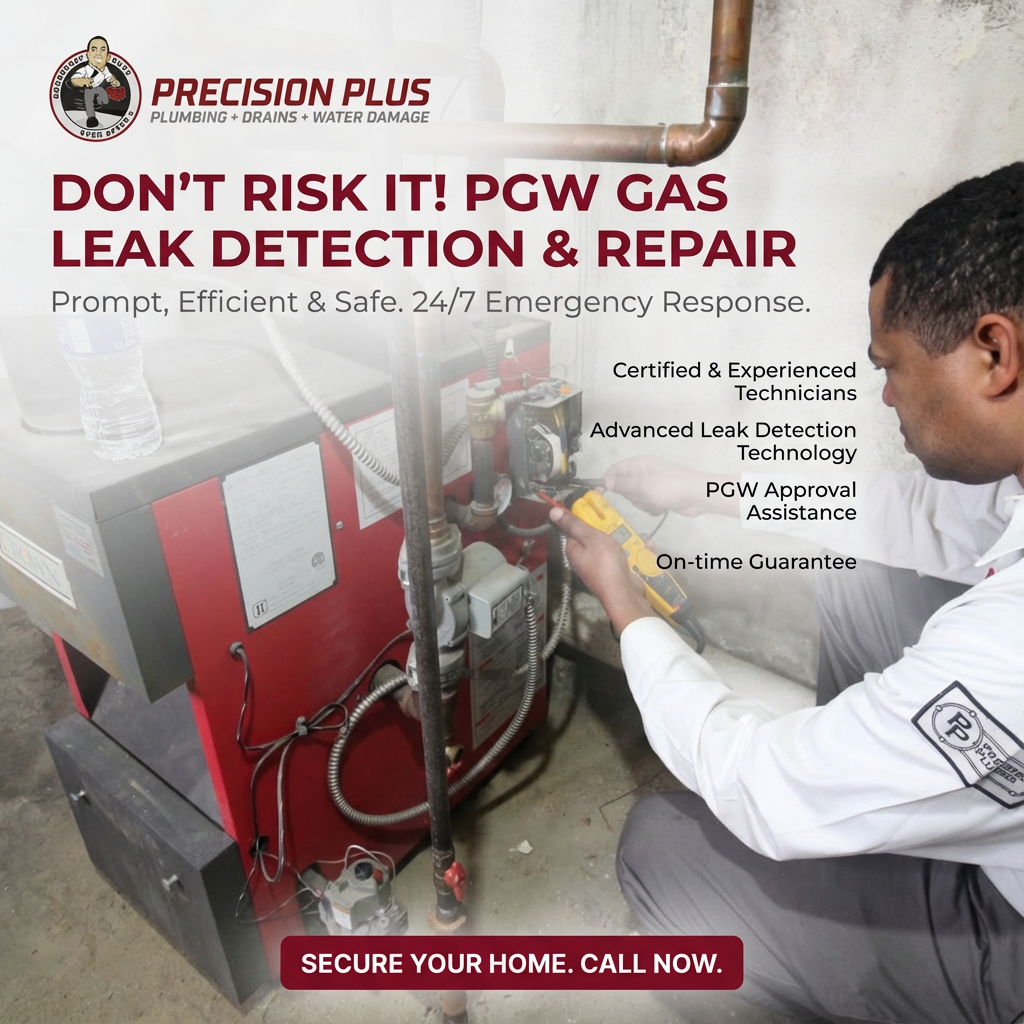
5 Gas Heater Problems We See Most in West Philadelphia
A heater failure in a detached suburban home is uncomfortable. In a West Philly multi-unit, it’s a building-wide emergency with legal implications. Here’s why:
1
Entire Building — No Heat, Shared Boiler Down
The most urgent call we get from West Philly. The shared basement boiler isn’t firing, and every unit is cold. Most common causes: failed thermocouple/ignition system, gas valve failure, seized circulator pump, or low water condition triggering the safety cutoff. We dispatch same-day and carry the most common boiler parts on every truck.
2
Upper Floors Cold, Basement Boiler Running
Classic West Philly Victorian boiler problem. The boiler fires and you can feel heat in the basement — but the second and third floor radiators are cold or barely warm. Usually a failed circulator pump (hot water systems), air-locked radiators, or clogged air vents (steam systems). We diagnose which and repair on the spot — including bleeding radiators floor by floor.
3
Gas Smell Near the Heater — Any Unit
4
CO Alarm Going Off in an Upper-Floor Unit
In a West Philly Victorian, a CO alarm on the second or third floor should never be ignored — it may indicate a problem with the basement boiler or furnace that’s pushing exhaust up through the building via a shared flue or stairwell. The most common causes: cracked heat exchanger, blocked chimney flue, or backdrafting caused by negative pressure (often from bathroom exhaust fans or a kitchen range hood pulling air in a sealed building). We test CO levels on every floor and trace the source.
5
One Unit's Furnace Short-Cycling, Others Fine
In multi-units with individual furnaces per apartment, one unit’s heater fires for 2-3 minutes, shuts off, and repeats. Meanwhile other units are fine. Usually a dirty flame sensor, restricted airflow from a clogged filter, or a failing control board in that unit’s furnace. Less commonly, a gas supply pressure issue at the branch line feeding that specific apartment. Left unaddressed, short-cycling burns out components and drives up the tenant’s gas bill.
Types of Gas Heating Systems in West Philadelphia Homes
West Philly’s housing stock means you’ll find every type of gas heating system — sometimes multiple types in the same building. A Victorian twin may have a 1920s steam boiler on one side and a 1990s forced-air furnace on the other. A multi-unit conversion may have a shared basement boiler feeding radiators on all floors, or individual furnaces in each apartment. Knowing your system type helps you understand the repair.
Shared Gas Boiler with Building-Wide Radiators
MOST COMMON IN: Pre-war Victorian multi-units where one basement boiler feeds cast iron radiators throughout the building
HOW IT WORKS: A single gas boiler (hot water or steam) heats water and circulates it to radiators on every floor via risers and circulator pumps (hot water) or natural steam pressure (steam systems).
COMMON FAILURES: Circulator pump failure (upper floors go cold while boiler runs), expansion tank waterlogged, gas valve failure, ignition/thermocouple issues, sediment buildup, pressuretrol malfunction (steam).
MULTI-UNIT IMPACT: When the shared boiler fails, every unit loses heat simultaneously. This is the most urgent scenario we handle in West Philly.
Individual Unit Furnaces (Post-Conversion)
MOST COMMON IN: Modern multi-unit conversions where each apartment has its own forced-air furnace
HOW IT WORKS: Each unit has a dedicated gas furnace (typically in a closet or utility space), with its own thermostat and ductwork.
COMMON FAILURES: Ignitor failure, blower motor burnout, clogged filter, cracked heat exchanger, thermostat malfunction.
MULTI-UNIT IMPACT: Only one unit is affected — but the gas supply line feeding that unit comes from the shared riser, so a gas supply issue can still affect the building.
Gas Steam Boiler with Radiators
MOST COMMON IN: Older Victorian singles and twins, especially in Spruce Hill and Cedar Park
HOW IT WORKS: Boiler heats water to steam, which rises naturally through pipes to radiators — no circulator pump needed. Each radiator has an air vent that lets trapped air escape as steam fills the radiator.
COMMON FAILURES: Low water cutoff failure (dangerous — can crack the boiler), clogged radiator air vents (radiators won’t heat), sight glass fouled, pressuretrol issues, uneven heat distribution across floors.
NOTE: Steam systems are the most misunderstood heating type. Many HVAC companies don’t know how to service them. Precision Plus has 25+ years of experience with West Philly’s steam systems.
Gas Wall/Space Heaters (Individual Units)
MOST COMMON IN: Smaller converted apartments, efficiency units, supplemental heat in bedrooms
HOW IT WORKS: Self-contained gas burner mounted in wall, vented through exterior wall or shared chimney. No ductwork.
COMMON FAILURES: Thermocouple failure, clogged burner, cracked combustion chamber, blocked vent, improper clearance from combustibles.
SAFETY NOTE: Wall heaters in converted apartments frequently don’t meet current code for clearance and venting. We check and flag these during every repair.
Hybrid Configurations
MOST COMMON IN: Partially renovated Victorian multi-units
HOW IT WORKS: Some West Philly buildings have a shared boiler feeding radiators on floors 1-2 and individual unit furnaces added on floor 3 during a conversion. Or a steam boiler on one side of a twin and a forced-air furnace on the other.
COMMON FAILURES: Gas riser overloaded by equipment from different eras, incompatible thermostats, venting conflicts when multiple appliances share a flue.
OUR APPROACH: We assess the entire building’s heating infrastructure — not just the unit that called — because hybrid systems can mask the real cause of a failure.
Repair or Replace? A Gas Heater Guide for West Philadelphia Property Owners
Repair Makes Sense When
- The system is under 15 years old (furnace) or under 25 years (boiler)
- Single-component failure (ignitor, circulator pump, gas valve, thermocouple)
- Heat exchanger is intact
- The system serves the building adequately when working
Replacement Makes Sense When
- Furnace is 20+ years old or boiler is 30+ years old
- Heat exchanger is cracked (furnace) or boiler vessel is leaking
- Repeated repairs — 3+ in the last two heating seasons
- Energy bills have steadily climbed with no change in usage
- System was undersized during original conversion and has never adequately heated the building
Multi-Unit Replacement Considerations
- Building access: Equipment must fit through narrow basement entries — some boilers require partial disassembly to get through row home doorways
- Pipe and radiator compatibility: A new boiler must match the existing distribution system (hot water vs steam, pipe sizing, radiator capacity)
- Multi-unit impact: Replacement takes 1-3 days depending on complexity — all units are without heat during installation. We can provide temporary electric heaters for occupied units during the swap.
- Venting: If the shared chimney is deteriorated, a new high-efficiency boiler with PVC sidewall venting eliminates the chimney dependency entirely
- Permit requirements: Boiler replacement requires a Philadelphia L&I permit. We handle all permitting.
Our Approach
We never push replacement when a $300 circulator pump swap will solve the problem. And we never band-aid a boiler that's a CO risk or costing the landlord more in emergency repairs than a planned replacement would. You get both options with real numbers for your building.
Gas Heater Repairs in West Philadelphia — Our Work
Real jobs completed by our expert technicians — delivering gas heater repair solutions for West Philadelphia homes.
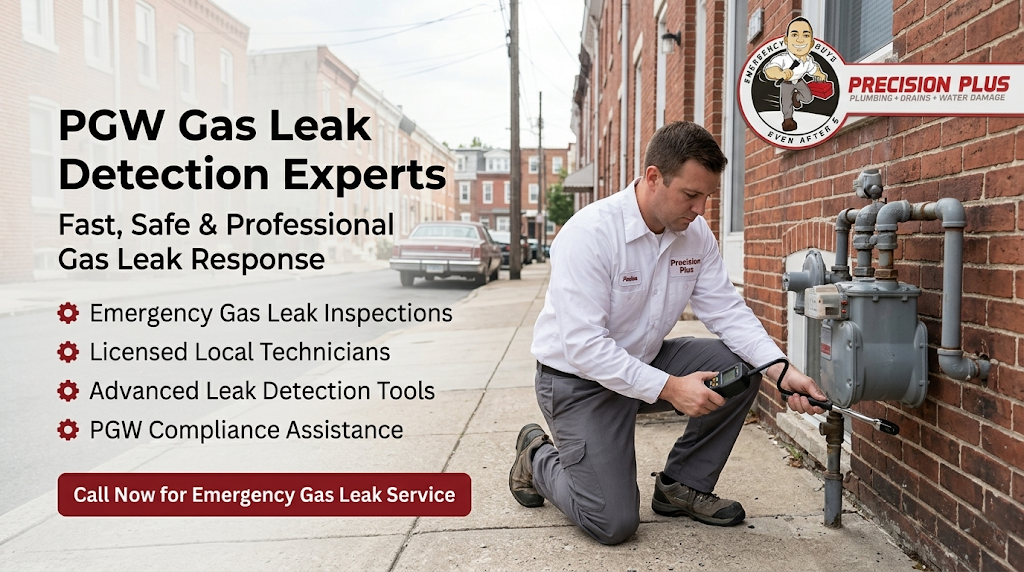
Cedar Park — 3-Unit Shared Boiler, Circulator Failure
No heat in all three units of a Victorian conversion on Baltimore Avenue. Tenants had been calling the landlord for two days. Our inspection found the circulator pump had seized — the boiler was firing but hot water wasn't reaching the radiators on any floor. Replaced with a high-efficiency Taco 007 pump, bled radiators on all three floors, and had building-wide heat restored in under two hours. Landlord received invoice and photos by email the same evening.
University City — CO Alarm in Third-Floor Apartment
Tenant's CO detector alarmed repeatedly near the stairwell on the third floor. The basement shared boiler appeared to be operating normally. Our CO testing found elevated levels in the stairwell and second floor — traced to a partially blocked shared chimney flue. Mortar debris from the deteriorated chimney liner was restricting exhaust flow, causing backdrafting into the building. We shut the boiler down, ventilated the building, and provided the landlord with a repair quote and a recommendation to switch to a sidewall-vented high-efficiency boiler that bypasses the chimney entirely.
Haddington — Individual Unit Furnace, Flame Sensor Failure
One apartment in a 4-unit conversion had no heat while the other three units were fine. The unit's individual gas furnace was short-cycling — firing for 30 seconds and shutting off. Diagnosed a dirty flame sensor that wasn't detecting the burner flame. Cleaned and tested the sensor, ran the furnace through multiple cycles, confirmed proper heat output. 45-minute repair, single visit
Our Gas Heater Repair Process for West Philadelphia Properties
From emergency call to heat restored — adapted to your system type.
1
Emergency Dispatch — Building Priority
Call (484) 436-4190. Multi-unit no-heat calls in West Philly are our highest priority — especially during heating season. Licensed master plumber dispatched same-day, including evenings, weekends, and holidays. We ask upfront: how many units are affected? Is the boiler shared or individual? This helps us dispatch the right technician with the right parts.
2
Building-Wide Safety Inspection
Before touching any heating equipment, we test for gas leaks at supply lines and connections, check CO levels in the basement and every occupied floor, and inspect the flue/chimney venting path. In Victorians with shared chimneys, we verify no exhaust is backdrafting into any unit. Safety clearance before diagnosis.
3
System Identification & Diagnosis
We identify every heating system in the building — shared boiler, individual furnaces, wall heaters, hybrid setups. We test all components on the failed system: ignition, gas valve, thermostat, blower/circulator, heat exchanger, pressure controls. Clear verbal explanation to the owner/landlord and written diagnosis before any work.
4
Upfront Estimate & Landlord Approval
Written estimate with exact cost. For multi-unit buildings, we coordinate directly with the landlord or property manager — including remote owners. Estimate sent by email or phone photo if the landlord isn't on-site. Work starts only after approval.
5
Repair & Building-Wide Verification
We complete the repair, run the heating system through a full cycle, and verify heat output at every radiator or register on every floor. CO levels rechecked throughout the building. For shared boilers, we confirm heat distribution to all units — not just the unit that called.
6
Gas Line Verification & Follow-Up
Every gas heater repair includes a check of the gas supply connection to the equipment. If we find a gas pipe issue — corroded fitting, deteriorated supply line, loose connection — we can repair it on the same visit. If a full system pressure test is needed for PGW compliance, we handle that too.
Wset Philadelphia Homeowners Trust Precision Plus for Gas Heater Repair

 Saxon Dave
Trustindex verifies that the original source of the review is Google.
Great service, very professiona,l on time, cleaned up afterwards, very respectable. I would definitely be calling him for all my needs. Before I go to anybody else for anything, i will call Precision Plus first. Five out of five stars for me Mary WorthyPrecision Plus Plumbing came out the next day and quickly got to work. They showed real care for our children’s well-being and handled everything with professionalism and compassion. Highly recommend!
 Keisha Jackson-SmithDerrick was very efficient and professional. He explained what needed to be done in detail and completed the job in a timely manner. I am very pleased with the result.
 Brian FeasterDerrick from Precision Plumbing, performed mold testing, was quick, professional and efficient!
 Beverly BoldenDerrick was quick assessing my issues problem solved in no time great job thanks so much
 Wayne TuckerQUALITY 5 STARS
 Dave WatsonGreat experience! Quick turnaround on a Saturday. Fixed the issue and was a pleasure to work with.
Gas Heater Repair — West Philadelphia Neighborhoods
We repair gas furnaces, boilers, radiator systems, and wall heaters across every West Philadelphia neighborhood:
University City
Philadelphia, PA
Spruce Hill
Philadelphia, PA
Cedar Park
Philadelphia, PA
Cobbs Creek
Philadelphia, PA
Haddington
Philadelphia, PA
Overbrook
Philadelphia, PA
Walnut Hill
Philadelphia, PA
Angora
Philadelphia, PA
West Philadelphia
Philadelphia, PA
Serving All of West Philadelphia for Gas Heater Emergencies
Precision Plus Plumbing responds to no-heat emergencies across every zip code in Northeast Philadelphia — 19111, 19114, 19115, 19116, 19136, 19152, 19154. Boilers in Tacony, furnaces in Somerton, and every system type in between — we bring the right expertise and the right parts.

Derrick Jackson
Founder & Master Plumber
Since opening our doors in 1999, Precision Plus Plumbing has had one goal in mind: save busy homeowners time and frustration.
When you hire Precision Plus, you’re benefiting from a proven local business that knows your home, is familiar with older plumbing, and will educate you on what caused your problem — while discussing options on how to prevent them from happening again.
“We made the decision to provide clients with a unique experience that busy homeowners would be proud of. Our techs show up on time, do not smell like the sewer, and can resolve most problems on the initial service call.”
What started as a commitment to better service has grown into the area’s most trusted name for emergency plumbing, water damage restoration, and mold services — serving Pennsylvania, Delaware, and New Jersey.
Gas Heater Repair FAQ — West Philadelphia
The whole building has no heat. How fast can you get here?
The most common cause in NE Philly’s post-war furnaces is a failed hot surface ignitor — the element that lights the gas burner. You’ll hear the inducer motor run and a click, but no flame appears. This is a $150–$250 same-visit repair. Less commonly: a failed gas valve, cracked ignitor wiring, or a control board issue. We diagnose on-site before recommending any repair.
I'm a landlord — am I responsible for the heating repair?
In Tacony, Mayfair, and Holmesburg row homes with boiler/radiator systems, this usually means a failed circulator pump (hot water isn’t being pushed to upper floors), air-locked radiators (trapped air blocks water flow), or a waterlogged expansion tank causing short-cycling. We diagnose and repair same-visit — including bleeding every radiator in the house.
My building has radiators, not vents. Can you fix the boiler?
Very likely — especially in NE Philly’s older furnaces and boilers. Common causes: cracked heat exchanger (furnace), blocked chimney flue, or backdrafting from negative pressure. Leave the home immediately and do not restart the heater. Call us — we test CO levels throughout the home, inspect the heater AND the venting path, and identify the source before clearing the system for use.
My CO detector went off on an upper floor. Is it the heater?
Common repairs: ignitor replacement $150–$250, flame sensor $150–$250, circulator pump $300–$500, gas valve $300–$500, expansion tank $250–$400, control board $400–$700. Diagnostic fee: $150 (applied to repair if you proceed). Full furnace replacement: $3,500–$7,000. Full boiler replacement: $5,000–$10,000+. Written estimate before any work.
How much does gas heater repair cost in West Philly?
For most boilers, yes — circulator pumps, gas valves, thermocouples, expansion tanks, and controls are still available even for older units. Some very old boiler-specific components may require sourcing from specialty suppliers, which we handle. If a critical part is truly unavailable, we’ll explain the replacement options and help you choose a new boiler compatible with your existing radiator system.
Can you coordinate the repair if I'm not in Philadelphia?
My building has both a boiler AND individual furnaces. Can you service both?
All of Northeast Philadelphia — Somerton, Bustleton, Rhawnhurst, Fox Chase, Mayfair, Tacony, Holmesburg, Torresdale, Pennypack, Modena Park, Morrell Park, Parkwood, and all surrounding neighborhoods. Zip codes 19111, 19114, 19115, 19116, 19136, 19152, 19154.
Should I replace my building's old boiler or keep repairing it?
It depends on what failed. If the heat exchanger is intact and the failure is a single component (ignitor, blower motor, gas valve), repair usually makes sense — even on a 30-year-old unit. If the heat exchanger is cracked, parts are no longer available, or you’ve had 3+ repairs in the last two seasons, planned replacement is the better investment. We always present both options with costs.
More Gas Services in West Philadelphia
Gas heater repair is just one of the gas services we provide across West Philadelphia. Explore our other specialized services below.
PGW Gas Leak Repair
PGW shut off your gas? We repair, test, and coordinate restoration for the entire building.
Pressure Test Gas Line
Building-wide pressure testing for PGW restoration, permits, and new installations.
Gas Pipe Repair
Corroded Victorian-era gas piping? Licensed repair and replacement for twins and multi-units.
Gas Water Heater Repair
No hot water? Gas water heater diagnosis, repair, and replacement.
Electric Water Heater Repair
Element failure, thermostat problems, or gas-to-electric conversion.
No Heat in Your West Philly Building? Don't Let Your Tenants Spend Another Night in the Cold.
Same-day emergency gas heater repair. Furnaces, boilers, multi-unit systems. Licensed since 1999.