
It's a familiar story for homeowners everywhere. A sink that takes forever to drain. A shower that leaves you standing in ankle-deep water. When a drain slows to a crawl in your Wilmington, DE or Cherry Hill, NJ home, your first thought might be to grab a bottle of chemical drain cleaner. But hold on—there's a much better way.
As a plumber, I can tell you those harsh chemicals often do more harm than good, eating away at your pipes while only offering a temporary fix. The real pro tool for the job, and one you can easily master yourself, is a drain snake.
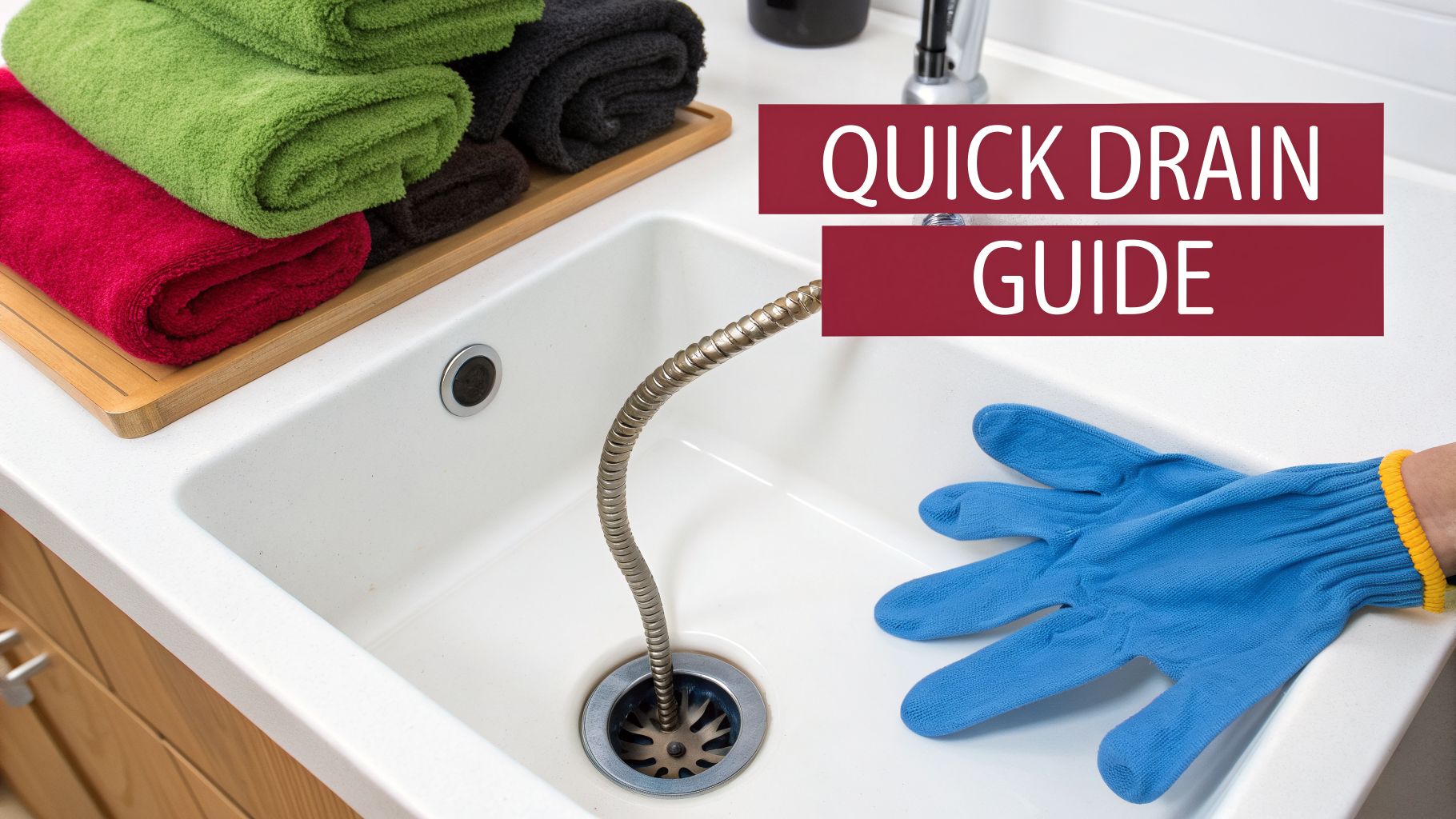
Also known as a plumbing auger, a drain snake is a simple mechanical tool that physically breaks up or pulls out whatever is blocking your pipe. It's safe for your plumbing and, once you get the hang of it, can save you a ton of money and hassle.
The Real Cost of Ignoring a Clog
What most people don't realize is how quickly the costs of a simple clog can add up. It's a huge issue, affecting countless households in our service areas every single year and racking up significant plumbing bills.
Here in our local communities, from Chester County, PA to New Castle County, DE, we see it firsthand. Clogged drains make up about 40% of all our service calls. The good news? You can avoid most of those costs. Learning to use a drain snake can save you up to 70% on what you'd otherwise spend on a professional visit, which can run anywhere from $100 to over $500. When a basic manual snake costs less than $40, the savings are obvious.
Choosing the Right Drain Snake for Your Clog
Not all drain snakes are created equal, and using the right one for the job is half the battle. This table breaks down the common types you'll find and where they work best for the kinds of clogs we see around Delaware County and Montgomery County.
| Snake Type | Best For | Common Clog Type | Local Example |
|---|---|---|---|
| Small Drum Auger | Sinks, Showers, Tubs | Hair, soap scum, grease | Perfect for a slow bathroom sink in a West Chester, PA home. |
| Toilet Auger | Toilets Only | Clogs in the toilet's built-in trap | The go-to tool when you need to fix a clogged toilet in a Doylestown, PA home without scratching the bowl. |
| Electric/Powered Auger | Main Lines, Stubborn Clogs | Heavy buildup, minor tree root intrusion | Best left to pros, but used for tough main sewer line blockages under a property in Bucks County, PA. |
Picking the right auger, like a small drum for a sink or a dedicated toilet auger for a commode, ensures you have enough power to clear the clog without damaging the fixture.
By investing in a simple tool and learning the right way to use it, you’re not just clearing a drain—you’re taking control of your home maintenance.
A drain snake is more than just a tool; it's your first line of defense against inconvenient and costly plumbing emergencies. Mastering its use gives you control over your home's maintenance.
Now, let's get into the nitty-gritty of how to prepare your workspace and use these tools like a pro.
Setting Up Your Workspace for a Clean Job
I can’t tell you how many homeowners I’ve seen turn a simple clogged drain into a giant, grimy mess. The biggest mistake? Diving in without any prep work. Before you even touch that drain snake, taking five minutes to set up your workspace is the most crucial part of the job.
Drain snaking is a wet and dirty business by nature. You’re about to pull up all the gunk that’s been festering in your pipes. So, first thing’s first: grab a thick stack of old towels or rags. Lay them down on the floor around the drain and, if you're under a sink, line the inside of the cabinet, too. This simple step will save your floors and cabinets from nasty water damage.
Gear Up for Safety
With your surfaces protected, it's time to protect yourself. Trust me, you do not want whatever is in that drain getting on your skin or in your eyes. It's usually a nasty brew of bacteria, soap scum, hair, and sometimes, harsh chemical cleaners from a previous failed attempt.
At a minimum, you need two things:
- Sturdy, waterproof gloves. This is non-negotiable.
- Safety glasses or goggles. A small, unexpected splash of that drain water can lead to a serious eye infection or even a chemical burn.
These items are your first line of defense against the hazards you can't see.
Should You Remove the P-Trap?
Now for a key decision, especially for sink clogs in a kitchen or bathroom. While you can feed the snake down through the sink drain itself, you often get much better results by removing the P-trap—that U-shaped pipe right under the sink.
Pro Tip: Going through the drain opening means navigating tight bends right away, which can be tough. Removing the P-trap gives you a straight, clear shot into the main drain line inside the wall. It also lets you clean out the trap itself, which is where many clogs start.
To do this, place a bucket right underneath the P-trap to catch the water that’s about to spill out. Using channel-lock pliers or a pipe wrench, carefully loosen the two large nuts that connect the trap. Once it's off, you can clear any debris from the trap and get much better access for snaking the clog downstream. It’s an extra step that makes the whole job a lot easier.
A Practical Guide to Snaking Sinks and Showers
Alright, with your workspace prepped and safe, it’s time to get down to business and clear that clog. Knowing how to properly use a drain snake in a sink or shower is the skill that really pays off. While the general idea is the same, tackling a kitchen sink in Bucks County, PA is a bit different from a shower drain in Delaware County, PA simply because of their plumbing setups and the kind of gunk you'll find.
Before you even think about feeding that cable into the pipe, a few simple prep steps are crucial. This image lays it out perfectly.
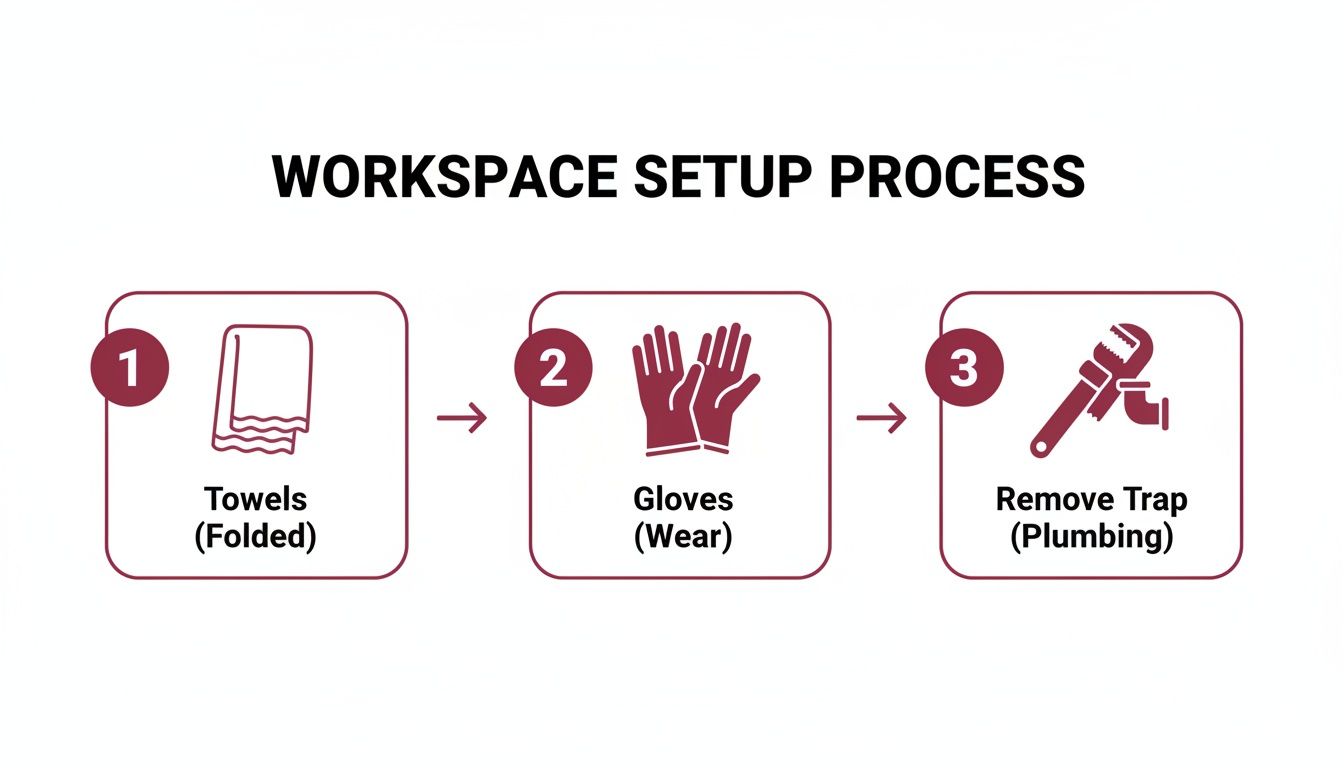
It really comes down to this: protect your space, protect yourself, and get direct access to the pipe. A clean job is a successful job.
The Right Way to Feed the Cable
Start by inserting the auger’s tip into the drain opening—or directly into the pipe if you’ve taken off the P-trap. Feed the cable in by hand, pushing gently until you feel it stop. That first bit of resistance you feel is probably the clog itself, or just a bend in the pipe.
Whatever you do, don't force it. Instead, pull the cable back a few inches. Now, start turning the snake’s handle clockwise while applying just a little forward pressure. It's this turning motion that helps the snake navigate the pipe's curves and bore into the blockage.
Patience is your best friend here. The tip of the snake works like a corkscrew. You want to gently drill into the clog, not just ram it forward. Being too aggressive can kink the cable or, worse, crack an old pipe—a problem I've seen more than once in older New Jersey homes, like those in towns like Princeton or Haddonfield.
Tackling Kitchen Sink Grease and Grime
Kitchen sinks, especially around Montgomery County, PA, are famous for their nasty grease buildups. This stuff creates a thick, sticky blockage that can be a real bear to get through.
- Feed and Rotate: Once you feel the snake make contact with that greasy mess, keep turning the handle at a steady pace. You’ll feel the tension in the cable change as the auger head starts to burrow in.
- Break It Up: After several solid rotations, try pulling the snake back an inch or two and then pushing it forward again. This action helps to break the clog apart rather than just poking a small hole through its center.
- Retract and Test: Slowly pull the snake all the way out, wiping the gunk off the cable as you go. Once it's clear, run hot water for a few minutes to flush out any leftover debris.
Kitchen sinks present unique challenges compared to bathroom drains. If you want to learn more about how to fix your kitchen sink clog, this guide is an excellent, in-depth resource.
Clearing Stubborn Shower Drain Hair
When it comes to shower and tub drains, the villain is almost always a combination of hair and soap scum. It forms a fibrous, net-like obstruction that a drain snake is designed to grab and pull out. When you're snaking a shower in a place like Chester County, PA, the goal isn't just to break the clog up—it's to retrieve it.
As you rotate the snake into the hairball, you'll feel it grab on, and the tension will ramp up quickly. The moment you feel that solid connection, stop pushing. Instead, keep rotating slowly as you begin to pull the snake back out of the drain. This motion wraps the hair tightly around the auger head, letting you pull the entire clog out in one go. You’ll be shocked at what comes out!
Considering drain clogs jump 40% in the fall from things like holiday grease buildup, knowing how to use a snake has helped 65% of homeowners in the greater Philadelphia and Wilmington metro areas avoid an emergency plumbing bill. A single investment in a good electric snake can easily pay for itself after just one or two uses, and it keeps you from reaching for those harsh, pipe-damaging chemicals.
Troubleshooting Common Drain Snaking Mistakes
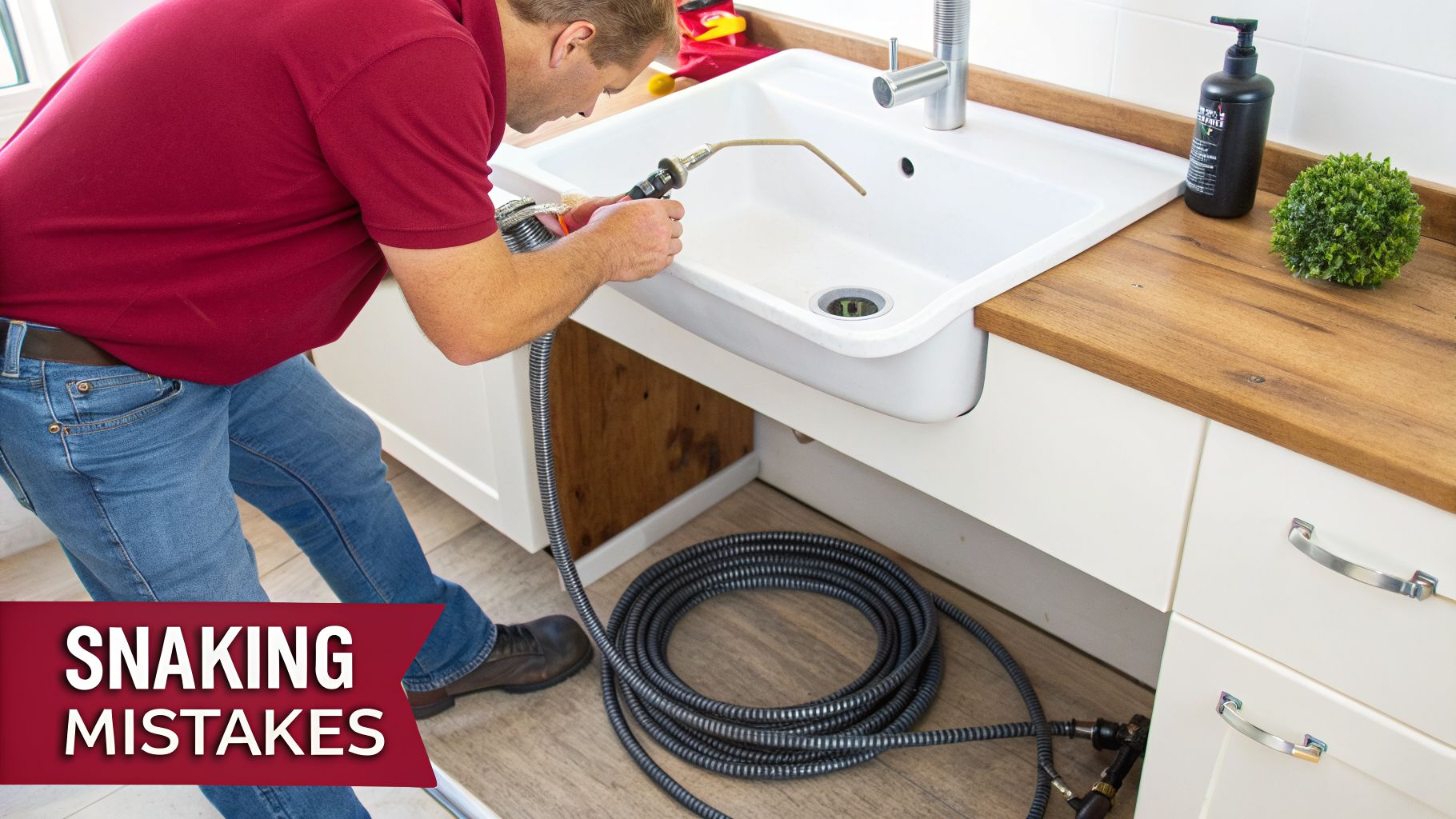
So, you’re feeding the cable into the drain, and then it happens—the snake stops dead in its tracks. It's a moment every DIYer faces, and what you do next is critical. I can tell you from years of experience, the absolute worst thing you can do is try to force it.
That single mistake is the fastest way to put a permanent kink in your auger cable, wrecking the tool. Even worse, especially in the older homes we see all over Chester and Delaware Counties, PA, that brute force can crack an old, brittle pipe. Just like that, a simple clogged drain in your Media or Phoenixville home turns into a major leak behind a wall.
The Snake Is Stuck or Won’t Bend
When your snake gets stuck, it’s almost always for one of two reasons: you’ve either hit a sharp turn in the pipe, like a P-trap or an elbow fitting, or you’ve finally reached the clog itself. The trick is to feel the difference and use a little finesse instead of muscle.
Don't Push, Nudge: First, pull the cable back a few inches to release the tension. Then, as you slowly crank the handle, gently nudge the snake forward. This little back-and-forth motion is often all it takes to help the head navigate around a tight corner.
Try Reversing: If you're still stuck, try cranking the handle in the opposite direction for a few turns. This can sometimes reposition the auger head just enough to find a better angle past the hang-up.
Learn to Feel the Pipe: Pay close attention to what the cable is telling you. A hard, solid thud usually means you've hit a fitting. If the feedback feels more springy or spongy, you've likely hit the actual blockage. This is the feel you're looking for.
The number one rule is to be patient. Let the spinning auger do the work. Jamming it forward is how you get into real trouble and end up with costly pipe damage.
The Clog Won't Clear or the Drain Is Still Slow
This is another frustrating scenario. You work the snake, pull it out, run the water, and… it’s still draining like molasses. Or maybe it drains for a second and then backs up again. Don't get discouraged; this tells you a lot about what’s really going on.
If the snake comes out perfectly clean, the clog is probably located much farther down the pipe than your tool can reach. A typical household snake is 25 feet long, but a mainline blockage could easily be 40 or 50 feet away.
It's also very common to just poke a small hole through a bigger, softer clog (like grease). Water gets through the opening for a moment, but the surrounding gunk quickly collapses back in. When you see these signs, it usually points to a more significant issue. We break down many of the underlying causes in our guide on what causes slow drains in your home.
Knowing how to use a drain snake is a great skill, but knowing when to stop is even more important. Some studies on common DIY drain snaking pitfalls online have found that improper snaking leads to pipe damage in as many as 25% of DIY jobs, with an average repair bill hitting $1,200. In fact, at Precision Plus Plumbing, we find that about 35% of our drain calls across Montgomery County, PA, and New Jersey start as a well-intentioned DIY project. Recognizing the limits of a simple snake can save you a massive headache and a lot of money.
Knowing When Your Clog Needs a Professional Plumber
Learning how to handle a minor clog with a drain snake is a great skill for any homeowner. But, from my experience, knowing when to put the snake away is even more important. We’ve seen it countless times: a homeowner in Newark, DE or Norristown, PA pushes a DIY fix a little too far, and a simple clog morphs into a full-blown plumbing emergency.
Recognizing the difference between a small problem and a serious one can save you a world of mess, stress, and expense.
Your home’s plumbing is like a tree. All the smaller drain lines from your sinks and showers are the branches, and they all feed into one large trunk—the main sewer line. A clog from soap scum and hair in a single bathroom sink in New Castle County, DE, is usually manageable. But when the signs point to a problem deeper down in the main line, a standard 25-foot snake from the hardware store just isn't going to reach it.
Red Flags That Point to a Main Line Problem
If you've snaked a drain but the problem won't quit, or if you're noticing some odd plumbing behavior around the house, it's time to stop. These are the classic signs that you're dealing with a main line blockage, which requires a whole different level of tools and expertise.
Keep an eye (and an ear) out for these tell-tale warnings:
- Recurring Clogs: You clear a drain, and it works fine… for a few days. If that clog keeps coming back, it means your snake is probably just poking a small hole in a much larger, denser obstruction.
- Multiple Drains Backing Up: This is the big one. When flushing a toilet makes water bubble up in the shower drain in your Trenton, NJ home, or running the washing machine causes the kitchen sink to back up in your Coatesville, PA house, you’ve got a textbook main line clog. The wastewater has nowhere to go, so it’s coming up through the lowest point it can find.
- Strange Gurgling Noises: Hearing random gurgles from drains or toilets, especially when nothing is running? That's often the sound of trapped air being displaced by wastewater trying to slowly force its way through a partially blocked main line.
If you spot any of these signs, stop what you're doing. Forcing more water or repeatedly jamming a small snake down the drain can cause a complete sewage backup inside your home. That’s a messy, unsanitary, and costly disaster you want to avoid at all costs.
When Professional Equipment Is the Only Answer
Whether it's stubborn blockages in Bucks County, PA, or old, fragile pipes in Delaware County, PA, some jobs are just too big for DIY tools. Major sewer line problems, like invasive tree roots that have crushed a pipe or decades of accumulated grease, demand powerful, specialized equipment.
To solve these tough clogs, we bring in the heavy artillery. First, we use a video camera inspection by feeding a waterproof, high-resolution camera down the line. This lets us see exactly what we're dealing with—no guesswork.
Once we’ve diagnosed the problem, we use tools like high-powered augers that can chew through dense tree roots or hydro-jetters that use high-pressure water to scour the pipe walls clean, restoring full flow.
Trying to clear a main line clog with a small drain snake is like trying to chop down an oak tree with a pocket knife. You have the right idea, but the wrong tool for the job. Recognizing when it’s time to call in an expert is the smartest move a homeowner can make. If you're curious about the potential investment, our guide can walk you through what drain cleaning services typically cost.
Frequently Asked Questions About Drain Snakes
Even after you've read the manual, tackling a clog for the first time can bring up a few questions. We get it. Over the years helping folks from New Castle County, DE, all the way to Bucks County, PA, we've heard just about everything. Here are the answers to the questions that come up most often.
Can I Use a Standard Drain Snake on a Toilet?
This is a big one we get asked all the time, and the answer is a hard no. A standard drain snake has an exposed metal tip that will absolutely scratch the porcelain inside your toilet bowl, and once that happens, the damage is permanent.
For toilets, you need a special tool called a toilet auger (or closet auger). It’s designed specifically for the job, with a curved guard and a protective rubber sleeve that guides the cable through the toilet's trap without scraping a thing. Using a sink snake on a toilet is one of the most common—and completely avoidable—DIY mistakes we see across Delaware and Montgomery Counties.
How Do I Clean My Drain Snake After Use?
Cleaning your snake right away is a step you can't skip. It's not just about hygiene; it’s about making sure your tool doesn't rust and fall apart. You definitely don't want all that gunk from your pipes sitting around.
Here’s the simple process we follow after a job:
- Wipe as You Go: As you pull the snake out of the drain, use a thick wad of paper towels to wipe the big, nasty chunks of debris off the cable. (Keep your gloves on for this part!)
- Wash It Down: With the snake fully retracted, grab a rag and a bucket of hot, soapy water. Give the entire cable a thorough wipe-down to get rid of all that greasy, corrosive residue.
- Let It Dry: Before coiling it back up, let the snake air dry completely. This is the most important step for preventing rust from eating away at the cable.
What's the Difference Between a Manual and an Electric Snake?
Think of it this way: a manual drain snake, the kind you power with a hand crank, is your go-to tool for everyday clogs. It has more than enough muscle for the hair and soap scum that typically backs up a sink or tub, and it's a great first tool for any homeowner in New Jersey or Chester County, PA.
An electric snake, on the other hand, brings in the heavy machinery. It uses a motor to rotate the cable with serious force, giving it the power to chew through tougher blockages like dense grease or tree roots. While impressive, it’s usually overkill for what most people face inside their homes.
My Drain Is Still Slow After Snaking. What Now?
If you’ve run the snake through and the drain is still slow, it usually points to one of three things. You might have just poked a small hole in a much bigger clog, the blockage could be farther down the pipe than your snake can reach, or you may have inadvertently pushed the clog even deeper. You can try snaking it again, but if that doesn't fix it, that’s a clear sign you need a professional. We can often use a camera to see exactly what’s going on in there. For tips on keeping pipes clear in the first place, check out our guide on how to prevent drain clogs.
When your best DIY efforts just aren't enough, don't let a stubborn clog disrupt your home. For fast, reliable drain cleaning and emergency plumbing, you can trust the experts at Precision Plus Plumbing. We're here 24/7 to help homeowners across New Castle County DE, New Jersey, Bucks County PA, Montgomery County PA, Delaware County PA, and Chester County PA. Learn more and schedule your service today.