

Certified Gas Line Testing — Southwest Philadelphia
Gas Line Pressure
Testing in Southwest Philadelphia
PGW Won't Restore Your Gas Until the System Passes a Pressure Test. We Perform, Document, and Submit — Same Day.
- 4.9 Star Rating (312+ Reviews)
- Licensed & Insured
- Same-Day Service

Watch How Precision Plus Detects Gas Leaks
What Is Gas Line Pressure Testing — and Why Does PGW Require It?
Gas line pressure testing — also called an air pressure test — verifies whether your entire gas piping system is airtight. A licensed plumber pressurizes the gas lines with air (not gas), then monitors a calibrated pressure gauge for a sustained period. If pressure holds steady with zero drop, the system passes. Any drop — even a fraction of a PSI — means a leak exists somewhere, and the system fails.
PGW requires a passing pressure test before restoring gas service in any of these situations:
- After a gas leak repair — The most common trigger in Southwest Philadelphia. PGW needs proof that the repair resolved the original leak and no additional leaks exist. In SW Philly's moisture-damaged systems, secondary leaks discovered during pressure testing are more common than in drier neighborhoods.
- After a PGW shutoff — Whether PGW shut off gas for a confirmed leak, a failed routine inspection, or a meter replacement, a passing test is mandatory before restoration.
- After new gas appliance installation — Installing a gas furnace, water heater, range, or dryer requires verifying all new connections are leak-free.
- During real estate transactions — Kingsessing's active revitalization market and Eastwick's turnover activity make pre-closing pressure tests increasingly common. Buyers and lenders want documented proof that the gas system is safe before closing — especially in properties with known flood history.
- After gas line modifications or renovations — Running new gas piping, relocating lines during basement waterproofing, or adding connections for new appliances all trigger a pressure test requirement.
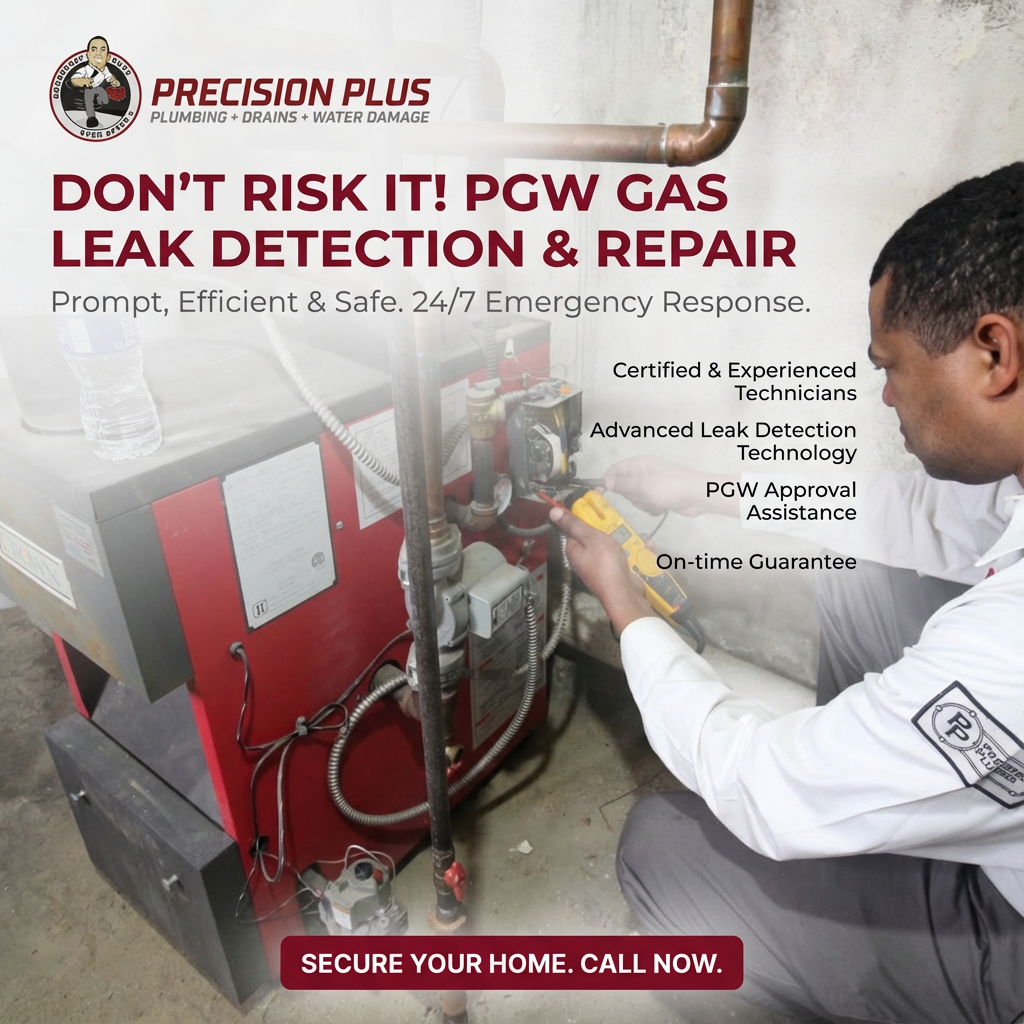
How We Perform Gas Line Pressure Testing in Southwest Philadelphia
System Preparation
All gas appliances are disconnected or isolated. The gas meter is confirmed off. We verify that all valves, connections, and test ports are accessible. In SW Philly homes with moisture-damaged basements, we inspect visible piping for obvious corrosion before pressurizing — because testing a system with visibly compromised piping wastes time. If we see corroded sections that will clearly fail, we recommend repairing those first.
Pressurization
We connect a calibrated air pump and pressurize to the level specified by PGW (typically 3–5 PSI for residential systems). The system is brought to target pressure and the pump is disconnected.
Monitoring Period
The calibrated gauge is monitored for 15–30 minutes, depending on PGW requirements and system size. We observe for any pressure drop. In SW Philly homes with extensive piping networks (older twins with multiple gas appliances, multi-unit conversions), the monitoring period may be extended to ensure accuracy across the larger air volume.
Pass or Fail Determination
If the system passes (zero pressure drop): We document the results and prepare PGW submission. If the system fails (any pressure drop): We use electronic gas detection equipment to locate the source. In Southwest Philadelphia, a failed pressure test after a single-point repair frequently reveals secondary corrosion elsewhere in the system — especially in basements with recurring moisture exposure. We repair the additional leak(s) and retest. We do not submit a failing result to PGW.
PGW Documentation and Submission
We submit passing results and all documentation directly to PGW. We coordinate your meter reconnection — typically within 24–48 hours, same-day in many cases.
Why Pressure Testing in Southwest Philadelphia Often Reveals More Than One Problem
In drier Philadelphia neighborhoods, a pressure test after a single gas leak repair usually passes on the first attempt — the repaired fitting was the only issue, and the rest of the system is sound. In Southwest Philadelphia, the conditions are different.
Moisture-Driven Multi-Point Corrosion
SW Philly basements experience recurring moisture exposure from the area's low elevation, high water table, and proximity to Cobbs Creek and the Schuylkill. This moisture doesn't corrode one fitting and leave the rest untouched — it attacks every contact point simultaneously. When we repair the fitting that triggered the PGW shutoff and then pressurize the system, the test frequently reveals a second or third leak at nearby fittings that were corroding at the same rate. This is not a sign that the repair was incomplete — it's a sign that the corrosion environment affects the entire system, and the pressure test is catching problems that hadn't yet reached the threshold of a detectable gas odor.
Underground Lateral Damage in Floodplain Soil
Eastwick and lower Penrose sit on reclaimed floodplain where soil saturation and settlement stress underground gas laterals year-round. A pressure test that includes the lateral line (as PGW may require after certain shutoff events) can reveal lateral joint separation that wasn't part of the original leak diagnosis. Lateral repairs require excavation — a different scope than interior piping work — and we provide a separate estimate when lateral damage is discovered during testing.
Deferred Maintenance in Investment Properties
Kingsessing and Paschall have a high concentration of rental and investment properties where gas piping maintenance has been deferred across multiple ownership changes. When PGW shuts off gas and a pressure test is performed — often for the first time in decades — the test becomes a comprehensive audit of the entire system. Failed tests in these properties often reveal multiple code violations in addition to the active leak: missing shutoff valves, unapproved connectors, and piping modifications made without permits or inspections. We address everything in one visit when possible.
Wet Mortar Affecting Test Accuracy in Twins
In Kingsessing and Elmwood twins with moisture-damaged party walls, gas can migrate slowly through wet mortar joints into the neighbor's side. During a pressure test on one unit, this migration can create a slow pressure drop that mimics an internal leak but actually represents gas escaping through the shared wall. Our technicians are experienced with this phenomenon and can differentiate between an internal piping leak and party wall gas migration — preventing unnecessary repairs on piping that's actually sound.
Our Work in Action Across Southwest Philadelphia
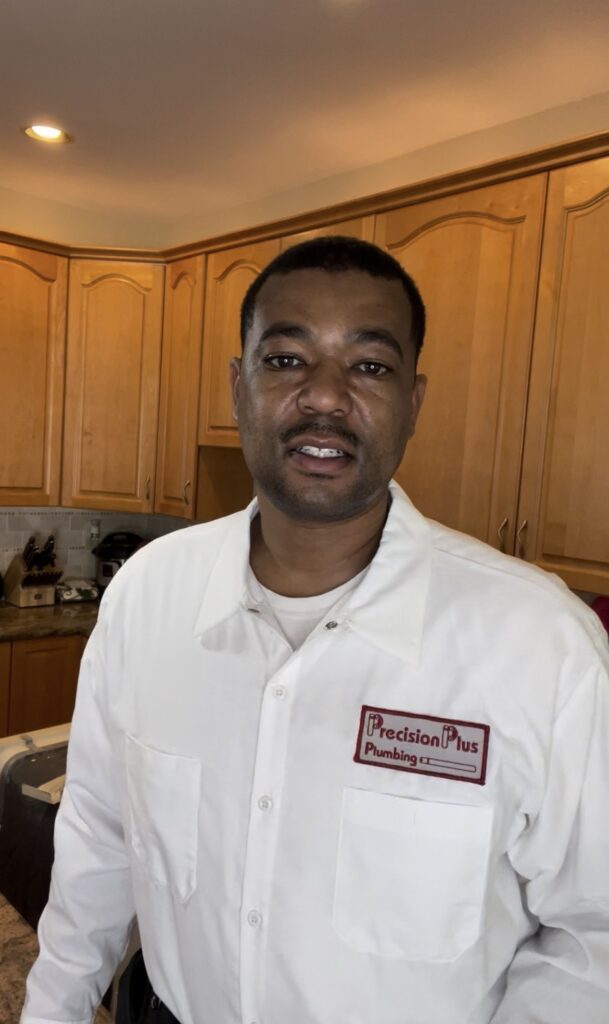
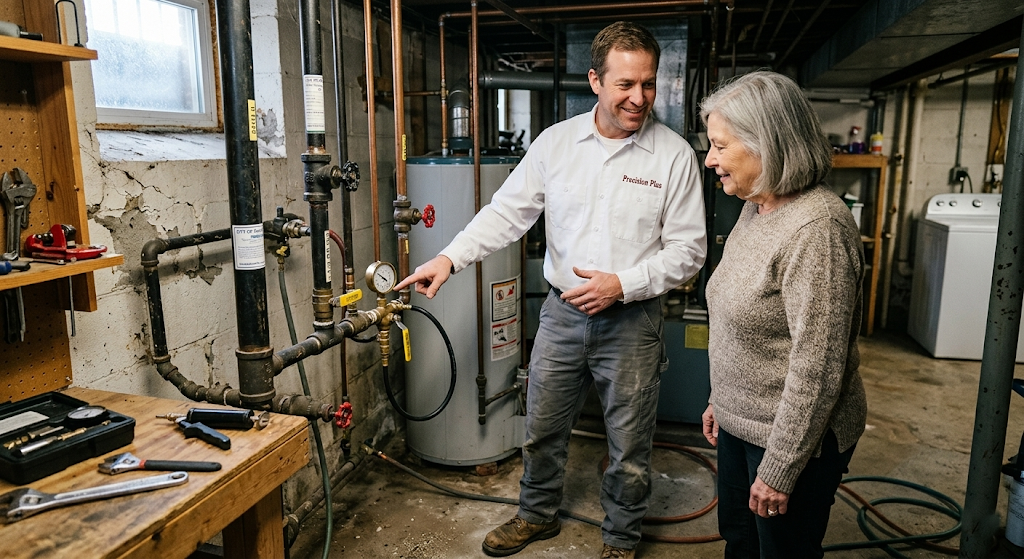
Our Gas Line Pressure Testing Process for Southwest Philadelphia
From your call to PGW gas restoration — every step handled.
1
Schedule or Emergency Dispatch
Call (484) 436-4190. PGW shutoff emergencies dispatched same-day. Scheduled tests (real estate, renovation, rental certification) accommodated at your convenience.
2
System Inspection and Preparation
Full gas piping inspection. In SW Philly, we visually assess for moisture-driven corrosion before pressurizing — and recommend pre-test repairs on obviously compromised sections to avoid wasting time on a guaranteed failure.
3
Pressurize and Monitor
Pressurize to PGW specifications. Monitor with calibrated gauge. Zero drop = pass. Any drop = locate and repair, then retest.
4
Documentation
All results documented: starting and ending pressure, duration, gauge calibration, date/time, plumber's license number.
5
PGW Submission and Coordination
Results submitted directly to PGW. Meter reconnection coordinated — typically 24–48 hours, same-day in many cases.
6
Code Corrections
All repairs to current Philadelphia code. In moisture-affected basements, we prioritize materials and connection methods that resist future corrosion.
Common Situations Requiring Pressure Testing in Southwest Philadelphia
After PGW Shuts Off Your Gas
The most common trigger. For full details on the PGW shutoff and repair process, see our Southwest Philadelphia PGW gas leak repair page.
After Gas Leak Repair
Every repair must be verified. In SW Philly, we budget for the possibility that the pressure test will reveal secondary corrosion — so homeowners aren't surprised by additional repair needs.
Real Estate Transactions
Kingsessing's revitalization and Eastwick's ongoing development make pre-closing pressure tests increasingly common. Properties with known flood history receive extra scrutiny from inspectors and lenders.
Rental Property Certification
SW Philly's rental market — particularly multi-unit conversions in Kingsessing and Paschall — requires gas system documentation for licensing and insurance.
Basement Waterproofing Projects
When a SW Philly homeowner waterproofs their basement (a common improvement given the flood exposure), the work often disturbs or relocates gas piping. Any modification to gas piping triggers a pressure test before gas can be restored.
New Appliance Installation
Installing a gas furnace, water heater, range, or dryer in a SW Philly home requires verifying that all new connections are leak-free and the existing system wasn't disturbed during installation.
Philadelphia Homeowners Trust Precision Plus for Gas Line Services

 Saxon Dave
Trustindex verifies that the original source of the review is Google.
Great service, very professiona,l on time, cleaned up afterwards, very respectable. I would definitely be calling him for all my needs. Before I go to anybody else for anything, i will call Precision Plus first. Five out of five stars for me Mary WorthyPrecision Plus Plumbing came out the next day and quickly got to work. They showed real care for our children’s well-being and handled everything with professionalism and compassion. Highly recommend!
 Keisha Jackson-SmithDerrick was very efficient and professional. He explained what needed to be done in detail and completed the job in a timely manner. I am very pleased with the result.
 Brian FeasterDerrick from Precision Plumbing, performed mold testing, was quick, professional and efficient!
 Beverly BoldenDerrick was quick assessing my issues problem solved in no time great job thanks so much
 Wayne TuckerQUALITY 5 STARS
 Dave WatsonGreat experience! Quick turnaround on a Saturday. Fixed the issue and was a pleasure to work with.
Gas Line Pressure Testing — Southwest Philadelphia Neighborhoods
We provide certified pressure testing across every Southwest Philadelphia neighborhood:
Kingsessing
Philadelphia, PA
Elmwood
Philadelphia, PA
Paschall
Philadelphia, PA
Eastwick
Philadelphia, PA
Clearview
Philadelphia, PA
Serving All of Southwest Philadelphia for Gas Line Pressure Testing

Derrick Jackson
Founder & Master Plumber
Since opening our doors in 1999, Precision Plus Plumbing has had one goal in mind: save busy homeowners time and frustration.
When you hire Precision Plus, you’re benefiting from a proven local business that knows your home, is familiar with older plumbing, and will educate you on what caused your problem — while discussing options on how to prevent them from happening again.
“We made the decision to provide clients with a unique experience that busy homeowners would be proud of. Our techs show up on time, do not smell like the sewer, and can resolve most problems on the initial service call.”
What started as a commitment to better service has grown into the area’s most trusted name for emergency plumbing, water damage restoration, and mold services — serving Pennsylvania, Delaware, and New Jersey.
Gas Line Pressure Testing FAQ — Southwest Philadelphia
How long does a gas line pressure test take?
Yes. Every gas connection on your property — indoor and outdoor — must be part of the pressure test. Outdoor connections are the most common failure point in NE Philly because underground lines are exposed to freeze-thaw, root pressure, and soil corrosion that indoor pipes aren’t.
My basement floods. Will my gas piping pass a pressure test?
The pressure test failed after my gas leak repair. Does that mean the repair didn't work?
Can I schedule a pressure test for a real estate closing?
I own a rental property in SW Philly. Do I need a pressure test?
This happens regularly in NE Philly. We identify every gas connection on your property during our pre-test assessment, including outdoor branches to grills, fire pits, and pool heaters. If an outdoor line fails, we quote the repair separately and retest after repair at no additional fee.
Does PGW accept pressure test results from any plumber?
My basement is being waterproofed. Do I need a pressure test afterward?
What's the difference between a pressure test that reveals a second leak and a plumber who missed the first leak
A pressure test stresses the entire system at once — revealing every weak point simultaneously. A gas leak detection locates the active leak that triggered the shutoff. These are different procedures with different purposes. In SW Philly’s corrosion-heavy environment, it’s normal for a pressure test to find secondary issues that weren’t detectable by smell or electronic detection alone. The test isn’t finding something we missed — it’s finding something that wasn’t yet leaking enough gas to detect by other methods.
What SW Philly neighborhoods do you serve?
More Gas Services in Southwest Philadelphia
Gas line pressure testing is just one of the gas services we provide across Southwest Philadelphia. Explore our other specialized services below.
PGW Gas Leak Repair
PGW shut off your gas? We repair the leak, pass the pressure test, and coordinate restoration.
Gas Pipe Repair
Corroded, damaged, or aging gas pipes? Licensed repair and replacement for every NE Philly housing type.
Gas Heater Repair
Gas furnace not firing, boiler down, or radiators cold? Same-day diagnosis and repair.
Gas Water Heater Repair
No hot water? Pilot light out? Gas water heater diagnosis and repair.
Electric Water Heater Repair
Element failure, thermostat problems, or tripped breakers. Same-day service.