How to tell if a Plumbing Problem is an Emergency? (Philadelphia Home Owners Guide)
How to Tell If a Plumbing Problem Is an Emergency (Philadelphia Homeowner Guide)
Emergency Plumbing Education Series – Philadelphia
Written by: Derrick Jackson
Need emergency help right now?
Visit Precision Plus Plumbing on Google Maps
👉 https://maps.google.com/?cid=11805563818548642020
One of the most common questions homeowners ask during a plumbing issue is:
“Is this really an emergency… or can it wait?”
In Philadelphia homes — especially older row homes and renovated properties — waiting too long often turns a manageable repair into a major water damage situation.
This guide will help you clearly identify what counts as a true plumbing emergency, what can wait, and when delaying action will cost you far more than calling for help.
What Qualifies as a Plumbing Emergency?
A plumbing issue becomes an emergency when it threatens:
- Your safety
- Your home’s structure
- Electrical systems
- Indoor air quality
- Or can rapidly worsen if ignored
If any of those apply, it’s an emergency — even if the water “doesn’t seem that bad yet.”
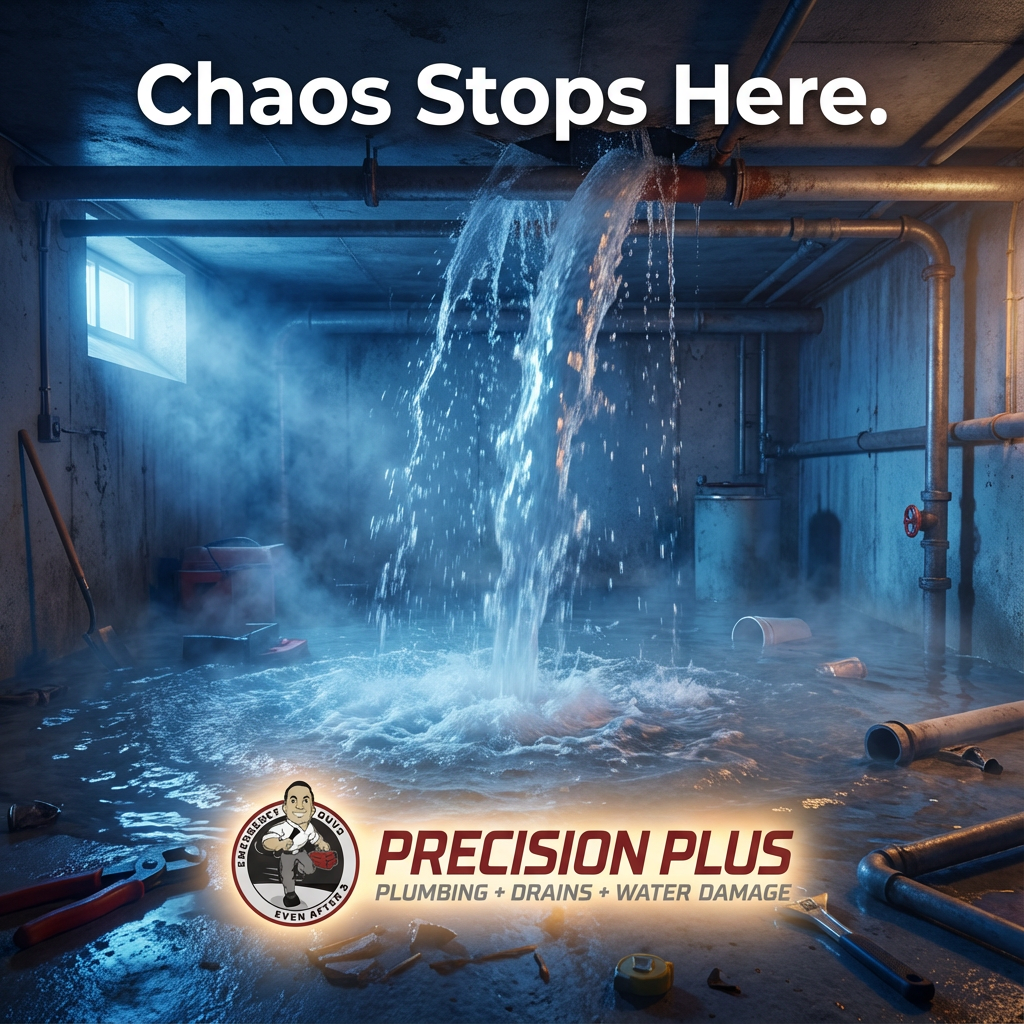
Emergency #1: Burst or Actively Leaking Pipes
If water is:
- Spraying
- Pouring
- Dripping steadily
- Spreading across floors or ceilings
This is an emergency.
In Philadelphia homes, burst pipes commonly occur:
- In basements
- Behind plaster walls
- In exterior-facing kitchens
- In ceiling cavities
Even small leaks can soak framing and cause mold within 24–48 hours.
Emergency #2: Sewer Backup or Overflow
If sewage is coming up through:
- Basement drains
- Toilets
- Tubs
- Floor drains
This is an immediate emergency.
Sewer backups expose your home to:
- Bacteria
- Contaminated water
- Health hazards
- Structural damage
Do NOT attempt DIY fixes — improper actions can worsen contamination.
Emergency #3: No Water in the Home
If your entire home suddenly loses water:
- After freezing temperatures
- After construction nearby
- Without notice from the water department
You may have:
- A frozen pipe
- A collapsed line
- A burst main
Loss of water often signals a failure that can cause flooding once pressure returns.
Emergency #4: Water Near Electrical Systems
Any water near:
- Outlets
- Electrical panels
- Light fixtures
- Appliances
Creates a serious safety hazard.
Turn off electricity immediately and call for emergency service.
Emergency #5: Ceiling or Wall Leaks
Water coming from:
- Ceilings
- Behind walls
- Light fixtures
Means water is already traveling through your home’s structure.
This type of leak often causes:
- Mold growth
- Drywall failure
- Hidden framing damage
Waiting is one of the most expensive mistakes homeowners make.
What Is NOT an Immediate Emergency (But Still Needs Attention)?
These issues can usually wait briefly if no active damage is occurring:
- Slow faucet drips
- Minor toilet leaks (no overflow)
- Small drain clogs affecting one fixture
- Running toilets (temporarily shut off valve)
Even these should be scheduled quickly in older Philly homes.
Why Philadelphia Homes Escalate Faster Than Others
Philadelphia’s housing stock includes:
- Older piping
- Mixed plumbing materials
- Narrow wall cavities
- Shared rowhome structures
A problem in one home can quickly affect neighboring properties — making fast action critical.
When in Doubt, Treat It as an Emergency
If you’re unsure, ask yourself:
- Is water actively moving?
- Could this spread behind walls?
- Could this damage floors or ceilings?
- Could mold start growing?
If the answer is “yes” to any of these — call immediately.
About the Author – Derrick Jackson
Born and raised in Philadelphia, Derrick Jackson is a trusted emergency plumbing, water damage, and mold inspection expert serving homeowners across Pennsylvania, New Jersey, and Delaware. With more than 20 years of hands-on experience, Derrick owns and operates Precision Plus Plumbing, a company known for rapid response, expert diagnostics, and honest, homeowner-first service.
Derrick is the author of two homeowner education books, “Got Mold” and “Precision Service Experience.” Through thousands of real-world emergency calls, he has helped homeowners avoid unnecessary damage, costly mistakes, and repeat plumbing failures.
To learn more about Derrick’s background and expertise, visit www.DerrickCJackson.com.