
That unmistakable, earthy smell. If you’ve noticed it in your basement, your first instinct is probably correct—it’s time to check for mold. The first move is always a thorough visual check, which might lead to using a DIY test kit. But the real key is knowing when you're in over your head and need to call in a professional.
Getting these first steps right is crucial. It helps you assess the situation confidently without putting your family’s health on the line.
First Steps in Basement Mold Testing
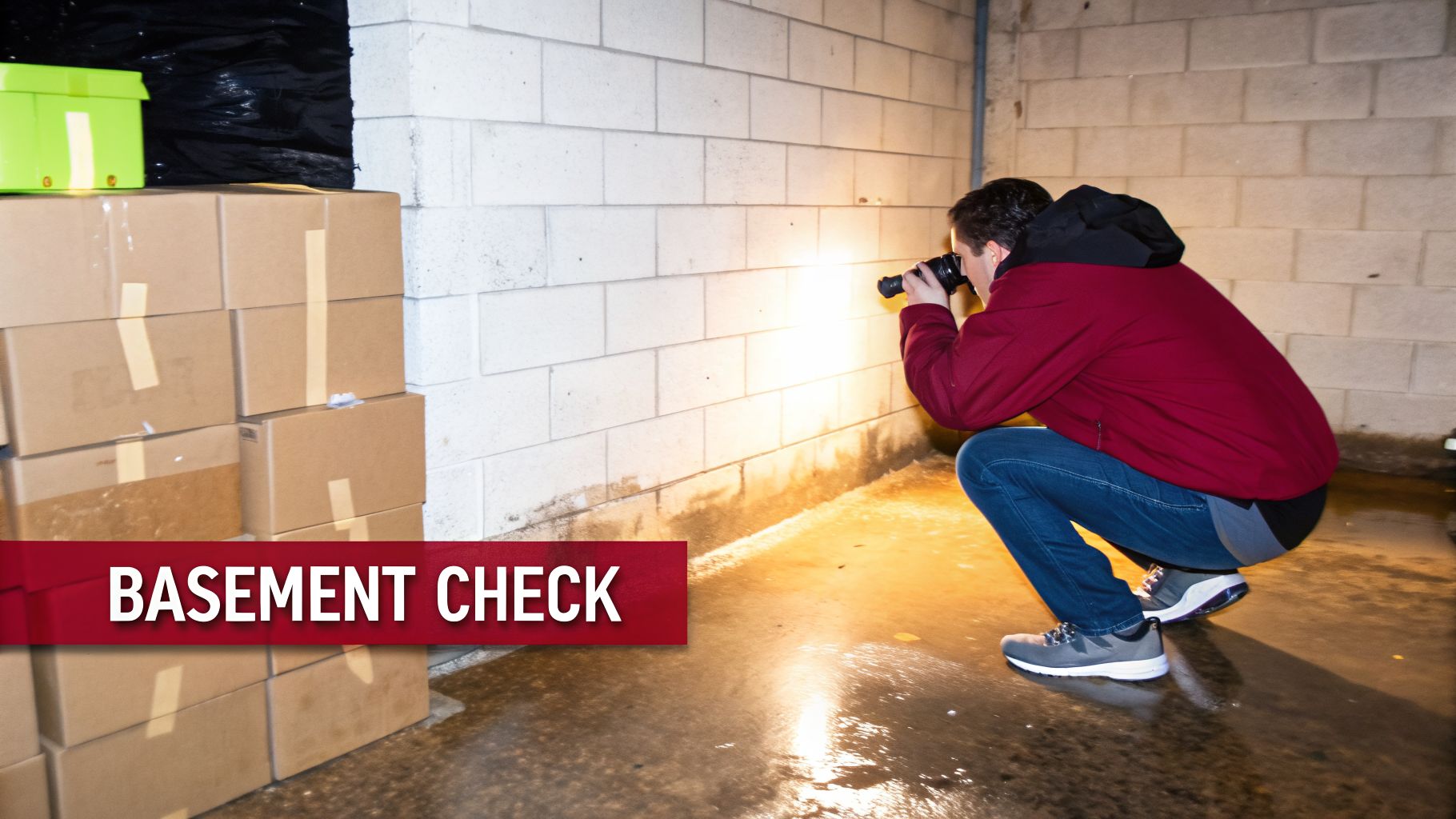
That persistent musty smell in your basement is more than just an annoyance. It’s a clear signal that hidden moisture is allowing mold spores to become active. Before you even think about testing, your first priority should always be safety.
Basements are, by their very nature, prime real estate for mold. This is especially true in places like Philadelphia and South Jersey, where high humidity and damp seasons are just a part of life.
Why Basements Are Mold Hotspots
So, why are basements such a problem area? It really comes down to a few simple factors. Their below-ground location makes them magnets for moisture, whether from tiny foundation cracks, slow-leaking pipes, or just poor outdoor drainage.
Add in the typical lack of sunlight and poor ventilation, and you've created a stagnant, damp environment. It's the perfect place for mold to thrive completely undisturbed.
From my experience in the field, the data backs this up. We've seen that the Penicillium/Aspergillus mold group—which contains some seriously toxic strains—was found in a staggering 71% of all basement air tests. That makes basements a significantly higher risk for these specific molds compared to any other part of the house.
To help you get started, here’s a quick rundown of the common signs you might encounter and what you should do first.
Quick Guide to Basement Mold Warning Signs
| Warning Sign | What It Could Mean | Your First Action |
|---|---|---|
| Musty, Earthy Odor | Active mold growth is releasing microbial volatile organic compounds (mVOCs). | Use a flashlight to trace the smell to its source. Check damp or humid areas first. |
| Visible Growth | Obvious mold colonies on walls, pipes, or stored items. Color can be black, green, or white. | Do not touch it. Photograph the area and assess the size of the patch (e.g., smaller or larger than 10 sq. ft.). |
| Water Stains/Discoloration | A past or present water leak has created the conditions for mold, even if it's not visible yet. | Identify the source of the water—leaky pipe, foundation crack, condensation—and address it. |
| Peeling Paint/Warped Wood | Excess moisture in the building materials is causing them to fail. | Check the area for dampness and look for hidden mold behind the damaged surface. |
This table is your starting point. Recognizing these signs early is the best way to prevent a small issue from becoming a major remediation project.
Key Takeaway: Never ignore a musty basement smell. It’s your home’s way of telling you that there’s an underlying moisture problem, creating the ideal conditions for mold that can impact your air quality.
From Suspicion to Action
Going from a simple suspicion to a clear plan of action can feel like a lot, but it’s a logical process. You’ll always start with a good visual inspection, armed with a bright flashlight. From there, you might decide a DIY test kit is a good next step to get some initial data.
Ultimately, the most important part is knowing how to read the results to decide if a professional is necessary. The goal isn't just to find mold—it's to pinpoint the source and understand the full scope of the problem. A methodical approach from the beginning will save you a world of time, money, and stress down the road.
Gearing Up Safely for a Mold Inspection
First things first: before you even get close to a suspicious patch of mold, you need to protect yourself. It's easy to forget that disturbing a mold colony—even just by touching it or getting too close—can release a cloud of millions of microscopic spores into the air. Breathing that in can lead to anything from respiratory irritation to more serious health issues.
This means your safety gear, or personal protective equipment (PPE), is absolutely non-negotiable. And I'm not talking about a flimsy paper dust mask from the back of the garage. You need equipment specifically designed to handle microscopic threats.
Your Mold Inspection Safety Checklist
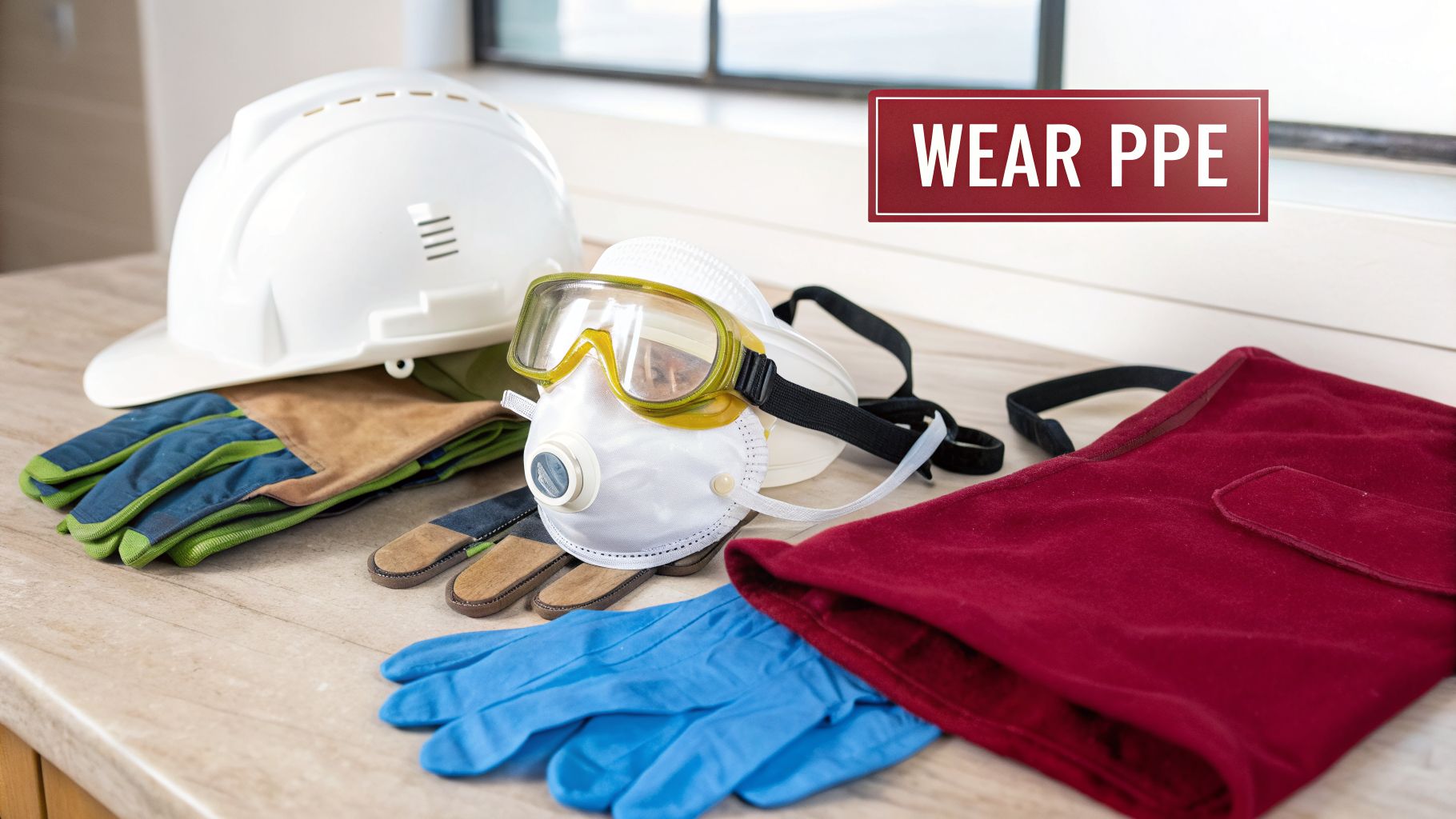
To do this right, you need to block spores from getting into your lungs, eyes, or onto your skin. Here’s the essential gear I always have on hand before heading into a basement for an inspection.
- N95 or P100 Respirator: This is your most important piece of gear. A quality, well-fitted respirator will filter at least 95% of airborne particles. This is the minimum standard for protecting your lungs from inhaling spores.
- Non-Vented Goggles: Your eyes are another easy entry point for mold spores. You need fully sealed, non-vented goggles. Regular safety glasses or your everyday eyeglasses leave gaps and won't do the job.
- Disposable Gloves: Always wear nitrile or vinyl gloves to prevent any direct skin contact. You don’t want to be touching mold with your bare hands.
- Long-Sleeved Clothing or Coveralls: To keep spores off your skin and clothes, cover up completely. For a small, contained area, a long-sleeved shirt and pants might suffice. If you're dealing with a larger, more widespread issue, I strongly recommend disposable coveralls.
Pro Tip: When you're finished, take off your disposable gear (gloves, coveralls) and bag it up while you are still in the basement. This simple step prevents you from accidentally tracking spores through the rest of your house.
It might feel like a bit much, especially if you're just looking at a small spot. But trust me, I've seen situations where a quick, unprotected inspection stirred things up and made the problem worse. Taking these few minutes to gear up properly ensures your investigation stays contained and, most importantly, keeps you safe.
Performing a Thorough Visual Inspection
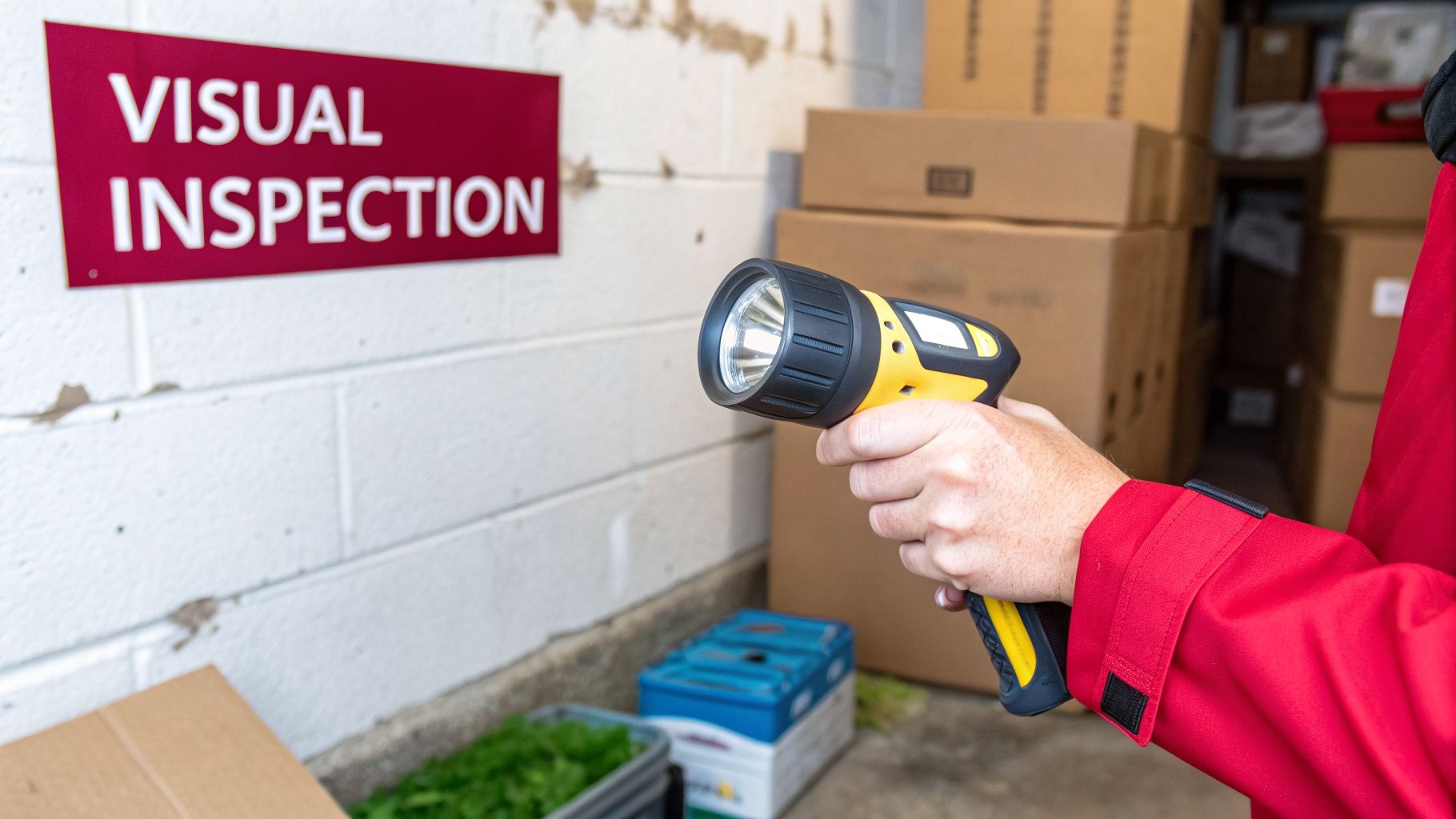
Before you spend a dime on test kits, your best tools are your own senses. A detailed visual inspection, armed with a powerful flashlight, is the first and most critical step in sniffing out a potential mold problem. It’s exactly how we professionals start every assessment, and it often tells you most of what you need to know.
Mold has one non-negotiable requirement: moisture. Without it, it simply can’t grow. So, your entire search boils down to becoming a water detective. Knowing the common signs of mold in your house will give you a major head start, helping you spot subtle clues that others might miss.
Where to Focus Your Search
Think like a water droplet. Where would you pool, seep, or get trapped? Focus your energy on these key areas, as they’re notorious for hiding mold growth.
- Foundation Walls and Corners: Get up close to the base of your concrete or block walls. Pay special attention to the corners. You're looking for dark stains, peeling paint, or a chalky white powder on the surface, which is a mineral deposit called efflorescence that gets left behind when water evaporates.
- Around Pipes and Plumbing: Trace every pipe you see, especially where they enter or exit the walls. Look for active condensation, slow drips, or tell-tale rust stains on the floor directly underneath. Don't be afraid to run your hand along the underside of pipes to feel for dampness.
- Near the Sump Pump: The area around your sump pump pit is a prime suspect for dampness. Check the pit itself and the surrounding floor. If you have any doubts about its performance, it's a good idea to learn how to tell if your sump pump is working to head off future water issues.
- Under Basement Windows: Window wells are a classic entry point for water. Check the sills, frames, and the wall area directly below them for discoloration, soft spots in the drywall, or water stains.
Don’t be afraid to move things around. Mold loves to grow in dark, undisturbed places. Check behind those boxes you haven’t touched in years, look under old furniture, and inspect the walls that are usually hidden from view.
Is It Mold, Mildew, or Just a Stain?
Not every funky-looking spot is a five-alarm fire. It’s crucial to know the difference between common basement blemishes, as this will help you decide what to do next.
| Blemish | Appearance and Texture | Common Location |
|---|---|---|
| Mold | Can be slimy when wet or fuzzy when dry. Often appears in patches of black, green, or even white. Usually has a distinct, musty odor. | Grows into porous surfaces like drywall, wood, and carpet. |
| Mildew | Typically looks powdery or downy. Almost always gray or white. It stays on the surface and can be wiped away easily. | Sits on top of non-porous, damp surfaces like tile grout, painted walls, or window sills. |
| Water Stains | Appear as flat, discolored rings or blotches with no texture. The stain is still there even when the area is bone-dry. | Ceilings, walls, and floors where a leak happened in the past. |
Understanding these differences helps you map out problem areas for more targeted testing. While mildew is much less destructive than mold, remember that both are clear signs that you have a moisture problem that needs to be fixed.
Research shows just how predictable these damp spots can be. One study found that a staggering 88% of homes had mold on their windowsills, making it the single most common problem area. Other hot spots included refrigerator seals (83%) and the plumbing area under kitchen sinks (83%), proving that mold consistently thrives in these hidden, damp spaces.
Choosing and Using a DIY Mold Test Kit
I know that wall of DIY mold test kits at the hardware store can be overwhelming. They all make big promises, and it’s tough to know which one, if any, is right for you. Think of these kits as a starting point—a way to gather some initial clues, not get a final diagnosis.
When used correctly, they can point you in the right direction. The key is understanding what they actually do. You’ll generally find three types: petri dishes for air sampling, tape lifts, and simple swab tests. Each is designed for a completely different scenario, and grabbing the wrong one can give you misleading information.
Matching the Kit to the Situation
Picking the right kit isn't about finding the "best" brand. It's about matching the tool to the job. What are you trying to figure out? Are you staring at a strange, fuzzy patch on the wall, or are you just dealing with that classic musty basement smell and can't see a thing?
Here’s how I break it down for people:
- Surface Tests (Tape Lifts & Swabs): Reach for one of these when you can physically see what you suspect is mold. If there’s a discolored splotch on drywall, a joist, or some old cardboard boxes, a surface test will tell you if it's actually mold. From my experience, the tape lifts are perfect for sampling dry, powdery, or fuzzy growth. Swabs are better for anything that looks slimy or is growing in a tight, awkward corner.
- Air Sample Kits (Petri Dishes): These are for when your nose is telling you there’s a problem, but your eyes can't find it. That persistent, earthy smell is a huge red flag for hidden mold. You’ll place the open petri dish in the room for a specific amount of time to capture airborne spores and see what grows.
Don't waste your money using an air kit right next to a visible mold colony—you already know it's there. And a swab test is useless if you have nothing to swab. It's all about context.
Collecting an Uncontaminated Sample
The biggest mistake people make with these kits is contaminating the sample. If you do that, the results are completely worthless. You have to be meticulous. Before you even open the kit, turn off any fans, dehumidifiers, or your HVAC system for a couple of hours. You want the air in the basement to be still.
Always put on your PPE—at a minimum, wear disposable gloves and an N95 mask. When taking a surface sample, be precise. Touch only the suspicious growth. Don't drag the tape or swab across a clean area on your way to the spot, as you'll just cross-contaminate it.
For air samples, find a stable, elevated surface about waist-high, like a small stool or table. Don't just set the petri dish on the floor where it can collect dust, and keep it away from open windows or doors. Outdoor spores can easily drift in and give you a false positive.
Crucial Tip: Always take a "control" sample. For an air test, this is non-negotiable. Take a second petri dish from the same kit and set it up outside, away from any vents, for the same amount of time. This gives you a baseline for your local environment. If your basement dish grows a jungle while your outdoor one has just a few spots, you’ve got a strong sign of an indoor mold source.
The Limits of a DIY Test
You have to go into this with realistic expectations. A home test kit can really only tell you one thing with certainty: "Yes, mold is present."
That's it. It can't tell you what kind of mold it is (like Stachybotrys or Aspergillus) or give you a precise spore count to determine if the air quality is hazardous.
Seeing a few colonies grow in your petri dish is not an automatic reason to panic. Mold spores are literally everywhere, inside and out. The real value of a DIY test is in either confirming a visible substance is mold or revealing a dramatically higher spore concentration inside your basement compared to your outdoor control sample.
Think of it like a smoke detector. It alerts you to the possibility of a fire, but it can’t tell you how big the fire is or what started it.
What Your DIY Test Results Really Mean
You’ve done the test, waited patiently, and now you have your results. Whether it's a few mysterious spots in a petri dish or a lab report from your swab sample, the next step is figuring out what it all means. Getting this part right is just as important as the test itself, because it dictates what you do next.
If you used a surface test—like a tape lift or a swab—and it came back positive, you’ve got a clear answer for that specific spot. You've confirmed it's mold. Simple as that. But remember, this only tells you about the surface you tested; it doesn't give you the bigger picture of your basement's air quality.
Air samples are a bit more nuanced. Mold spores are literally everywhere, so seeing a few colonies pop up in your dish isn't an immediate red flag. The real insight comes from comparing your indoor sample to the outdoor control sample. If the dish from your basement looks dramatically more crowded than the one from outside, that's a strong indicator you have an active, indoor mold source pumping spores into the air.
When DIY Is Not Enough
Those home testing kits are great for getting an initial read, but they are not the final word. There are very clear signs that it’s time to put down the DIY kit and call in a certified professional for a full-blown assessment.
Here are the red flags that tell you it's time to escalate:
- You've Found a Large Patch of Mold: If you're looking at a patch of mold bigger than 10 square feet (think a 3-foot by 3-foot area), you're well past the point of a simple DIY cleanup. Growth of this size points to a serious underlying moisture issue that needs a professional’s touch.
- That Musty Smell Won't Quit: You’ve cleaned the visible spots and fixed obvious leaks, but that damp, earthy smell keeps lingering. This is a classic sign of hidden mold. Pros use tools like thermal imaging cameras and moisture meters to find what’s growing behind your walls or under the floorboards.
- Your Health Is Being Affected: Are people in your house dealing with constant, unexplained allergy-like symptoms? Things like sneezing, coughing, itchy eyes, or breathing troubles could be directly tied to your indoor air. When health is on the line, professional air quality testing is non-negotiable.
- You've Had Major Water Damage: If your basement recently flooded or you dealt with a massive leak, don't even bother with a DIY test—call a pro. The risk of widespread, hidden mold is incredibly high in these situations. There's a lot that goes into proper remediation, which you can see in our guide to the professional water damage restoration process.
It's easy to think mold is just an issue for other people's homes. One survey revealed that people estimate only about 37% of houses have mold. The reality? Research shows that 47% of U.S. homes have problems with dampness and mold, and some studies have found mold in 100% of the homes they tested. You can find more details on how mold truly affects U.S. homes from these statistics.
To help you decide on your next move, we've put together a quick guide for interpreting the most common DIY test findings.
Interpreting DIY Test Results and Next Steps
| DIY Test Finding | What It Likely Means | Recommended Next Step |
|---|---|---|
| No growth on any test plates. | Good news! Your basement likely doesn't have an active, significant mold issue. | Monitor for musty smells or signs of new water intrusion. Retest annually or after any water event. |
| Positive surface test, negative air test. | You have confirmed mold on a specific surface, but it's not yet significantly impacting your air quality. | Clean the small, affected area (if under 10 sq ft) using appropriate safety gear. Find and fix the moisture source. |
| Air test growth matches outdoor control. | The mold spore levels in your basement are normal and consistent with the natural outdoor environment. | This is generally a good result. Continue to control humidity and watch for any new signs of moisture. |
| Air test growth is much higher than outdoor control. | You likely have an active, hidden mold colony somewhere in the basement releasing spores into the air. | This warrants a professional inspection. A certified technician can find the hidden source and assess the full scope. |
| Visible mold spots, but all tests are negative. | The visible spots may be old, inactive mold stains, or the test may have produced a false negative. | If the spot is small and you have no musty smells or health symptoms, you can clean it and monitor. If concerned, call a pro. |
Ultimately, a DIY test is a screening tool. Its job is to give you enough information to make a smart decision. Think of it as a signpost: does it point you toward a small fix you can handle, or does it tell you it’s time to call for backup? Trust what the test tells you, but more importantly, pay attention to the red flags. If you see them, don't hesitate to bring in the experts.
Common Questions About Basement Mold
Even when you know how to test for mold in your basement, questions always pop up. Trust me, after years of crawling through damp basements, I've heard just about every myth and worry there is. Let's clear up a few of the most common ones I hear from homeowners.
Can I Just Use Bleach to Kill Basement Mold?
This is the number one question I get, and the answer is a hard no. It seems like it should work, but bleach is actually one of the worst things you can use on porous surfaces like drywall, wood, or your basement carpet.
Here's the deal: bleach is mostly water. When you spray it on drywall, that water soaks right in and feeds the mold's root system hiding inside the material. The chlorine part might kill the surface stuff and look clean for a bit, but you've just given the hidden mold a big drink. It almost always comes back, and often worse than before.
A Better Approach: For a small patch on a non-porous surface (like a PVC pipe), a simple mix of soap and water does the trick. But for drywall, wood, or anything else that absorbs moisture, you need to address the problem without adding more water to the equation.
Is All Black Mold the Dangerous Kind?
The term "black mold" rightfully scares people. It's often linked with Stachybotrys chartarum, a nasty species that can produce mycotoxins. But here's a crucial fact: not all mold that looks black is Stachybotrys. Plenty of other harmless (and not-so-harmless) molds can be black, gray, or dark green.
You simply can't tell how dangerous a mold is by its color. I've seen fuzzy white mold cause more respiratory issues for a family than a small, contained black spot. The only way to truly identify the species and its potential risk is to have a sample analyzed by a professional lab.
How Fast Does Mold Grow After a Water Event?
It grows shockingly fast. If the conditions are right—a little moisture, some warmth, and a food source like drywall paper or wood—you can see visible mold growth in as little as 24 to 48 hours.
This is exactly why you have to act immediately after your basement gets wet. Whether it's a burst pipe, a foundation leak, or a sump pump that quit, the clock is ticking. The longer materials sit damp, the higher the odds of a small issue turning into a massive contamination problem.
This flowchart gives you a good roadmap for what to do if your DIY mold test comes back positive.
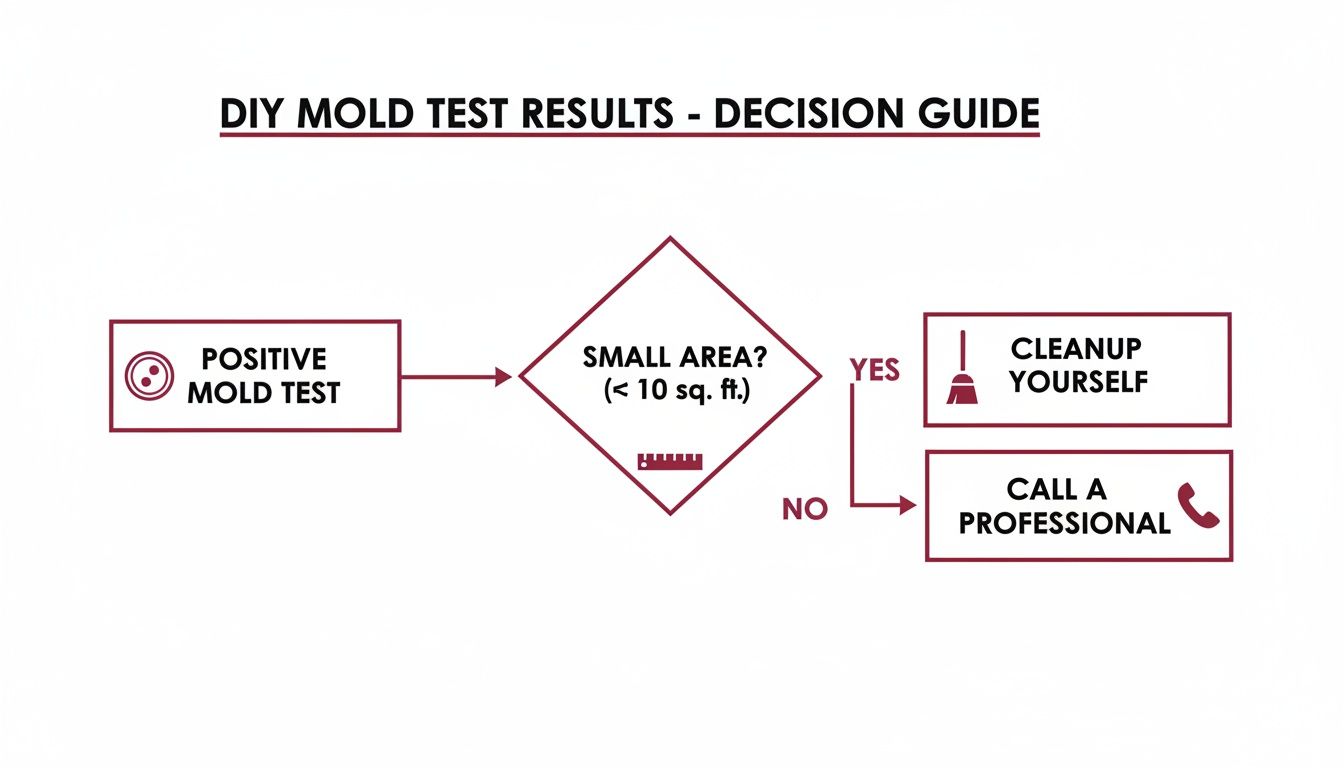
As you can see, the decision to DIY the cleanup or call in a pro really comes down to the size of the affected area.
Does Mold in Carpet Mean I Have to Rip It Out?
Often, yes. It's a tough pill to swallow, but carpet and the padding underneath are like giant sponges. They trap moisture and create a perfect breeding ground deep within the fibers where you can't see it.
If a test shows mold in your carpet, a surface shampoo is rarely enough to solve the problem. If the carpet was soaked for more than 48 hours or you have a large area of growth, replacement is the safest and most effective solution. For a very small, recent spot, you might get lucky with professional cleaning. This guide on how to get rid of mold in carpet offers some good insights on when it might be salvageable.