
That awful hum. The dreaded puddle under the sink. Or maybe, just dead silence. These are the classic distress signals from your garbage disposal. Knowing what they mean can help you decide if it's time to call in a plumber for garbage disposal repair before a small headache turns into a full-blown plumbing nightmare.
Common Garbage Disposal Problems and What They Mean
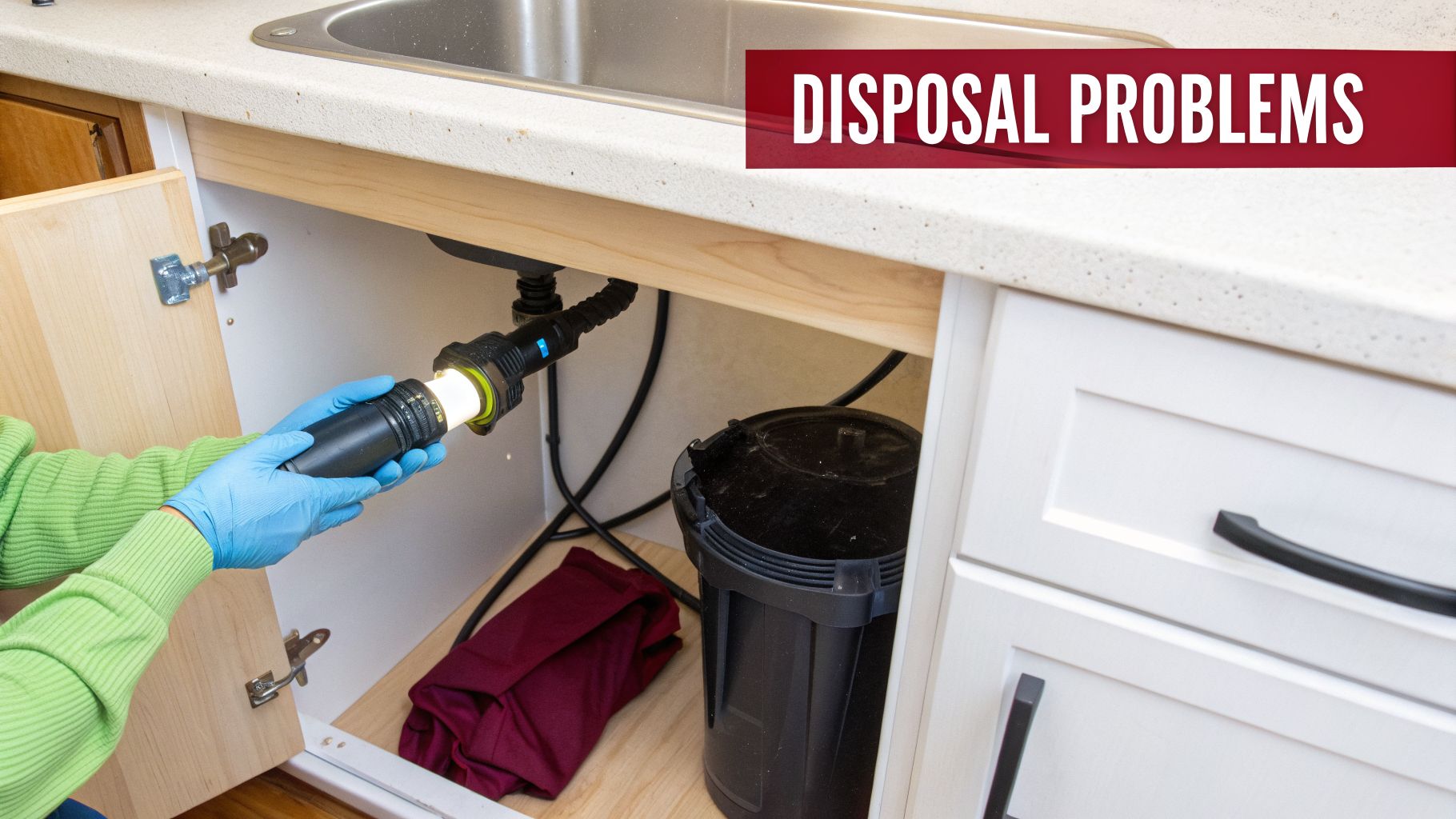
Most of the time, your garbage disposal is a workhorse, quietly handling whatever you throw at it. But the moment it quits, your whole kitchen routine can grind to a halt. For homeowners across Greater Philadelphia and South Jersey, a few key symptoms almost always point to the same common failures.
Think of these signs as your home's way of telling you exactly what's wrong. Once you learn to translate them, you'll know exactly what you’re dealing with.
The Loud Hum Without Grinding
This is the one we hear about most often. You flip the switch and are met with a loud, angry humming sound, but nothing is actually happening inside the disposal. The blades aren't moving an inch.
More often than not, this means the unit is simply jammed. Something hard—a stray peach pit, a chicken bone, or the classic culprit, a dropped spoon—is wedged between the grinding plate and the chamber wall. The motor wants to turn, but it can't, and that strain is what creates the humming. While a special wrench can sometimes free a minor jam, a really stubborn one needs a pro to safely remove it without wrecking the disposal.
Key Takeaway: A humming sound is actually good news—it means the motor is still receiving power. The problem is a physical obstruction, not an electrical failure, which is often a less expensive fix.
Complete Silence When You Flip the Switch
On the other hand, if you get nothing but silence, you're looking at a power issue. It’s no different than a lamp that won't turn on—the problem isn't the bulb, it's the electricity getting to it. Sometimes, the fix is as simple as a tripped circuit breaker in your home's main panel.
If that doesn't solve it, the problem is likely one of two things inside the unit itself:
- The Overload Protector: Look for a small red or black reset button on the bottom of the disposal. If the motor gets overworked and overheats, this button pops out to cut the power and prevent permanent damage.
- A Burned-Out Motor: If you've pushed the reset button and checked the breaker with no luck, the motor has probably given up the ghost. At this stage, replacing the entire unit is almost always the more practical and cost-effective solution.
Leaks Underneath the Sink
Finding a puddle of water in the cabinet under your sink is a red flag you can't afford to ignore. A leak means one of the disposal's critical seals has failed, and water is escaping. This can happen at the main sink flange, the dishwasher connection hose, or the discharge pipe where water exits the unit.
Even a slow drip can quickly cause thousands in damage by warping cabinets and rotting the floor. And in the humid climate we get in New Castle County, DE, it creates the perfect breeding ground for mold. Leaks only get worse, so this is a problem that needs a plumber's attention right away.
Simple DIY Checks You Can Safely Try First
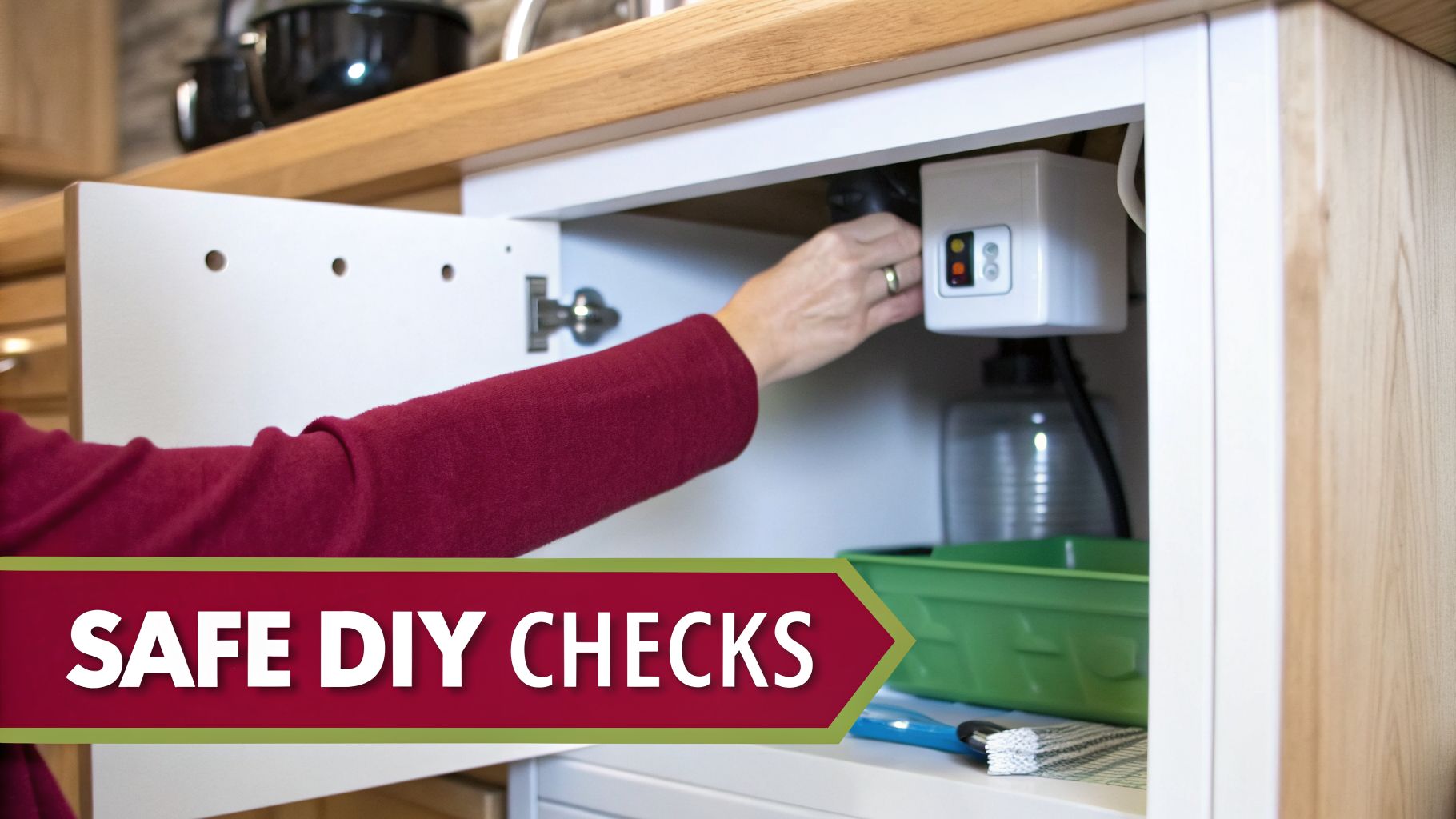
When your garbage disposal suddenly goes quiet, it’s easy to assume the worst. But before you start looking for a plumber to service your home in Philly or South Jersey, there are a couple of incredibly common and easy things you can check yourself. It’s like checking if a lamp is unplugged before you decide the bulb is dead—sometimes, the fix is refreshingly simple.
These quick checks can often solve power-related glitches and save you the time and money of a service call. But let’s be clear: your safety is what matters most.
CRITICAL SAFETY WARNING: Never, under any circumstances, put your hands, fingers, or any object down into the disposal’s grinding chamber. The blades are razor-sharp, and a serious injury can happen in a split second, even if you think the power is off.
Step 1: Look for the Reset Button
If you flip the switch and hear absolutely nothing—no hum, no buzz, nothing—the unit’s internal motor may have overheated. This is a built-in safety feature that automatically shuts the disposal off to prevent it from burning out.
- Find the Button: Look underneath the main body of the garbage disposal unit under your sink. You’re searching for a small, recessed button, usually red or black.
- Press It In: Push the button firmly. If it was tripped, you should feel a little click as it pops back into place.
- Test It Out: Run a good stream of cold water and try flipping the wall switch again. If this was the culprit, your disposal should roar back to life.
Step 2: Check Your Circuit Breaker
Still no luck? The next place to look is your home’s main electrical panel. A garbage disposal motor can sometimes draw a surge of power, especially when starting up, which is enough to trip a circuit breaker and cut the power off at the source.
- Find Your Breaker Box: Head to your basement, garage, or a utility closet to find your main electrical panel.
- Identify the Right Circuit: Look for a breaker labeled for the "Kitchen," "Disposal," or "Kitchen Outlets." If the labels are unclear, you’re looking for a switch that’s either in the "OFF" position or looks like it’s stuck in the middle between "ON" and "OFF."
- Reset the Breaker: To reset it properly, flip the switch all the way to the "OFF" position first, then push it firmly back to "ON."
If you've tried both of these steps and your disposal still won't work, it's time to stop. The problem is likely something more serious, like a jam, a seized motor, or an internal electrical failure. Trying to fix those issues yourself is not only dangerous but can easily cause more damage. This is the point where you call in a licensed plumber.
To learn more about keeping your drains clear in the first place, have a look at our guide on how to prevent drain clogs.
How a Professional Plumber Diagnoses and Fixes Your Disposal
When you've tried the basics and your garbage disposal is still on the fritz, it's time to call in a professional. What you're getting isn't just a handyman—you're getting an expert who can quickly and safely pinpoint the real source of the trouble, ensuring the fix actually lasts. They don't just treat the symptom; they diagnose the root cause.
The first thing any licensed plumber will do, before even touching the disposal, is cut the power. This isn't optional. They'll either unplug the unit from the outlet under your sink or, more likely, shut off the dedicated circuit at your breaker box. This guarantees there’s absolutely no risk of the unit accidentally turning on while they work.
Once it's safe, the real detective work begins.
The Professional Inspection and Repair Process
A seasoned pro doesn't guess. They follow a methodical process, starting with the most likely culprits and working their way to more complex issues. This is where their experience and specialized tools really shine.
- Clearing Stubborn Jams: If your disposal hums but doesn't spin, that’s a classic jam. Instead of reaching for pliers, a plumber uses a specialized disposal wrench (sometimes called a jam-buster). This tool fits perfectly into a socket on the bottom of the motor housing, allowing them to manually rock the blades back and forth. This motion safely dislodges the obstruction without putting any strain on the motor itself.
- Detailed Leak Inspection: A small puddle under the sink can come from several places. A pro knows exactly where to look: the sink flange seal up top, the dishwasher inlet connection on the side, and the main drain line gaskets below. They can spot the subtle signs of a failing seal that might otherwise go unnoticed until it becomes a major leak.
- Motor and Electrical Testing: If the unit is completely silent, the problem could be the motor or the electricity supplying it. Using a multimeter, a technician can test the wall switch, the power cord, and the motor's internal wiring. This simple test definitively tells them whether you have a dead motor or just a faulty switch or connection—a crucial difference.
For homeowners in Greater Philadelphia and South Jersey with older houses, a plumber might also suggest a quick video drain inspection. This involves sending a tiny camera down the drain to make sure the blockage is truly gone and not just pushed further down the line, preventing a frustrating repeat problem a few weeks later.
Even after attempting simple DIY checks, understanding why choosing professional help matters can save time and prevent further damage. Experts have the right tools and knowledge to diagnose issues you can't see.
On average, a garbage disposal will last you about 8-12 years. When issues pop up, repair costs for aging units can range from $100 to $450. Most common fixes, like clearing a tough jam or sealing a minor leak, typically land between $150 and $250, making a professional repair a smart investment against the risk of costly water damage. You can read more about these repair cost breakdowns.
Deciding Between Garbage Disposal Repair and Replacement
When your garbage disposal gives up the ghost, you're left with a big question: is it smarter to fix it or just get a new one? This isn't just about getting your sink back in working order; it's a financial decision.
Putting a little money into a simple repair often makes sense. But pouring cash into an old, failing unit is like paying for major engine work on a car with a rusted-out frame. You’re just delaying the inevitable.
The right answer usually comes down to a simple cost-benefit analysis. A good quality garbage disposal has a typical lifespan of around 8 to 12 years. If your unit is on the younger side and the repair cost is well under half the price of a new one, a fix is usually the best path forward.
The Financial Tipping Point
So, where’s the line between a smart repair and a bad investment? As a rule of thumb, we tell homeowners to follow the 50% rule. If a repair is going to cost more than 50% of what a brand-new, professionally installed unit would, replacement is almost always the better long-term choice.
Let's put that into perspective. Say you're in a South Jersey home and your disposal is just jammed. The fix is probably straightforward. According to 2026 data from Thumbtack, the national average for a garbage disposal repair is $149, with a typical range of $96 to $229. A simple jam will be on the lower end of that scale, making a repair a no-brainer.
But if the motor has burned out, that repair could easily creep toward the cost of a full replacement. At that point, you're just not getting a good return on your investment. Digging into the details, you can explore more about these garbage disposal repair costs and what influences them.
The age of your unit is the other huge piece of the puzzle. It just doesn't make financial sense to sink a couple hundred dollars into a decade-old disposal with a dying motor. You’re just asking for another breakdown in the near future.
This flowchart gives you a great visual for making that call. For most disposals under eight years old, a repair is often worth it. Once you pass that eight-year mark, replacement becomes the smarter bet.
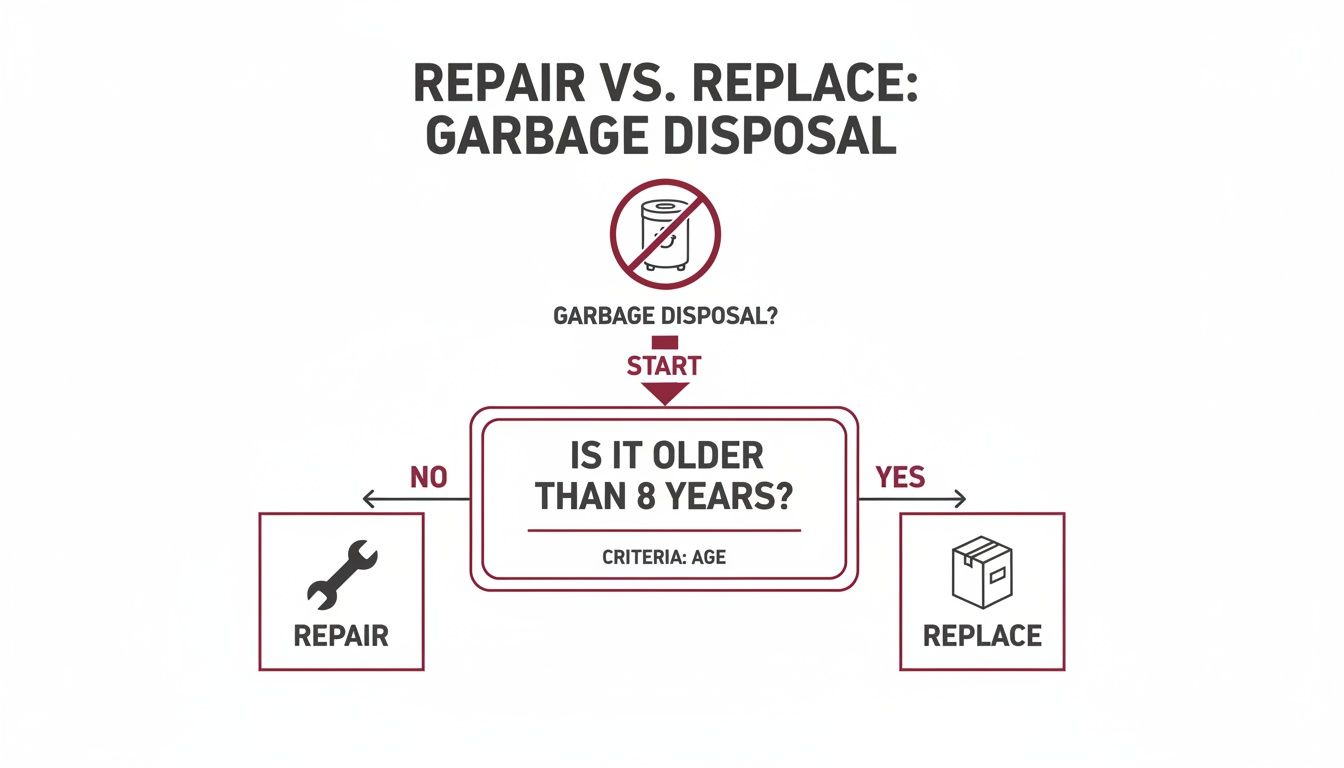
As you can see, age is one of the clearest indicators of whether you should invest more in your current unit or start fresh.
Comparing Repair Costs vs Full Replacement in 2026
To help you visualize the costs, here’s a breakdown of common repairs versus a full replacement. This should give you a clearer picture of that 50% rule in action, especially when you factor in the all-in cost of a new unit, which includes the disposal itself, labor, and proper disposal of the old one.
| Service | Average Repair Cost (National) | Typical Replacement Cost (Installed) | When to Choose This Option |
|---|---|---|---|
| Fix a Jam/Clog | $100 – $180 | $350 – $650+ | Repair. This is a minor issue and well below the replacement threshold. |
| Replace Seals/Flanges | $150 – $250 | $350 – $650+ | Repair, if the unit is less than 5-6 years old and not leaking elsewhere. |
| Fix a Major Leak | $200 – $350 | $350 – $650+ | Consider Replacement. If the unit is old or the housing is cracked, replacement is better. |
| Replace Burnt-Out Motor | $250 – $400+ | $350 – $650+ | Replace. The repair cost is too close to a new unit's price to be worthwhile. |
Ultimately, for any repair inching over the $250 mark, it’s wise to get a quote for a full replacement so you can compare the numbers side-by-side.
When Replacement Offers More Value
Sometimes, choosing a replacement isn't just about avoiding a costly repair—it's about getting a serious upgrade. If your current disposal sounds like a jet engine taking off in your New Castle County kitchen, you'll be amazed by the difference a modern unit makes.
Newer models offer some significant benefits that make them a worthwhile investment:
- Improved Performance: Today's disposals come with more powerful motors and multi-stage grinding technology that pulverizes food waste far more effectively.
- Quieter Operation: Advances in sound-dampening insulation and anti-vibration mounts mean new units are dramatically quieter. It’s a difference you’ll appreciate every day.
- Long-Term Peace of Mind: A new unit comes with a full manufacturer's warranty. Plus, many expert local plumbers in the Greater Philadelphia area also offer a "No-Lemon Guarantee," which protects you if the new unit fails prematurely.
By weighing these factors, you can make a confident decision that saves you money and headaches down the road. If you're weighing your options, you can learn more about the latest garbage disposals and professional installation.
Your Checklist for Hiring the Right Local Plumber
When your sink is full of murky water and the garbage disposal has gone silent, the last thing you want is to gamble on a random name from a Google search. Making a panicked decision can lead to more problems down the road, so having a quick checklist ready helps you find a true professional who’ll get it right the first time.
After all, a broken disposal isn't just an inconvenience. It can quickly escalate into a much bigger headache, like a sewage backup or water damage that costs thousands to fix. This is a real risk for homeowners, especially in parts of South Jersey and New Castle County that are already prone to flooding. While 2026 data shows the average repair runs about $230, hiring a qualified plumber is your best defense against those catastrophic failures. You can discover more insights about how these repair costs are calculated on Angi.com.
Verify Licensing and Insurance
Let's be clear: this is the absolute first thing you should check. A licensed plumber has put in the work to prove they know what they’re doing and are up-to-date on local codes, which can be particularly strict in places like Philadelphia.
Just as important is their insurance. This protects you, the homeowner, from any liability if an accident happens on your property while they're working. A reputable company will have no problem showing you their credentials, so don't be shy about asking.
Confirm Guarantees and First-Call Fix Rates
You need a plumber who is confident in their work. Ask them directly about their guarantees. Things like an "On-Time Guarantee" or a "No-Lemon Guarantee" on new installations are great signs they prioritize customer satisfaction.
Another smart question to ask is about their first-call fix rate. A company with a high rate—think over 90%—is a well-oiled machine. It means their trucks are fully stocked, and their technicians have the expertise to diagnose and complete the job in a single visit, saving you the hassle of a follow-up appointment.
Key Takeaway: When your garbage disposal requires professional attention, seeking out local garburator repair services can provide the quick and specialized help you need. Look for established local pros who know the specific plumbing challenges of your area.
Your Hiring Checklist
Keep this simple checklist by the phone or saved on your computer. It gives you a solid benchmark for finding a quality plumber who can handle your repair without any drama.
- 24/7 Availability: Does the company offer true emergency service for issues that simply can't wait until morning?
- Upfront Pricing: Will they give you a clear, straightforward price before they start any work? No surprises.
- Local Experience: How long have they been serving communities in Greater Philadelphia, South Jersey, or New Castle County?
- Positive Reviews: What are other homeowners in your area saying about their service online?
Taking just a few minutes to ask the right questions can be the difference between a simple fix and a major expense. And if you're curious how other plumbing issues stack up, you can learn more from our guide on typical drain cleaning costs.
Got Questions About Your Garbage Disposal Repair? We’ve Got Answers.
Even after you've decided to call in a pro, a few questions might still be bouncing around in your head. That's perfectly normal. Knowing a bit more about the repair process gives you peace of mind and helps you understand exactly what to expect.
Here are the straightforward answers to the questions we hear most from homeowners in our area. Having this info on hand will help you feel confident and prepared for the service call, with no surprises along the way.
How Long Should a Garbage Disposal Repair Take?
Honestly, the time it takes to fix a garbage disposal all comes down to what’s actually wrong with it. Think of it like working on a car—fixing a flat tire is a lot quicker than rebuilding an engine.
For a simple fix, like clearing out a really tough jam or swapping out a worn splash guard, a good plumber can usually be in and out in 30 to 45 minutes. These are the quick, straightforward jobs.
But if the problem is a bit more tangled, the timeline gets longer. For instance:
- Tracking down a leak from the sink flange or dishwasher hose could take 60 to 90 minutes. This often means we need to detach the whole unit to get in there and replace the seals properly.
- Solving an electrical issue, like a bad wall switch or an internal wiring fault, might also take about an hour of diagnostic work and repair.
The real game-changer is preparation. A true professional arrives with a truck that’s basically a workshop on wheels, stocked with over 90% of the parts needed for common disposal repairs. This means no time wasted running to the supply house. We can almost always fix the problem on the first trip, getting your kitchen back to normal that much faster. We'll always give you a clear time estimate before we even pick up a wrench.
What Causes That Awful Smell Coming from My Disposal?
That funky odor rising from your sink? It’s almost always caused by tiny bits of food that have gotten trapped and are starting to rot. These particles lodge themselves in tricky spots, like under the grinding blades or deep within the folds of that black rubber splash guard.
Sure, running ice cubes or lemon peels through the disposal might give you a temporary burst of freshness, but it's just masking the problem, not solving it. If the smell keeps coming back, it’s a sure sign of a deep-seated buildup that DIY remedies just can't reach. Over time, grease and sticky food waste create a film on the inside of the grinding chamber, acting like flypaper for every new piece of food that goes down.
A foul smell that won't go away isn't just unpleasant—it can be a warning sign of a bigger drainage problem brewing further down the line. Ignoring it can lead to much more serious clogs.
A professional plumber doesn’t just clear the jam; we can give the entire unit and the drain pipe a deep clean and sanitization. This completely knocks out the odor at its source and gets your plumbing flowing freely again.
Can I Use Chemical Drain Cleaners on a Clogged Disposal?
In a word: no. We strongly advise against ever pouring harsh chemical drain cleaners into your garbage disposal or sink drain. While the promise of a quick fix is tempting, these products are incredibly corrosive and can cause serious, expensive, and permanent damage.
Think of it this way: those chemicals are designed to dissolve organic gunk, but they aren't smart enough to tell the difference between a food clog and the essential parts of your plumbing system.
Using chemical cleaners puts you at risk for:
- Destroying the Disposal: The potent chemicals can eat right through the metal grinding components and even the plastic housing of the unit itself.
- Weakening Your Pipes: They can corrode your metal or PVC pipes, creating weak spots that are prone to cracking and causing major leaks down the road.
- Creating a Safety Hazard: If the chemicals fail to clear the clog, they just sit there in your pipes—a toxic, caustic soup. This is incredibly dangerous for anyone who tries to work on the drain next, whether it's you or your plumber.
A professional will use mechanical tools, like a drain auger or special disposal wrenches, to physically and safely remove the clog. It’s the only method that’s guaranteed to work without risking damage to your home’s plumbing.
Why Choose a Local Plumber Over a National Chain?
When your disposal is on the fritz, calling a local, established company has some real-world advantages over a giant, faceless national chain. A plumber who works in the Greater Philadelphia, South Jersey, or New Castle County, DE area every day has invaluable local knowledge. They know the quirks of the homes in our communities, from the historic rowhomes in the city to the newer builds in the suburbs.
With a national franchise, you can sometimes feel like just another number on a work order. A local plumber, on the other hand, is your neighbor. Their business and reputation are built right here in the community, so your satisfaction is personal to them.
Look for a local company that offers solid guarantees, transparent pricing, and takes the time to show you how to prevent the same problem from happening again. With a trusted local expert, you’re not just buying a one-time service; you’re building a relationship with someone you can count on for years to come.
When a broken garbage disposal throws your kitchen into chaos, you need fast, reliable help from someone you can trust. Precision Plus Plumbing has been the #1 emergency plumbing service for homeowners across the region since 1999. Our licensed and insured technicians offer 24/7 response with upfront pricing and guarantees that protect you. Don’t let a small issue become a major disaster—contact us today at https://www.precisionserviceexperts.com.