
That gut-wrenching moment when sewer water starts backing up into your home is a nightmare for any property owner. For decades, the only solution was a messy, destructive trench dug straight across your yard, tearing up everything from prized flower beds to concrete patios.
Thankfully, there's a better way. Trenchless sewer line replacement is the modern fix, offering a powerful, long-lasting repair without the collateral damage.
Is Trenchless Sewer Replacement Right for You?
When your main sewer line gives out, the thought of a backhoe carving up your property can be just as stressful as the plumbing emergency itself. The old-school dig-and-replace method leaves a trail of destruction that can cost thousands in landscaping and hardscaping repairs. It doesn't just ruin your yard; it disrupts your life for days, sometimes even weeks.
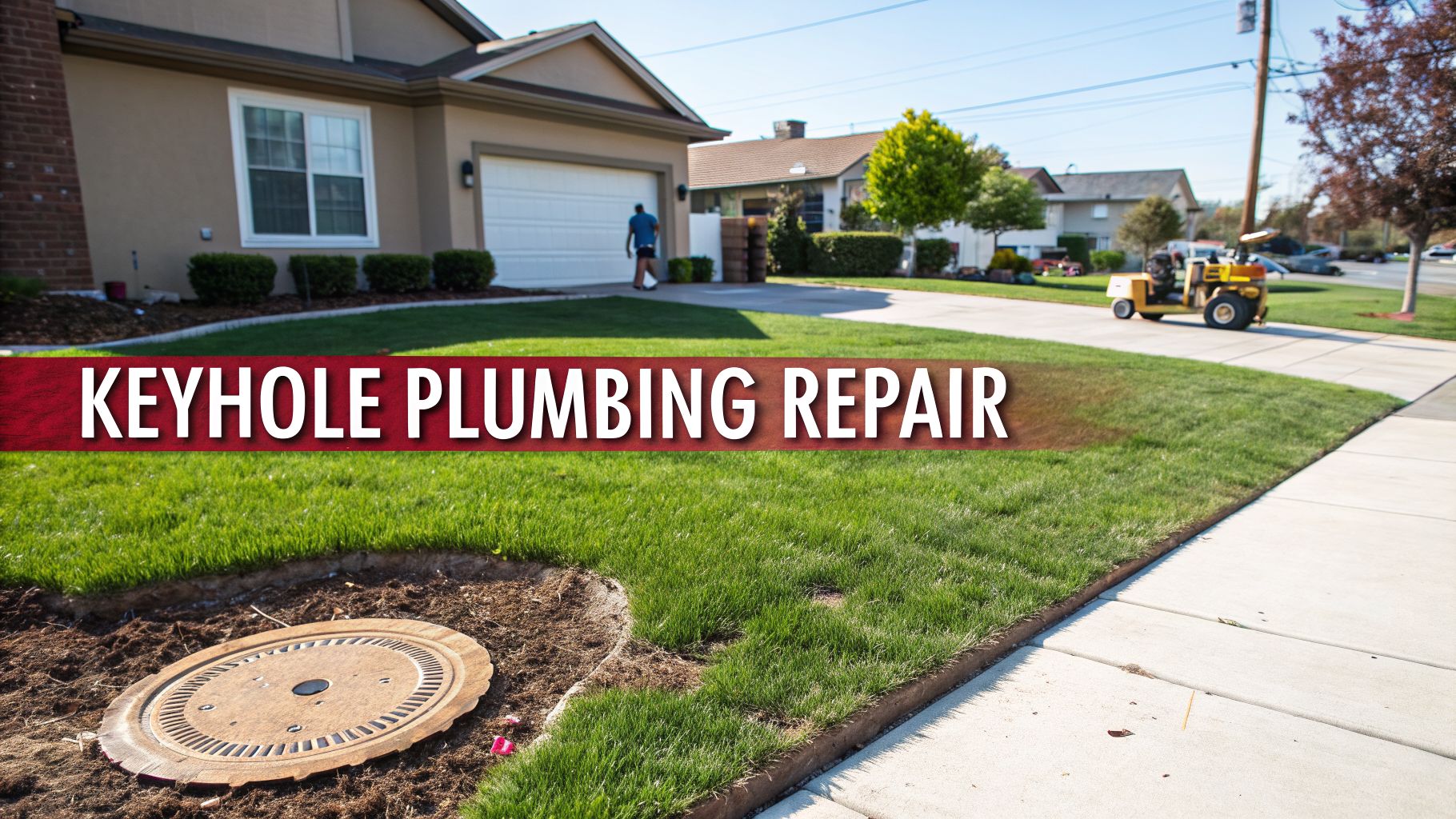
Trenchless sewer line replacement avoids all that chaos. We often compare it to keyhole surgery for your home's plumbing. Instead of digging a huge trench, our technicians can repair or completely replace your underground pipe using just one or two small, strategically placed access points.
A Modern Solution to an Age-Old Problem
The idea behind trenchless technology is brilliant in its simplicity: we fix the pipe from the inside out. This no-dig approach preserves your beautiful landscaping, your mature trees, and any custom stonework you’ve invested in. Everything stays intact.
When you compare the methods side-by-side, the difference is night and day. Traditional replacement is a brute-force approach, while trenchless repair is a precise, surgical fix that delivers a far superior result with minimal disruption.
A new, seamless pipe installed with trenchless methods has a life expectancy of over 50 years. This isn’t a temporary patch—it’s a permanent upgrade that eliminates the joints found in older pipes, which are common entry points for tree roots.
Comparing Your Options
To make the right decision for your home, you have to look at the whole picture: property damage, total project time, and long-term reliability. It's why so many homeowners in the Greater Philadelphia area and New Castle County are choosing the no-dig route—it saves them from massive restoration bills and headaches down the road.
To help you see the differences clearly, we've put together a quick comparison.
Trenchless vs Traditional Sewer Replacement at a Glance
| Feature | Trenchless Replacement | Traditional Replacement |
|---|---|---|
| Yard Impact | Minimal; only 1-2 small access holes are dug. | Major; requires digging a long, deep trench across the yard. |
| Landscaping | Preserves lawns, gardens, trees, and hardscaping. | Destroys everything in the trench path, requiring costly restoration. |
| Project Timeline | Typically completed in 1-2 days. | Can take several days to a week or more, plus restoration time. |
| Pipe Durability | Creates a seamless, joint-free pipe resistant to root intrusion. | New pipe has joints that can be future weak points for roots. |
| Long-Term Cost | Higher initial cost but lower total cost when factoring in restoration. | Lower initial cost but can be thousands more after landscape repair. |
As you can see, while the upfront quote for a traditional dig might seem lower, the "hidden" costs of repairing your property often make trenchless sewer line replacement the smarter and more cost-effective investment in the long run.
Warning Signs Your Sewer Line Is Failing
That gurgling sound from your toilet? The shower that takes forever to drain? We often write these off as minor annoyances. But sometimes, they're the first signs of a serious problem developing deep underground in your sewer line. Catching these clues early can be the difference between a straightforward repair and a full-blown sewage disaster in your home.
Think of it this way: if one sink is slow, the problem is likely just with that drain. But when you have multiple slow drains across the house—the kitchen sink, the downstairs bathroom, the laundry room all acting up at once—that’s a huge red flag. It’s a classic sign that the issue isn't with individual drains, but with the main sewer line that serves your entire home.
Unpleasant Odors and Strange Sounds
Your nose often knows first. If you catch a persistent, foul sewage smell inside your house or even outside in your yard, take it seriously. This isn't normal. It usually means that there's a crack or break in the sewer pipe, allowing foul-smelling gases to escape and rise up from the ground.
Your ears can pick up clues, too. Listen for strange noises coming from your pipes and fixtures.
- A frequent gurgling sound from your toilets or drains often means air is getting trapped by a blockage and is being forced back up.
- Bubbling when you flush a toilet or run water is another sign that the sewer line is struggling to keep up.
These aren't just quirky house sounds; they're the sound of wastewater fighting its way past an obstruction.
Changes in Your Yard and Home
Sometimes the most obvious evidence of a sewer line problem isn't inside your house at all—it's right on your lawn. A leaking pipe can secretly "water" and "fertilize" the ground above it, creating a patch of grass that’s suspiciously green and lush compared to the rest of your yard.
A broken sewer line can do more than just make a mess; it can roll out the welcome mat for pests. Rodents often travel through municipal sewer systems, and a crack in your home's pipe is the perfect entry point. If you're suddenly dealing with a rodent issue you can't explain, a compromised sewer line could be the hidden highway they're using.
Keep an eye out for these other signs around your property:
- Soggy spots or puddles in the yard when it hasn't been raining.
- Foundation cracks that can appear as a slow, constant leak erodes the soil supporting your home.
- Mold growth on your basement walls, which thrives on the excess moisture a broken line can introduce.
Figuring out these symptoms is the first step in avoiding a much bigger problem. For everyday clogs, you can check out our guide on how to prevent drain clogs. But if you’re noticing several of these serious warning signs together, it's definitely time to call in a professional for a camera inspection to see exactly what's going on down there.
How No-Dig Sewer Replacement Actually Works
The idea of replacing a sewer line buried deep underground without tearing up your entire yard sounds almost too good to be true. But it’s not magic—it's just smart engineering. Trenchless sewer line replacement uses some pretty brilliant techniques to install a brand-new pipe right from the inside, leaving your lawn, driveway, and landscaping exactly as they were.
Essentially, we rely on two main methods: pipe bursting and pipe lining. While they solve different kinds of problems, they both achieve the same goal: a new, reliable sewer line without the massive headache of excavation.
Method 1: Pipe Bursting
Think of pipe bursting as the heavy-duty option. This method doesn't just patch up the old pipe; it completely demolishes and replaces it in one powerful motion. It’s our go-to solution for pipes that are collapsed, severely broken, or completely choked with tree roots.
The whole process is incredibly efficient, requiring just two small holes to work from.
Here’s how our team gets it done:
- Strategic Access: First, we dig two small pits at either end of the damaged sewer line. These are our entry and exit points.
- Cable Insertion: We thread a heavy-duty steel cable through the old, broken pipe, from one pit to the other.
- The Bursting Head: A cone-shaped "bursting head" is attached to the cable. Right behind it, we connect the brand-new, seamless HDPE (high-density polyethylene) pipe.
- Breaking and Replacing: A powerful hydraulic machine pulls the cable through. As the bursting head travels along the old pipe, it shatters it outward into the soil, creating a clear path. At the same time, it pulls the new pipe perfectly into place behind it.
- Final Connections: With the new pipe in position, we securely connect it to your home’s plumbing and the city sewer main. Then we fill in the two small pits, and your yard is back to normal.
What you're left with is a brand-new, single-piece pipe that’s far stronger than the old one. Because the new HDPE pipe is seamless, it has no joints, making it incredibly resistant to future root intrusion—one of the top causes of sewer line failure.
Method 2: Pipe Lining (Cured-In-Place Pipe)
If pipe bursting is a full replacement, pipe lining is more like giving your old pipe a new, super-strong inner sleeve. We officially call it Cured-In-Place Pipe (CIPP), and it’s the perfect fix for pipes that are still in one piece but have leaks, cracks, or minor root damage.
The best way to picture it is like a stent for an artery. We insert a flexible liner into the damaged pipe and expand it, reinforcing the pipe from the inside and sealing off any issues.
The rise of trenchless technology has been a game-changer, especially for older homes in places like Greater Philadelphia and New Castle County with pre-1970s plumbing. The global market for this work hit $7.3 billion in 2024, and methods like CIPP make up over 60% of all pipe rehabilitation projects. It’s all driven by the urgent need to fix aging infrastructure without the cost and chaos of digging. You can see more on this trend in Stratview Research's detailed analysis.
The CIPP lining process itself is a fascinating mix of plumbing know-how and material science.
Here are the key steps for CIPP lining:
- Thorough Cleaning: Before we do anything else, we use high-pressure water jets to scour the inside of the existing pipe. We have to get rid of all the roots, sludge, and debris so the new liner can bond perfectly.
- Liner Preparation: We take a flexible felt liner and cut it to the exact length needed. Then, we saturate it with a special two-part epoxy resin.
- Liner Insertion: The resin-soaked liner is carefully fed into the old pipe through an existing cleanout or access point. No digging is needed for this part.
- Curing the Liner: Once the liner is in place, we inflate an internal rubber bladder with hot water or air. This presses the epoxy-soaked liner tightly against the walls of the old pipe. The heat (or ambient air) cures the resin, hardening it into a rock-solid, jointless pipe within the original one.
- Final Inspection: After a few hours, the resin is fully cured. We deflate and remove the bladder, then run a camera through one last time to confirm the new pipe is flawless and ready for decades of service.
These warning signs—from slow drains to weird smells—are your sewer line’s way of asking for help before disaster strikes.
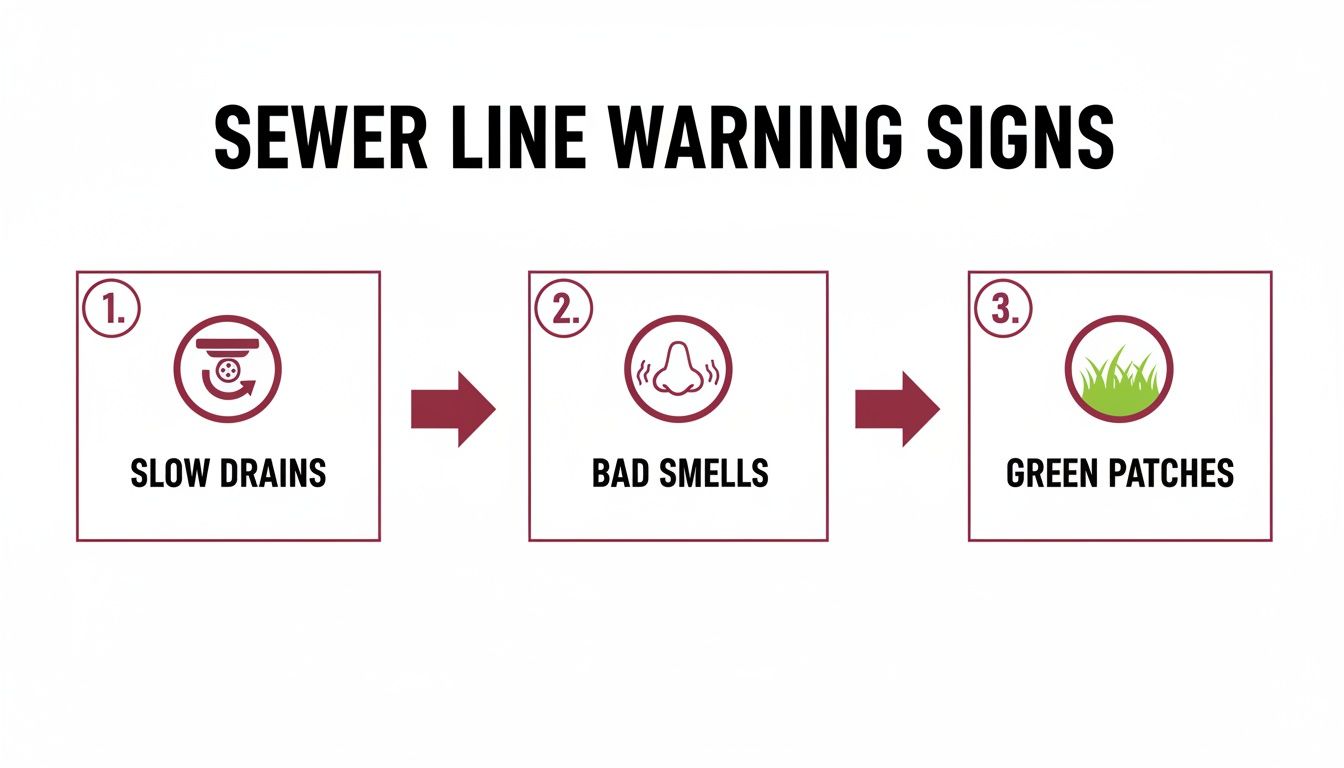
The infographic above highlights how small annoyances can point to a much bigger problem underground. By catching these signs early, you can schedule a trenchless sewer line replacement and avoid a messy, expensive backup down the road.
The Major Benefits of a No-Dig Solution

When people first hear about trenchless sewer line replacement, the biggest selling point seems obvious: you don’t have to dig up your yard. While that’s a huge plus, the real advantages run much deeper, impacting your wallet, your schedule, and the long-term health of your home’s plumbing.
Choosing a no-dig solution is about more than just avoiding a mess; it's a direct investment in your property's value. Think about what it would cost to replace that beautiful paver patio, mature trees, or custom walkway. Those restoration costs can easily add thousands to a traditional sewer repair, turning a plumbing problem into a full-blown landscaping nightmare.
Save Your Landscaping and Your Money
With a trenchless approach, all your hard work—the garden, the sprinkler system, the expensive hardscaping—is safe. We perform the entire replacement underground, using just one or two small access points that are easily restored when we’re done. Your yard remains intact.
This is exactly why the technology is taking off. The global trenchless pipe repair market was valued at USD 1.66 billion in 2023 and is expected to grow to USD 2.14 billion by 2028. The reason is simple: it works. It allows us to fix critical infrastructure while cutting down property disruption by as much as 90% compared to old-school digging. You can explore more about the market growth on PR Newswire to see how this shift is happening worldwide.
Get Your Life Back to Normal Faster
A traditional dig-and-replace job isn't quick. It can turn your property into a noisy, messy construction zone for a week or even longer. You have to deal with the excavation, the actual pipe replacement, backfilling the trench, and then the long process of trying to put your yard back together.
Most trenchless sewer replacements, on the other hand, are finished in just one to two days.
- Day 1: Our crew confirms the plan with a final camera inspection, then we complete the pipe bursting or pipe lining process itself.
- Day 2: We handle the final connections, run tests to ensure everything is flowing perfectly, and restore the small access points.
That kind of speed means your family's daily routine is barely disturbed. You get a brand-new sewer line without putting your life on hold for a week.
By minimizing new material consumption and waste generation, trenchless solutions align perfectly with principles of circular economy waste management. Instead of excavating and sending old pipes to a landfill, we are repairing and reinforcing what’s already there, making it a much more sustainable choice.
A Long-Term Investment in Durability
Maybe the most significant benefit of all is the quality of the new pipe. Trenchless methods install a solid, seamless pipe from modern materials like high-density polyethylene (HDPE). This single, joint-free line has a life expectancy of 50 years or more.
Why does "seamless" matter so much? Old sewer lines were built from shorter sections of clay or cast iron, creating numerous joints. Over the years, we've seen time and again that these joints are the system's weakest points—and they're exactly where tree roots force their way in.
A new trenchless pipe eliminates those weak spots completely. It's a truly permanent fix.
- Impervious to Root Intrusion: No joints means no entry points for roots. Period.
- Corrosion-Proof: Unlike old cast iron, modern HDPE won’t rust, corrode, or break down over time.
- Leak-Proof: The solid, continuous pipe wall prevents the persistent leaks and cracks that plague older, jointed systems.
Ultimately, going trenchless isn't just about patching a problem. It’s a powerful upgrade to your home's infrastructure that provides decades of worry-free performance.
Understanding Trenchless Repair Costs and Timelines
When you get the news that your sewer line is failing, two big questions pop into your head right away: "What's this going to cost me?" and "How long is my yard going to be a disaster zone?"
With trenchless sewer line replacement, the answers are a lot better than you might fear. While the initial quote can sometimes look higher than a traditional dig-and-replace job, you have to look at the whole picture to see where the real value is.
There’s no single price tag for this kind of work. The final cost depends on what we find underground, which is why a professional video camera inspection is always our first step. It’s the only way to know exactly what we’re dealing with and give you a firm, honest price.
Breaking Down the Cost Factors
So, what goes into the final price? We typically calculate trenchless projects on a per-foot basis, and several things can influence that rate.
- Pipe Length and Diameter: This one's pretty straightforward. Longer, wider pipes need more material and time, so a 40-foot line will be less involved than a 100-foot one.
- Accessibility: How easy is it for us to get to your pipe? A line running under a soft lawn is much simpler to access than one buried beneath a concrete patio or a mature tree's root system.
- Chosen Method: Pipe bursting can be more intensive than pipe lining (CIPP), and the price reflects that. We choose the right method based on the condition of your existing pipe—is it just cracked, or has it completely collapsed?
- Permits and Location: Every municipality has its own fees and regulations for this type of work. We take care of pulling all the necessary permits so your project is done by the book.
When you add up the thousands of dollars you won't have to spend on rebuilding your deck, laying new sod, or repaving a driveway, the financial sense of trenchless repair becomes crystal clear. And if you're already facing the mess of a sewer backup, you might want to look at our guide on sewage backup cleanup costs.
Mapping Out the Project Timeline
Maybe the best part about trenchless technology is just how fast it is. A traditional excavation project can turn your life upside down for a week or more. Most of our trenchless jobs? We’re in and out in just one or two days.
This speed is a huge reason the method has become so popular. In fact, traditional digging can cost up to 50% more once you factor in landscape restoration, and it takes 3-5 times longer to complete. With wastewater pipes across the U.S. failing at a rate of 1-2% annually, trenchless is a fast, modern solution that can extend the life of your pipes by 50-100 years. You can discover more about the growing trenchless service market to see why it's the go-to for infrastructure repairs today.
A typical trenchless sewer replacement project follows a highly efficient schedule, minimizing disruption to your home and routine. You can often have your plumbing back in full service by the end of the first day.
Here’s what a typical project schedule looks like:
- Day 1 (Morning): Our crew shows up, walks you through the plan one last time, and preps the small access pits. We run a camera through the line again just to be sure nothing has changed.
- Day 1 (Afternoon): This is when the main event happens—either pipe bursting or lining. For most homes, this part of the job only takes a few hours.
- Day 2 (Morning): We connect the new pipe to your system and run a final camera inspection to guarantee a flawless installation. After that, we backfill the access points and clean up the site, leaving your property just as we found it.
This streamlined process gets your water back on and your life back to normal in record time, all without destroying your yard.
Why Your Choice of Plumber Matters Most
Knowing all about trenchless sewer line replacement is one thing, but the real key to a successful project is picking the right team for the job. Even the most advanced pipe bursting or lining equipment is only as effective as the technician controlling it. The line between a lasting, hassle-free repair and a complete nightmare really comes down to a company's experience, availability, and trustworthiness.
Let's face it—sewer problems never pop up at a good time. That’s why you absolutely need a plumber with a true 24/7 emergency response. When you’ve got sewage backing up into your basement, you can’t afford to wait for a call back tomorrow morning. You need a team that picks up the phone and gets moving right away.
What to Expect from a Real Pro
A true professional does more than just fix the pipe; they give you peace of mind. That process begins with honest, clear communication. You should always get guaranteed, upfront pricing before a single tool comes out, so you never have to worry about surprise costs on the final bill.
You can also spot a pro by how they respect your time and property.
- An on-time guarantee shows they value your schedule.
- A fully stocked service vehicle shows they came prepared to finish the job, not just diagnose it.
At Precision Plus Plumbing, our trucks are like rolling warehouses. That’s how over 90% of issues are resolved on the first visit. We have the parts and tools on hand to tackle just about anything, which means your problem gets solved faster and your life gets back to normal sooner.
Top-tier companies also stand firmly behind their work with solid, written guarantees. We’re not talking about vague promises. Look for policies like risk-free satisfaction and no-lemon guarantees on new equipment. That's the sign of a company that’s confident in its craftsmanship and willing to put it in writing.
Local Knowledge is a Game-Changer
Every area has its own quirks, from the soil composition to the specific type of pipes used in older homes. Choosing a locally owned and operated company with deep roots in the Greater Philadelphia and New Castle County areas gives you a huge advantage. A local expert has seen it all before—they know the common headaches for homes in your neighborhood because they’ve fixed them countless times.
If you want to dig deeper into what separates the best from the rest, you can learn more about what makes a trusted local plumber in our detailed article.
In the end, you just need someone who will get the job done right the first time. That requires the right equipment, years of training, and a genuine commitment to doing good work for their neighbors. When your home and peace of mind are at stake, settling for anything less than a proven, guaranteed expert simply isn’t worth the risk.
Frequently Asked Questions About Trenchless Repair
Even after you get the basics down, it’s completely normal to have a few more questions about how trenchless sewer line replacement might work for your home. It’s a fantastic technology, but you need to know what to expect. Here are some straightforward answers to the questions we hear most often from homeowners.
Can Trenchless Methods Fix Any Type of Pipe Damage?
Trenchless repairs are incredibly effective, but they do have their limits. They’re the perfect solution for pipes that are cracked, leaking, full of tree roots, or starting to corrode.
However, if a pipe has completely collapsed on itself or has sections that are badly misaligned, these methods might not be the answer. A camera inspection is the only way to know for sure. For the vast majority of common sewer problems, though, either pipe lining or pipe bursting is a perfect, long-lasting fix.
How Do I Know If My Property Is a Good Candidate?
The only way to know for certain is with a professional video camera inspection. When our technicians run a camera through your line, they’re looking at a few key things to see if a no-dig repair is the right move.
We look at:
- Pipe Material: Trenchless works great on common materials like cast iron, clay, and PVC.
- Pipe Condition: We need to see if the pipe is just cracked or if it has caved in entirely.
- Pipe Layout: We check the pipe’s path for any sharp 90-degree bends or severe “bellies” (sags in the line) that could cause problems.
Once we see what’s going on in there, we can confidently tell you the best and most cost-effective way to fix it for good.
Is the New Pipe Liner as Strong as a Brand New Pipe?
That’s a great question, and the answer is yes—in fact, it’s often even better. The seamless pipe we create with either pipe bursting or pipe lining is incredibly strong and built to last.
The new pipe is a single, continuous piece with no joints. This is a huge upgrade from older, sectional pipes, because those joints are the weak spots where tree roots typically break in and cause backups. These modern pipe materials are also corrosion-proof and are rated to last for 50 years or more.
Speaking of quality, it’s also crucial to understand whether a contractor needs insurance to protect their work and your property. A fully insured company isn’t just protecting its crew; it’s giving you total peace of mind. It's a non-negotiable sign of a true professional you can trust with your home.
Facing a sewer line emergency? Don't wait for the problem to get worse. Contact Precision Plus Plumbing today for a fast, on-time response and a guaranteed, upfront price. Let our experts provide a permanent solution without destroying your yard. Visit us online or call our 24/7 team now at https://www.precisionserviceexperts.com.