
It’s a feeling every homeowner dreads: the sight of water creeping across your floor from a burst pipe or a failing water heater. That initial moment of panic is completely normal, but what you do in the next few minutes is absolutely crucial.
Think of it as first aid for your home—the immediate goal isn't the cleanup, but stopping the bleeding and preventing any more damage.
Your First Steps After Discovering Water Damage
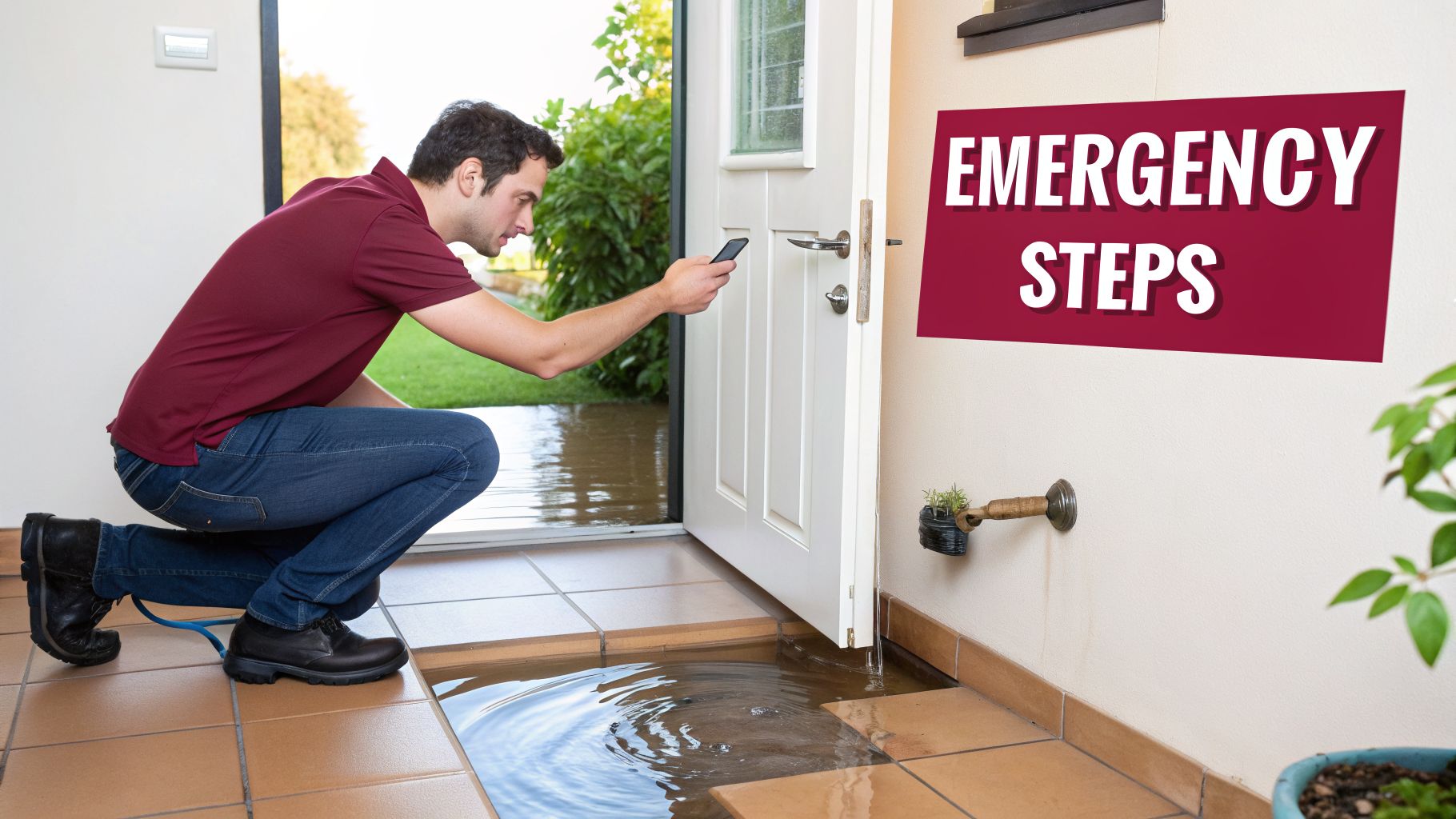
Before you even think about grabbing a mop, your focus needs to be on two things: safety and containment. A clear head now can save you from major headaches later.
And if you're feeling overwhelmed, know you're not alone. In the U.S., more than 14,000 people deal with a water damage emergency every single day, making it one of the most common reasons homeowners file an insurance claim.
The Immediate Action Plan
Navigating the aftermath involves dealing with your insurance company, so it helps to understand the initial steps for water damage restoration service claims to avoid common mistakes. But before making any calls, follow these critical safety steps.
The table below breaks down exactly what to do—and why—the moment you find water.
| Priority | Action Step | Reason |
|---|---|---|
| Safety First | Shut Off the Electricity | If you can safely reach your breaker box without walking through water, kill the power to affected areas. Water and live circuits are an extremely dangerous mix. |
| Stop the Source | Turn Off the Main Water Valve | This stops more water from entering your home. If it's a single appliance, use its local shutoff valve instead. |
| Protect Valuables | Move or Elevate Belongings | If the area is safe to enter, get furniture, electronics, documents, and sentimental items to a dry spot or lift them off the floor with blocks. |
Following these steps stabilizes the situation and buys you crucial time.
Once the immediate danger is handled, it’s time to call in the professionals. Professional water damage restoration services are not just a cleanup crew; they bring a scientific process and specialized equipment to the table. Their job is to remove the water you see and, more importantly, the hidden moisture that can destroy your home’s structure and lead to mold.
Even a slow drip you’ve been ignoring can cause serious issues, which is why it's so important to understand why small leaks can turn into big problems fast.
Think of a professional restoration team as the calm, experienced leader in a crisis. They know exactly how to take a home from chaos back to normal, handling all the technical details so you can focus on what matters most—your family.
Inside The Professional Restoration Process
When you call for help with water damage, a team of trained pros doesn't just show up with a mop. They arrive with a disciplined strategy and a truck full of specialized equipment designed to bring your home back from the brink. It's a methodical process that turns chaos back into a safe, dry, and healthy living space.
Let's walk through what this looks like with a common disaster: a dishwasher supply line breaks, flooding your kitchen. Water soaks the base of your cabinets, seeps under the flooring, and saturates the drywall. Here’s how a professional team would handle it.
Step 1: Assessment and Water Extraction
The first thing our technicians do is a rapid but thorough damage assessment. Using tools like moisture meters and thermal imaging cameras, they find not just the obvious puddles but also the hidden moisture that's already wicked up walls or settled into the subfloor. This initial inspection is everything—it's the blueprint for an effective drying plan.
Once we know the full scope of the problem, the immediate priority is getting all that standing water out. This isn't a job for a shop vac. We use powerful, truck-mounted extraction units that can pull out hundreds of gallons of water in a hurry. This step stops the damage from spreading and sets the stage for the most critical phase: drying.
Step 2: Strategic Drying and Dehumidification
Just getting rid of the standing water is only the first part of the job. The real fight is against the moisture you can't see, the water trapped inside porous materials like wood, drywall, and insulation. If you leave that moisture behind, the problem will absolutely come back, often as destructive mold.
To win this fight, the team sets up an arsenal of industrial-grade equipment:
- High-Velocity Air Movers: We strategically place these powerful fans to push air directly across wet surfaces. This dramatically speeds up evaporation, basically lifting the moisture right out of the materials and into the air.
- Commercial Dehumidifiers: As the air movers work, the air gets heavy with moisture. Our large dehumidifiers are the other half of the equation. They suck in that damp air, strip the water out of it, and pump dry air back into the room, creating the perfect drying environment.
This is the longest and most important part of the process. It can take several days of non-stop work to get the moisture content in your home's structure back to normal, pre-damage levels. We monitor the progress daily with moisture meters to make sure it's done right. For a deeper dive on what affects this timeline, check out our guide on how long water damage restoration takes.
A professional drying process is non-negotiable. Lingering moisture is the primary cause of secondary damage, including structural rot and mold infestations that can appear within 24 to 48 hours. Proper drying protects both your property and your family's health.
Step 3: Cleaning and Sanitizing
Once everything is verifiably dry, the focus shifts to making the area clean and safe again. The water from our dishwasher example is likely "Gray Water," meaning it could be carrying contaminants.
Our technicians will clean all affected surfaces and belongings, sometimes using special techniques to salvage items like furniture or important papers. For the structure of your home, we use EPA-approved antimicrobial treatments to sanitize everything. This kills off any lingering bacteria or microorganisms and prevents mold from getting a foothold, ensuring your home is not just dry, but hygienically safe.
Step 4: Full Restoration and Repairs
This is the final step: putting your home back together. The mitigation work stopped the problem; the restoration work rebuilds what was lost. This is where the construction side of our service shines.
For that dishwasher leak, the restoration phase could involve:
- Cutting out and replacing damaged sections of drywall.
- Tearing out warped flooring and installing a new floor.
- Replacing water-logged kitchen cabinets and baseboards.
- Painting, sealing, and finishing the repaired areas so they blend in perfectly with the rest of your home.
This last stage is what makes your house feel like a home again. From the emergency call to that final coat of paint, a professional team handles every detail to restore not just your property, but your peace of mind.
Why The Source Of Water Matters
When you find water in your home, the immediate gut reaction is to get it out. Period. But here's something most homeowners don't realize: where that water came from is the single most important factor in how we handle the cleanup.
Not all water is the same. Treating a leak from a clean water supply line the same way you’d treat a sewer backup is a dangerous mistake. Think of it like this: you wouldn't use the same method to clean up a spilled glass of water and a hazardous chemical spill. The risks and procedures are entirely different, and that's why a professional assessment is step one.
Our technicians are trained to immediately identify the water category, which dictates the safety gear, equipment, and restoration methods we use from the moment we arrive on site.
This careful classification is a cornerstone of the entire restoration industry. It’s a huge field, too—water damage restoration makes up a massive 38.56% share of the disaster recovery market. With over 14,000 properties across the country dealing with water damage every single day, getting this right is non-negotiable.
To help you understand what you might be facing, here’s a breakdown of the three official categories of water damage.
Water Damage Categories And Their Sources
This table gives you a quick snapshot of the different types of water damage, where they come from, and the health risks they pose.
| Category | Common Name | Typical Sources | Health Risk Level |
|---|---|---|---|
| Category 1 | Clean Water | Broken supply lines, overflowing sinks/tubs (no soap), rainwater from a clean roof. | Low – Not harmful to touch or ingest initially. |
| Category 2 | Gray Water | Dishwasher/washing machine discharge, toilet overflow (urine only), sump pump failures. | Medium – Contains contaminants that can cause illness if ingested. |
| Category 3 | Black Water | Sewage backups, rising floodwater from rivers/streams, seawater intrusion. | High – Grossly contaminated with pathogens and toxins. Severe health risk. |
Understanding these distinctions is the first step in a safe and effective restoration, protecting both your property and your family’s health.
Category 1: Clean Water
This is the least threatening type of water intrusion. Clean Water comes from a sanitary source, like the pipes that bring fresh water into your home. It doesn't pose a significant health risk if you come into contact with it.
You'll typically see Category 1 water from:
- Busted water supply pipes
- A leaky connection to your refrigerator’s ice maker
- An overflowing bathtub or sink (as long as no soap or other contaminants are mixed in)
- Rainwater that hasn't picked up any debris
But don't let the name fool you. Even clean water becomes a problem fast. If left sitting for more than 48 hours, it can mix with bacteria and microbes in your home’s building materials, quickly degrading into Category 2.
Category 2: Gray Water
This is where things get more serious. Gray Water is contaminated water that can make you sick if you’re exposed to it. It has a significant level of biological or chemical contaminants.
Common sources of Gray Water include:
- Discharge from a washing machine or dishwasher
- An overflowing toilet that only contains urine (no feces)
- A failed sump pump that has been sitting
- Water from a broken aquarium
Cleanup for Gray Water is more involved. It always requires thorough sanitization, and we often have to remove porous materials like carpet padding that have absorbed the contaminants.
Category 3: Black Water
This is the most dangerous category, and it's considered a biohazard emergency. Black Water is grossly contaminated with harmful pathogens, toxins, and other nasty things that can cause severe illness.
Any situation involving Black Water is an immediate health hazard. Our teams must wear full personal protective equipment (PPE), set up containment barriers, and follow strict protocols to decontaminate the area safely.
Sources of Category 3 water are unmistakable:
- Sewage backing up from a toilet or drain line
- Floodwaters from overflowing rivers or streams, which are full of ground contaminants
- Seawater from a coastal storm surge
A key part of our work involves using professional water quality testing methods to confirm the level of contamination. And since any water can trigger mold growth in as little as 24-48 hours, professional mold testing is a standard part of our process for any significant water event.
This guide breaks down the four core steps we follow in every restoration project.
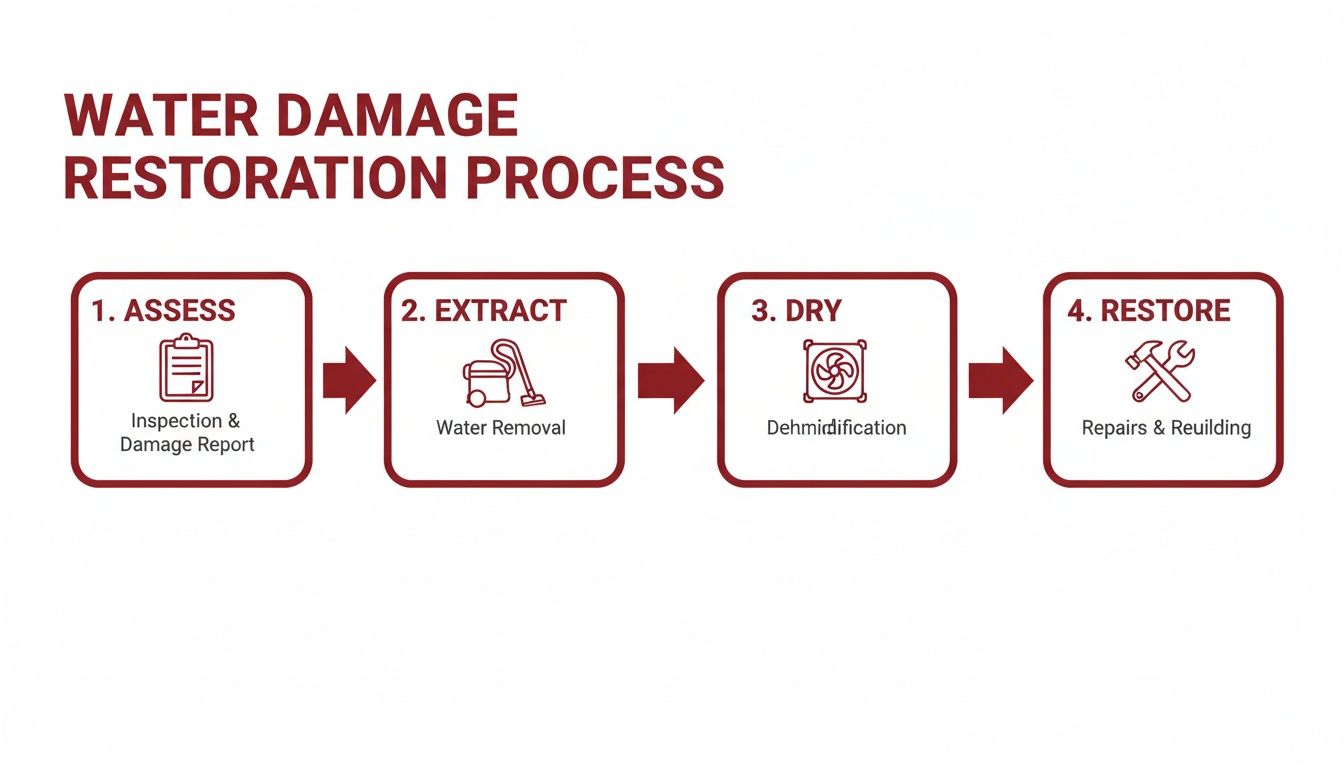
No matter what category of water we're dealing with, this proven process of assessing, extracting, drying, and restoring is the foundation for getting your home back to normal.
Navigating Insurance Claims And Restoration Costs
Finding your home soaked with water is bad enough. Then comes the second wave of stress: how are you going to pay for all of this? It’s a completely valid concern, but understanding how insurance works and what goes into the cost of **water damage restoration services** can make the entire process feel much more manageable.Most homeowner's insurance policies are designed to cover "sudden and accidental" water damage. Think of it this way: if a pipe bursts behind a wall or your washing machine suddenly springs a massive leak, you're likely covered. These are the unexpected disasters insurance is built for.
What isn't covered, however, are problems that stem from deferred maintenance. That slow drip under the kitchen sink you've been meaning to fix for months? That's usually on you. The same goes for water seeping in through foundation cracks over time. And it's important to know that widespread damage from a hurricane or river overflow requires a separate flood insurance policy, which is not part of a standard plan.
Understanding Restoration Costs
The final price tag for a water damage job isn't pulled out of a hat. Every project is different, and the cost is a direct reflection of the specific work required. A small, contained leak might run you $1,000 to $3,000, but a fully flooded basement can easily exceed $10,000.
Here’s a look at what drives that final number:
- Extent of Damage: Simply put, the more space that’s wet, the higher the cost. We measure the affected square footage across floors, walls, and even ceilings.
- Water Category: As we covered earlier, cleaning up contaminated Category 3 (Black Water) is a much more involved—and therefore more expensive—process than handling Category 1 (Clean Water) because of the serious health risks involved.
- Affected Materials: It's a lot cheaper to tear out and replace soggy carpet than it is to save and restore custom hardwood floors. Plaster walls, granite countertops, and other high-end materials also add to the complexity and cost.
- Drying Time: The job isn't done until your home's structure is completely dry. The amount of time our industrial-grade air movers and dehumidifiers have to run directly impacts the cost.
It's crucial to act fast. The longer water sits, the more it soaks into building materials, which can turn a straightforward drying job into a major reconstruction project involving mold remediation and structural repairs.
The Insurance Claims Process Step By Step
Navigating an insurance claim can feel like a full-time job, but a little preparation goes a long way. While a professional restoration company like Precision Plus Plumbing will communicate directly with your insurance provider, knowing the playbook helps you stay in control.
- Notify Your Insurer Immediately: Once you know everyone is safe, your very next call should be to your insurance company to file a claim. They'll give you a claim number and tell you which adjuster is assigned to your case.
- Document Everything Thoroughly: This is your most important task. Before anything is moved or cleaned up, take dozens of photos and videos. Get shots of the water's source, all the wet areas, and any damaged furniture or belongings. This visual proof is your strongest asset.
- Get a Professional Assessment: We'll conduct a detailed inspection and create an itemized estimate using the same industry-standard software that insurance companies use. This document breaks down every single cost, from water extraction to drying equipment rental to materials for repairs.
- Meet with the Adjuster: The insurance adjuster will schedule a time to visit and inspect the damage for themselves. Make sure you have your photos and our detailed estimate ready for them. Your restoration project manager can and should be there to walk the adjuster through the property and justify the scope of work.
Following these steps creates a clear, undeniable record that helps your claim move along fairly and without unnecessary delays. It helps turn a chaotic situation into a clear, step-by-step recovery plan.
How To Choose The Right Restoration Company

When your basement looks more like a swimming pool, panic is setting in. The first instinct for most people is to just call the first company that pops up on Google. I get it. But taking a deep breath and spending just ten minutes vetting your options can be the difference between a smooth recovery and a nightmare of shoddy work and hidden fees.
You're not just hiring a cleanup crew; you're trusting someone with the health and safety of your home. And with more companies jumping into the business—the global market is projected to grow from $4,470 million in 2025 to a staggering $6,640 million by 2033—it's more important than ever to know who you're letting through your door. As you can discover more insights about the restoration market on datainsightsmarket.com, this boom means you have a lot of choices, so making the right one is critical.
Your Contractor Vetting Checklist
Before you agree to anything, run through these essential questions. A pro will have solid answers ready. If they hesitate or get defensive, that's a major red flag.
Are You IICRC Certified?
The Institute of Inspection, Cleaning and Restoration Certification (IICRC) is the organization that sets the professional standards for our industry. Certification means their technicians are properly trained on the right way to do things safely and effectively. Honestly, if a company isn't IICRC certified, don't even consider them.Can I See Your License and Insurance?
This is a hard-and-fast rule. They must have a current local contractor's license, general liability insurance, and worker's compensation. This isn’t just about them; it’s about protecting you from liability if someone gets hurt on your property during the job.Do You Guarantee Your Work?
A company that’s confident in its skills will always stand behind its work. Ask them what kind of warranty or guarantee they offer on both the initial drying (mitigation) and the final repairs (restoration).
Non-Negotiable Qualities In a Restoration Partner
Beyond the basic questions, you want to get a feel for the company itself. The best teams out there share a few common traits that separate them from the rest.
- Around-the-Clock Availability: A burst pipe doesn't care if it's 2 AM on a Sunday. You need a team that answers the phone 24/7 and can be at your house within a couple of hours, ready to work.
- Deep Local Roots: A contractor based right here in the Greater Philadelphia, South Jersey, or New Castle County area knows our local homes, our weather, and our building codes. Check their online reviews from local customers and don’t be shy about asking for references.
- Clear, Honest Communication: From the very first call, they should explain what’s happening in plain English. They need to provide a detailed, itemized estimate and be comfortable working directly with your insurance company to make the claims process less of a headache for you.
Think of hiring a restoration company like choosing a surgeon for an emergency operation. You wouldn't pick one without checking their credentials and experience. The health of your home deserves the same level of care.
It’s tough to stay calm and think clearly when you're dealing with a water emergency, but this is one of the most important decisions you'll make. A little due diligence now ensures you partner with a team that will restore your property—and your peace of mind.
Common Questions About Water Damage Restoration
When water shows up where it shouldn’t be, your mind starts racing. It's a stressful, overwhelming situation that most people hope to never deal with, so it's completely normal to have a ton of questions. Getting clear, honest answers is the first step toward getting things back to normal and feeling in control again.
We get calls from homeowners all over the Philadelphia area who are facing this for the first time. Here are some of the most common questions we hear, along with the straightforward answers you need.
How Long Does The Water Damage Restoration Process Take
This is always the first question, and the honest-to-goodness answer is: it really depends. Every water damage situation is unique, so the timeline is, too. Think of it like recovering from an injury—a small sprain heals much faster than a major break. A minor leak from a clean pipe that’s caught early might be dried and fixed in just 3 to 5 days.
On the other hand, a major event like a flooded basement with contaminated water can easily stretch a week or longer. The good news is that the emergency part happens fast. We focus on extracting all the standing water within the first 24 hours to stop the damage in its tracks.
What takes the most time is almost always the structural drying. This is where we bring in heavy-duty air movers and dehumidifiers to pull every last bit of moisture from drywall, wood studs, and subfloors. It's a critical step that can take several days of non-stop work to get your home's moisture levels safely back to where they belong. Once a professional gets on-site, they can give you a much more accurate timeline.
Can I Clean Up Minor Water Damage Myself
It's tempting to think you can handle a small leak with a few towels and a fan. For a simple spilled glass of water, that's perfectly fine. But for anything more, you’re taking a big risk. The real problem isn't the puddle you can see; it's the moisture that silently wicks into drywall, insulation, and the subfloor under your carpet or vinyl.
Without professional tools like thermal cameras and moisture meters, you simply can't know if an area is completely dry.
That hidden, lingering moisture is a perfect breeding ground for mold, which can start growing in as little as 24 to 48 hours. A small water problem can quickly turn into a major air quality issue that’s much harder—and more expensive—to fix.
For anything more than a surface spill on a hard floor, calling a pro is the safest play. It protects your property from long-term structural problems and your family from potential health hazards. If you're already dealing with a persistent damp feeling, you might want to learn more about how to get rid of that musty smell in your basement, as it’s a classic sign of hidden moisture.
What Is The Difference Between Water Mitigation And Restoration
People often use these terms interchangeably, but in our world, they mean two very different things that happen one after the other. A good analogy is a medical emergency: first, you stop the bleeding, and only then can you start stitching up the wound.
Water Mitigation is the Emergency Response. This is the "stop the bleeding" part. It’s all the immediate actions we take to prevent the damage from getting any worse. Mitigation means finding and stopping the water source, pumping out all standing water, tearing out ruined materials, and setting up drying equipment. The only goal here is damage control.
Water Restoration is the Rebuilding Phase. This is the "stitching up" part of the job. Once everything is confirmed to be clean, dry, and stable, the restoration work begins. This involves all the repairs needed to put your home back together, just like it was before. It could be replacing drywall, laying new floors, hanging cabinets, or painting.
A true full-service company handles both, managing the entire project from that first panicked phone call until the final walkthrough.
Will My Belongings Be Salvageable After Water Damage
Whether your personal items can be saved comes down to three things: what they’re made of, how long they were wet, and what kind of water got on them. The answer can be very different for a wooden coffee table versus a fabric couch.
Here’s a quick rundown of what to expect:
- Non-Porous Items: Things made of glass, metal, hard plastics, or sealed wood have an excellent chance of being saved. Professionals can usually clean, sanitize, and restore them completely.
- Porous Items: This is where it gets tricky. Upholstered furniture, mattresses, carpets, books, and anything made of particle board soak up water like a sponge. If they were soaked in clean water (Category 1) and we get to them fast, they can sometimes be saved. But if they're saturated with contaminated Gray or Black Water (Category 2 or 3), they're almost always a lost cause and must be disposed of for safety.
A professional restoration technician will carefully sort through everything. They’ll create a detailed inventory, separating what can be restored from what needs to be thrown out, giving you and your insurance adjuster clear documentation.
When facing a water emergency, you need a team you can trust to act fast and get the job done right. Precision Plus Plumbing provides 24/7 emergency water damage restoration services across Greater Philadelphia, South Jersey, and New Castle County. Our IICRC-certified experts handle everything from the initial cleanup to the final repairs, working directly with your insurance to make the process as smooth as possible. Visit us online to get immediate help and restore your peace of mind.