

That moment you open the basement door and see standing water is a gut-punch. It's easy to panic, but what you do in the next 15 minutes is critical. Your first thoughts must be about safety, not saving your stuff.
Your First Moves: A Safety-First Protocol
Before you take a single step into that water, stop. The most immediate and life-threatening danger isn't the water itself—it's electricity.
Water is an incredibly effective conductor. If it has reached electrical outlets, power strips, or any plugged-in appliances, the entire pool of water could be live. Stepping into it could be fatal.
Never enter standing water unless you are 100% certain the power is off. If your circuit breaker is in the flooded area and you can't get to it safely, stay out. Your only move is to call your utility company or an emergency electrician immediately.
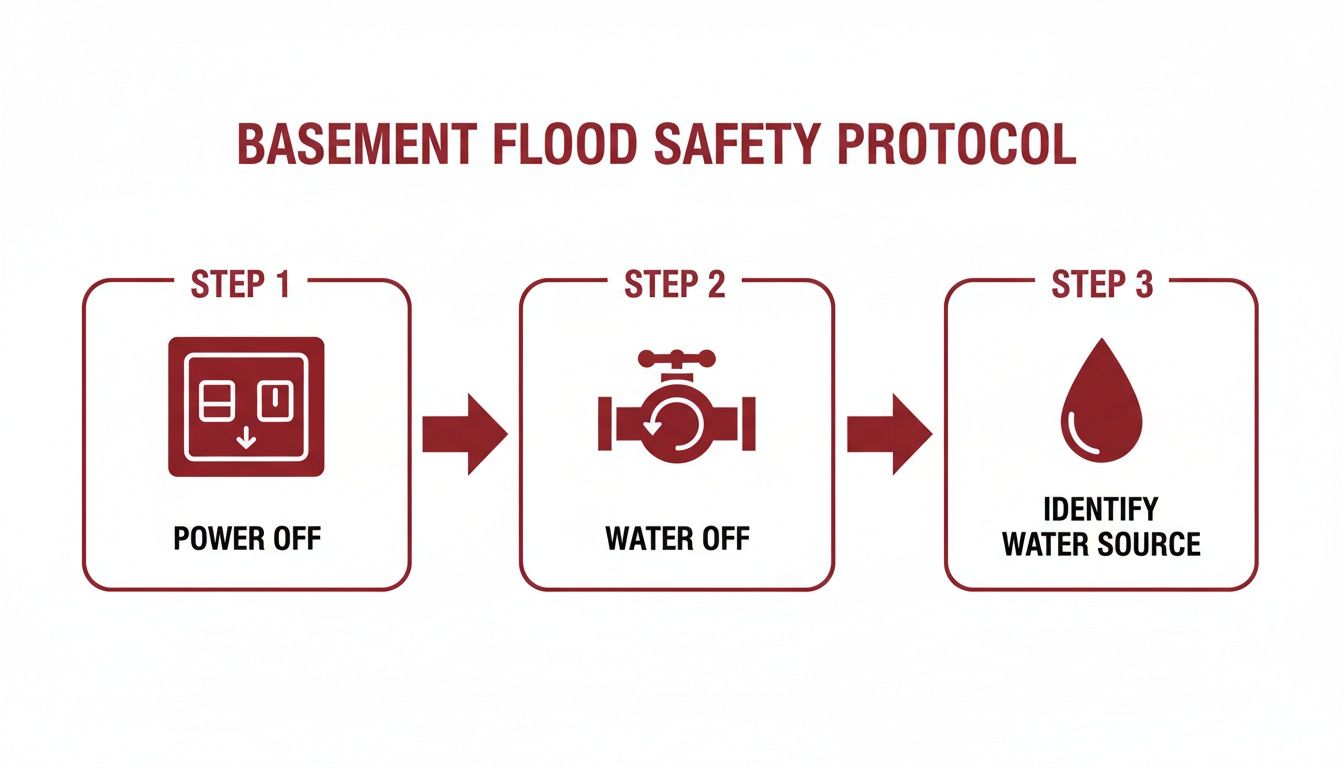
The following table lays out your priorities. Don't think about cleanup or damage yet—just focus on these immediate safety actions.
Immediate Actions for a Flooded Basement
| Priority | Action | Why It Matters |
|---|---|---|
| 1 (Critical) | Turn Off the Electricity | Prevents the risk of lethal electrocution. Water + electricity is a deadly combination. |
| 2 | Shut Off the Main Water Valve | Stops more water from entering if the flood is from a plumbing failure (burst pipe, water heater leak). |
| 3 | Identify the Water Source | Helps determine the level of contamination and health risks, guiding your next steps for cleanup. |
Once you've run through this safety checklist, you can start to get a handle on the situation.
Secure the Utilities
First things first: cut the power. Head to your home's main electrical panel and shut off the main breaker. This is usually the largest switch at the top. If you know which circuits power the basement, you can turn those off individually, but killing the main power is the safest and fastest route.
Next, stop the source. If the flooding is coming from inside your home—like a burst pipe or a leaking water heater—you need to shut off your home's main water valve. This is one of those things every homeowner should know how to find before an emergency strikes. If you're not sure where yours is, you can learn what the main water valve looks like and find it now.
This simple protocol—power off, water off—is your mantra in the first few minutes.
Identify the Water Type
With the immediate hazards handled, take a moment to figure out what kind of water you're dealing with. This is incredibly important for your personal safety and dictates how you'll approach the cleanup.
Category 1: Clean Water
This is water from a sanitary source, like a broken supply line or an overflowing sink. While it starts out clean, it won't stay that way for long as it mixes with whatever is on your basement floor.Category 2: Gray Water
This is dirty water that could make you sick. Think washing machine overflows, dishwasher discharge, or a failed sump pump that has churned up groundwater. It's significantly contaminated.Category 3: Black Water
This is the worst-case scenario. Black water is grossly unsanitary and dangerous, containing raw sewage, bacteria, and pathogens. It comes from sewer backups or overland flooding from rivers and streams. Do not try to handle this yourself. It requires professional hazmat-level intervention.
Understanding the different threats from floodwater is a key part of staying safe. For a broader look at flood preparedness, it’s worth knowing what to do before, during, and after a storm. Correctly identifying the water in your basement is the first real step toward a safe and successful recovery.
Calling for Help and Documenting the Damage
Okay, the power is off and the main water valve is closed. You've handled the immediate safety risks. Now it's a race against time, and your next move is getting professionals on the phone. But who gets the first call? That depends entirely on where the water is coming from.
If you’re staring at a geyser from a busted pipe, a failed water heater, or—worst of all—a sewer backup, your first call is to an emergency plumber. Their job is to stop the source of the water. Nothing else matters until that's done.
But if the water is coming from outside because of heavy rain or a failed sump pump, you’ll want to call a water damage restoration company first. They have the powerful pumps and massive air movers needed for large-scale water removal. Some businesses, like Precision Plus Plumbing, handle both, which can make a stressful situation a lot simpler with just one call.
Know Who to Call and What to Say
When you make that emergency call, remember the person on the other end is triaging multiple situations. The clearer you are, the faster the right help gets to your door.
- Give your name and full address. Start with the basics so they know where to go.
- Be specific about the problem. Instead of "my basement is flooding," try "I have about three inches of standing water in my basement."
- Tell them the suspected source. Is it a burst pipe? Is there a foul smell indicating sewage? If you suspect a sewer backup, you must say so. That’s a “Category 3 black water” situation—a serious health hazard that puts you at the top of the priority list.
- Confirm the power is off. This lets the crew know it’s safe for them to enter with their equipment.
Giving them this quick, accurate rundown helps them dispatch the right team with the right gear, which can literally save you thousands in the long run.
Become a Detective for Your Insurance Claim
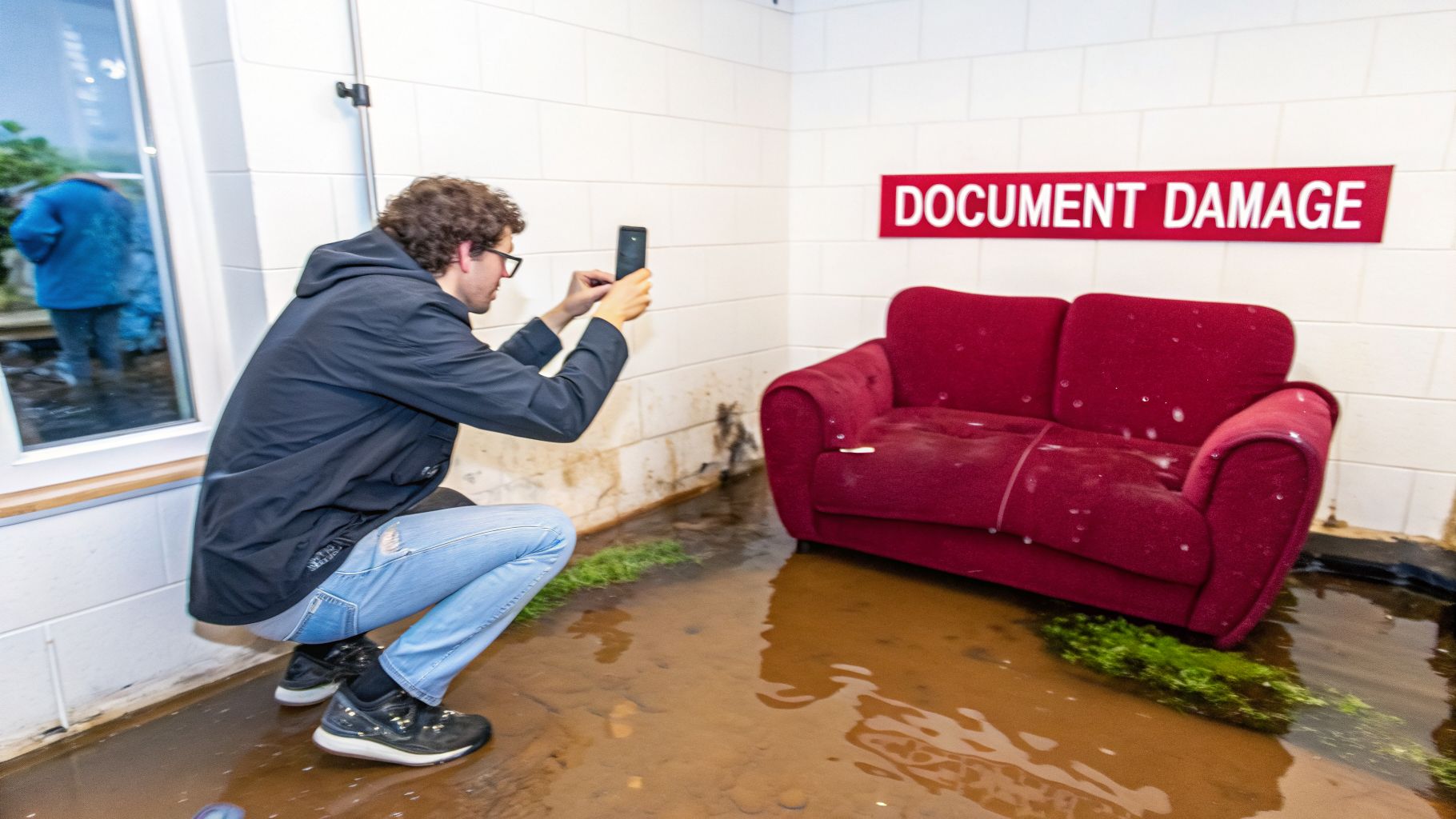
While you’re waiting for the pros to show up, it’s time to switch gears and protect your wallet. Before you move a single thing, you need to become the lead investigator for your own insurance claim. Don't wait. Water warps, rusts, and ruins things fast, and your evidence can disappear just as quickly.
Grab your phone and start taking wide, panoramic photos and videos of the entire basement. Get the big picture from a few different angles. You want to clearly show the scope of the flooding and how high the water level is against the walls, furniture, and major appliances.
Pro-Tip: As you record a video, talk to your phone. Narrate what you're seeing in real time. For example: "It's Tuesday around 4 PM, and I'm at the top of the basement stairs. The water is about six inches high on the drywall. The furnace and water heater are both sitting in water."
This narrated video is incredibly powerful evidence. It adds context and a timeline that photos alone just can't provide, making your claim much harder for an adjuster to dispute.
Next, get granular. Go through the space and take detailed, close-up shots of everything valuable that's been damaged.
Essential Close-Up Shots to Capture:
- Appliances: Your furnace, water heater, washer, and dryer. Get clear shots of the water line on the units.
- Furniture: Soaked couches, warped wooden legs on a table, delaminated cabinets.
- Electronics: Any TVs, computers, or sound systems that got wet.
- Structural Damage: Peeling drywall, buckled flooring, and water-logged baseboards.
- Personal Items: Anything of monetary or sentimental value that's been ruined.
Keep in mind that a standard homeowner's policy might not cover flooding from groundwater or storms; that's what separate flood insurance is for. This makes documenting the source—like that broken supply line—just as critical as documenting the damage itself. This detailed record will be your single most important tool for getting your claim approved and paid fairly.
Starting Water Removal and Salvaging Your Belongings
Alright, so the professionals are on their way. It’s easy to feel helpless while you wait, but this is your chance to get a jump on things and make a real difference in the outcome. This phase is all about smart, safe actions—a little strategic water removal and, just as important, salvaging what matters most.
So, the big question: should you start bailing water out yourself? If it’s a small amount of clean water (what we call Category 1) from something like a burst supply line—maybe an inch or less—and you’re 100% sure the power is off, then yes. Firing up a wet/dry vac can be a great first move to stop materials from soaking up more water.
But this isn't the time to be a hero. If you’re looking at water deeper than a couple of inches, or if it's murky, smelly (gray or black water), leave it alone. The professionals use powerful submersible pumps and truck-mounted extractors that pull out hundreds of gallons a minute. Your shop vac just can't compete and isn't safe for the job.
Safety First: If the water is from a sewage backup, do not touch it. This "black water" is a serious health hazard, teeming with dangerous pathogens. Wait for a certified restoration team. They have the proper protective gear (PPE) and disinfection protocols to handle it safely. The risk to your health is simply too high.
Prioritizing What to Save First
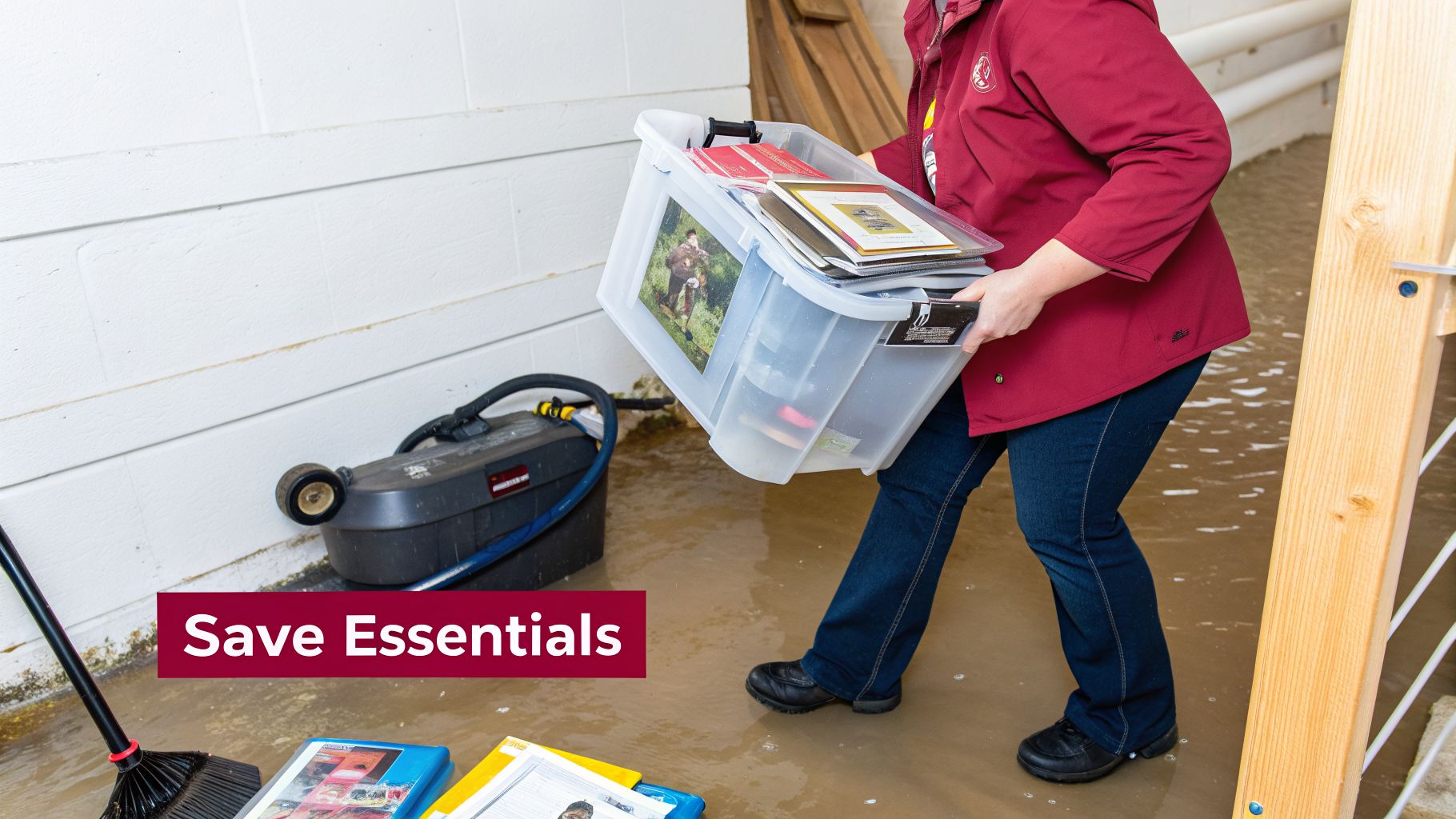
While you wait for your crew to arrive, you can start the crucial task of moving belongings out of the water. Don't just start grabbing things randomly; you need a system. The goal is to rescue items based on two things: how irreplaceable they are and how vulnerable they are to water.
Your first step is to set up a safe, dry "staging area" on the main floor or in the garage. I always tell homeowners to lay down some plastic sheeting first. This protects your floors from whatever gunk is on the items you’re about to move.
Your absolute first priority is always the personal, irreplaceable stuff. I'm talking about photo albums, important documents, family heirlooms, and your kids' artwork. These are the things that water can ruin in minutes. Get them out and get them high and dry.
Rescue Priority Checklist:
- Irreplaceable Items: Photos, legal papers (passports, birth certificates, deeds), and sentimental objects. For wet papers and photos, lay them flat to air-dry or—a pro tip—freeze them in a Ziploc bag. Freezing stops mold growth until they can be professionally restored.
- Electronics: If it's safe, unplug any electronics that aren't already underwater. Move computers, TVs, and game consoles to your dry staging area. Do not try to power them on to see if they still work.
- Small Furniture and Valuables: Grab any lightweight furniture, decor, and anything else on the floor you can carry. The sooner you get wood and fabrics out of the water, the less damage they'll absorb.
Triage for Damaged Possessions
Once you've rescued the high-priority items, it's time to sort through what's left. You have to be realistic here. Some things can be saved, but others are a lost cause. Trying to save heavily damaged porous items can just end up spreading mold through the rest of your house later on.
Set up a simple three-pile system: Keep, Discard, and Maybe.
- Keep: Anything that the water didn't touch or is just slightly damp and can be easily cleaned.
- Discard: Anything porous that soaked up contaminated water is almost certainly a goner. This means soggy cardboard boxes, particleboard furniture that's swelling up like a balloon, and any upholstered furniture or mattresses that got hit with gray or black water. Remember to take photos of these items for your insurance claim before you toss them.
- Maybe: This is for items like solid wood furniture, certain area rugs, and clothing. These can often be saved by professional cleaning and restoration. Move them to a separate, well-ventilated spot (like a covered patio) to await inspection from the pros.
And a final word of caution: be careful. Water-logged furniture, rugs, and boxes are incredibly heavy. Get help if you need it and always lift with your legs, not your back. Following these organized steps will not only save your most precious belongings but also make the professional cleanup that follows much, much smoother.
What the Professional Drying Process Actually Looks Like
Getting the last of the standing water out feels like a huge win, but don't be fooled. The fight against a flooded basement isn't over—it’s just shifting to a new, more scientific phase. The most destructive damage often comes from the moisture you can't see, the water that has soaked deep into drywall, flooring, and wooden framing.
Just pointing a few fans from the garage at a damp spot won't cut it. Lingering moisture is a ticking clock, with mold often starting to grow in as little as 24 to 48 hours. This is precisely when a professional restoration team and their specialized equipment become absolutely critical.
When the pros roll up, they're bringing in gear designed to pull moisture from the very bones of your house. It’s a process far more sophisticated than just circulating some air.
The Tools of the Trade: Air Movers and Dehumidifiers
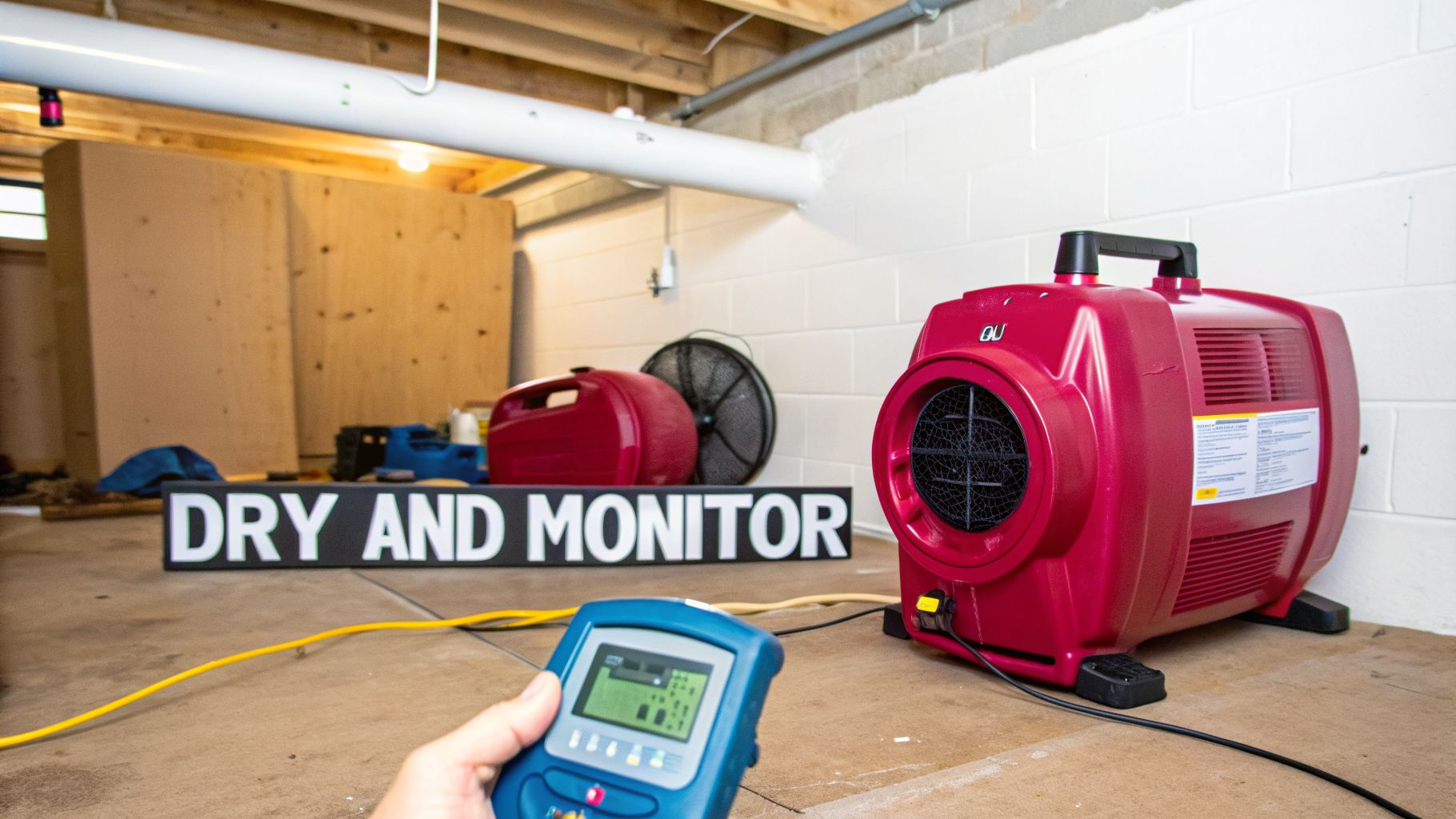
The first thing you’ll notice is the arrival of a small army of industrial-grade air movers. These aren't your typical box fans; they are powerful, low-profile machines that blast a concentrated sheet of air directly across surfaces like floors and walls.
This intense airflow dramatically speeds up evaporation, forcing moisture out of wet materials and into the air. In a typical basement, a crew might set up a dozen or more of these, placing them strategically to create a swirling vortex of air that reaches every nook and cranny.
But moving wet air around isn't enough. That’s where the real workhorses come in: commercial-grade dehumidifiers. These machines are beasts, capable of pulling an incredible amount of water vapor out of the air—far more than any unit you could buy at a big-box store.
- Low-Grain Refrigerant (LGR) Dehumidifiers: This is the industry gold standard. They work by chilling the air below its dew point, which forces water vapor to condense. The collected water is then automatically pumped away.
- Desiccant Dehumidifiers: In some cases, especially in cooler basements where LGRs are less efficient, pros might use these. Desiccants use special moisture-absorbing materials to pull water from the air.
The entire goal is to create an unnaturally dry environment. By dropping the humidity so low, the air itself becomes thirsty—acting like a sponge that actively wicks moisture out of drywall, wood studs, and even concrete.
How They Know When It’s Truly Dry
So, how does a restoration crew know the job is actually done? They don't guess. They use a range of specialized moisture meters to get precise readings from deep within your home’s structure.
You’ll see technicians using tools that look like they belong in a science lab. This is the science of psychrometry—measuring the moisture content of the air and materials. They’ll test dozens of spots to ensure every part of the basement meets a specific "dry standard."
Common Moisture-Detecting Tools You'll See:
- Penetrating Meters: These have two small prongs that they press directly into materials like drywall or wood to get an exact reading of the internal moisture content.
- Non-Invasive Meters: These use radio frequencies to scan for moisture behind a surface without leaving any marks. They're perfect for checking finished hardwood floors or custom cabinetry.
- Thermal Hygrometers: This handheld device measures both air temperature and relative humidity, giving technicians the data they need to manage the drying environment for maximum efficiency.
The entire professional water damage restoration process is driven by data, not guesswork. This ensures no hidden pockets of moisture are left behind to cause rot or mold down the road.
The drying phase usually takes several days. The crew will return periodically to take new readings, reposition equipment, and adjust their strategy as the structure dries out. It’s a methodical process, but this diligence is what prevents long-term structural problems and the serious health risks that come with mold.
How to Prevent Future Basement Flooding
After going through the nightmare of a flooded basement, your top priority becomes making sure it never, ever happens again. While you can't stop the rain from falling, you can absolutely fortify your home against it. The key is to shift from reactive cleanup mode to a proactive, defensive strategy.
This isn’t about finding a single magic bullet. Real-world flood prevention is about creating layers of protection, starting with the straightforward maintenance that every homeowner should be doing.
Start with the Basics: Essential Home Maintenance
Your house already has a first line of defense against water—you just have to keep it in fighting shape. Letting these systems fail is like leaving your door wide open during a downpour.
First, look up at your gutters and downspouts. Their only job is to get rainwater off your roof and move it far away from your foundation. But when they're choked with leaves, twigs, and other gunk, water spills right over the edge and pools directly against your basement walls, searching for any crack to get inside.
Next, turn your attention to the sump pump. This little workhorse is your last line of defense in the basement, and it needs to be ready to go at a moment's notice.
Your Sump Pump Health Check:
- Give It a Test Run: At least twice a year, pour a 5-gallon bucket of water into the sump pit. You should hear the pump kick on immediately, drain the water, and then shut itself off. If it doesn't, you have a problem.
- Keep the Pit Clean: Once a year, unplug the pump and scoop out any gravel, mud, or other debris that has collected in the pit. This junk can easily clog the pump’s intake when you need it most.
- Inspect the Discharge Line: Make sure the pipe that carries water outside isn't blocked, frozen, or aimed in a way that lets water flow right back toward the house.
A working sump pump is great, but it’s completely useless in a power outage—which, of course, often happens during the worst storms. A battery backup system is one of the smartest investments you can make for your basement. This secondary pump runs on a battery and will automatically take over if the power goes out, protecting you when your home is most vulnerable.
If you’re not confident about your pump’s health, our guide on how to tell if your sump pump is working walks you through more detailed checks.
Bolster Your Exterior Defenses
Good maintenance is non-negotiable, but for serious water problems, you need to upgrade your home's exterior defenses. This means actively managing how land and water behave around your foundation.
The ground immediately surrounding your house should slope away from it. After the next rain, take a look outside. Are there puddles forming against your foundation? That’s a classic sign of a negative grade, and it's a huge red flag.
Fixing this is often a matter of bringing in some compacted soil to build up the ground around the foundation, creating a slope that drops at least six inches over the first ten feet. It's a simple concept that uses gravity to your advantage, guiding water safely away.
For more stubborn groundwater issues, you might need to bring in the big guns. A French drain—a gravel-filled trench containing a perforated pipe—is a fantastic solution for intercepting and redirecting huge amounts of water before it ever gets the chance to press against your foundation walls.
Comparing Basement Floodproofing Solutions
Deciding on the best prevention strategy comes down to your home's unique weak spots and your budget. This chart breaks down some of the most common solutions to help you figure out where to invest your time and money.
| Floodproofing Method | Typical Cost | Best For | Maintenance Needs |
|---|---|---|---|
| Gutter & Downspout Maintenance | $100 – $300 (Pro Cleaning) | All homes, especially those with trees. | Biannual cleaning. |
| Yard Grading | $500 – $3,000+ | Homes with water pooling near the foundation. | Minimal; check for settling every few years. |
| Sump Pump Battery Backup | $600 – $1,500 | Homes in areas with frequent power outages. | Test annually; replace battery every 3-5 years. |
| Foundation Crack Sealing | $400 – $1,500 | Sealing visible cracks where water is entering. | Inspect for new cracks annually. |
| French Drain Installation | $5,000 – $15,000+ | Yards with high water tables or serious drainage issues. | Occasional inspection of the discharge point. |
As you can see, your options range from simple DIY maintenance to major professional installations. A layered approach often provides the best protection.
Seal Your Foundation from the Inside
Even with perfect drainage outside, water is persistent and can still seep through microscopic pores and cracks in your concrete. Sealing your foundation from the inside provides another critical layer of defense.
Start by carefully inspecting your basement walls and floor for any visible cracks. Small, non-structural hairline cracks can often be sealed with polyurethane or epoxy injection kits, stopping a known leak in its tracks.
For more widespread moisture issues or as a purely preventative measure, you may want to look into comprehensive concrete wall waterproofing. This can range from applying specialized waterproof coatings to installing an interior drainage system that collects any water that seeps through and channels it straight to your sump pump.
Taking these steps now is an investment in your property. More importantly, it’s an investment in your own peace of mind, so you're not filled with dread every time you see a storm in the forecast.
When you’re staring at a pool of water in your basement, your mind races. The shock and panic are real, and you need answers—fast. We've been on the front lines of these emergencies for years, and we know exactly what questions are keeping you up at night. Here’s the straight talk on what you need to know, right now.
How Fast Do I Have to Act Before Mold Starts Growing?
The clock starts ticking the moment the water appears. Honestly, you have a very narrow window before a water problem becomes a mold problem.
Mold and mildew can begin to grow within just 24 to 48 hours. That’s why getting the water out and starting the drying process isn't just important—it's everything. Once the standing water is gone, the real enemy is the moisture that gets absorbed by porous materials. Think of your drywall, wood studs, and carpet padding acting like sponges. They hold onto that dampness, creating the perfect environment for mold to thrive.
A key takeaway from years in the field: It’s not the puddle you can see that causes the biggest headaches. It’s the hidden moisture trapped inside your walls and floors. A professional restoration team's main job is to hunt down and eliminate that hidden dampness before mold ever gets a foothold.
Is My Flooded Basement Covered by Homeowners Insurance?
This is often the first question homeowners ask, and the answer always comes down to one thing: where did the water come from? Standard homeowners insurance is designed to cover damage from internal, "sudden and accidental" water releases.
What's Usually Covered by a Standard Policy:
- A pipe that suddenly bursts inside a wall.
- A water heater that fails and ruptures.
- An appliance, like your washing machine, that overflows.
On the other hand, standard policies almost never cover damage from groundwater or surface water. If heavy rains saturated the soil and seeped through your foundation, or a local creek overflowed, that's considered flooding. For that, you need a separate policy, typically from the National Flood Insurance Program (NFIP). Coverage for sewer or drain backups is also a separate endorsement you must have added to your policy before the incident.
This is exactly why documenting the source of the water is as critical as documenting the damage itself. It's the most important piece of evidence you'll have for your claim.
What is "Black Water" and Should I Be Worried?
Not all water is created equal. In the restoration world, we classify water into three categories based on how contaminated it is, because it directly impacts the cleanup process and the health risks involved.
Category 1 (Clean Water): This is from a sanitary source, like a broken water supply line. It starts clean, but the longer it sits and mixes with dirt and bacteria on your floor, the dirtier it gets.
Category 2 (Gray Water): This water is already contaminated and could make you sick. Common sources are overflows from a washing machine or dishwasher.
Category 3 (Black Water): This is the worst-case scenario. It's grossly unsanitary and filled with dangerous bacteria, viruses, and waste. The most common sources are sewage backups and overland flooding from rivers. Any contact with black water is a serious health risk, and cleanup should only be handled by certified professionals wearing proper personal protective equipment (PPE).
Is It Safe to Go Into My Flooded Basement?
Absolutely not. The single most important rule is to never enter a flooded basement until the electricity has been turned off at the main breaker.
Standing water and electricity are a lethal combination. If the water level reaches your electrical outlets, appliances, or even extension cords, the entire pool of water can become energized. The risk of electrocution is incredibly high, even in just an inch of water.
If your home's main breaker panel is in the basement and you can't get to it without stepping in water, do not go any further. Your only safe option is to call your utility company to shut off power at the meter or call an emergency restoration service immediately.
You don't have to navigate a basement flood on your own. If you're in the Greater Philadelphia region, New Castle County, DE, or South Jersey, the 24/7 emergency team at Precision Plus Plumbing is standing by. We handle everything from stopping the source and pumping out the water to helping you navigate the insurance process. For a guaranteed fast response from a team you can trust, visit us at https://www.precisionserviceexperts.com right away.