

Certified Gas Line Testing — South Philadelphia
Gas Line Pressure
Testing in South Philadelphia
PGW-Compliant Pressure Testing for South Philly Row Homes — After Leak Repairs, PGW Shutoffs, Permit Inspections, and New Installations. Certified Results. Same Day.
South Philadelphia’s row homes present unique challenges for gas line pressure testing. Shared walls, interconnected basement piping, original black iron systems, and multi-branch gas lines mean a standard test isn’t enough — you need a plumber who understands how row home construction affects test results and knows how to isolate problems when the gauge drops. Precision Plus Plumbing provides certified pressure testing across every South Philly neighborhood, with same-day scheduling for PGW restoration emergencies.
- 4.9 Star Rating (312+ Reviews)
- Licensed & Insured
- Same-Day Service


Watch How Precision Plus Detects Gas Leaks
When South Philadelphia Homeowners Need a Pressure Test
PGW Shutoff in Your Row Home
The most common reason we're called to South Philly. PGW detected a leak and shut off your meter. They won't restore service until we perform a documented pressure test proving your system is airtight. In row homes, this often requires testing both sides of a shared wall. Learn about PGW gas leak repair in South Philadelphia
After a Gas Leak Repair
You had a leak fixed — corroded pipe replaced, fitting tightened, valve installed. PGW requires a passing pressure test before they'll reconnect. In South Philly row homes, we test the entire system, not just the repaired section, because vibration from the repair work can loosen aging fittings elsewhere in the line.
Basement Renovation in a Row Home
Your contractor finished the basement and capped or moved gas lines. Philadelphia code requires a pressure test before gas flows again. In South Philly row homes, basement renovation work frequently disturbs gas piping that runs along or through the party wall — making a post-renovation test essential.
Selling or Buying a South Philly Row Home
Some buyers' inspectors require gas line certification. In row homes built before 1950, a pressure test gives both parties documented proof that the system is safe — critical for properties with original black iron piping that may never have been tested.
New Appliance Gas Connection
Installing a new gas range, dryer, or water heater in your South Philly row home? The new connection must be tested before use. We test the full branch line, not just the appliance connector, to catch any issues introduced during installation.
Failed a Previous Test
Another company or PGW tested your system and it failed. The leak must be found, fixed, and retested. In South Philly row homes, test failures often trace back to joints hidden behind party walls or in inaccessible basement ceiling cavities — exactly the situations where our electronic detection equipment matters most.
Why Gas Line Pressure Testing Is More Complex in South Philadelphia Row Homes
A pressure test in a detached suburban home is straightforward — one system, one structure, clear access. In a South Philly row home, it’s rarely that simple. Here’s what makes testing different in row home construction:
Multi-Branch Piping Systems
South Philly row homes typically have gas lines running to the furnace, water heater, stove, and sometimes a dryer — all branching off a single main riser, often in a tight basement with limited clearance. When the gauge drops during a test, isolating which branch has the leak requires systematically capping and re-testing each section. In older row homes with 4-5 gas appliances, this process takes longer than in a home with two.
Party Wall and Shared-Wall Piping Access
Gas piping in row homes sometimes runs along or through the party wall — the shared structural wall between your home and your neighbor's. If a pressure test fails and the leak is at a fitting embedded in or behind the party wall, accessing the repair point requires careful work to avoid disturbing the structural integrity of the shared wall. This is specialized work that general plumbers often get wrong.
Original Black Iron Systems
Many South Philly row homes still have their original black iron gas piping from the early 1900s. These systems develop micro-leaks at threaded joints over decades as the pipe compound dries out and threads corrode. A pressure test may reveal multiple small leaks across the system rather than one obvious failure point — requiring a comprehensive repair plan, not just a single fix.
Basement Ceiling and Floor Joist Routing
In row homes, gas pipes often run along basement ceiling joists before dropping to appliances. These runs may be 20-40 feet long in a narrow row home basement and are frequently concealed by later additions — drop ceilings, insulation, or drywall. Locating a leak in a concealed ceiling run requires thermal imaging or ultrasonic detection, not just soapy water.
Connected Lateral Lines
The gas service line from the PGW street main to your meter may share a trench path or proximity with your neighbor's lateral. While the pressure test only measures your piping (meter to appliances), understanding the lateral connection is important context when diagnosing why a system fails — especially if PGW's street-side infrastructure is contributing to the problem.
Why Gas Line Pressure Tests Fail in South Philadelphia Row Homes
A failed pressure test doesn’t mean your house is dangerous — it means a leak exists and needs fixing before gas service can be certified. In South Philly row homes, these are the most common causes we find:
Dried-Out Thread Compound at Black Iron Joints
The pipe dope or Teflon tape sealing threaded joints on original black iron piping degrades over 50-100 years. Joints that "held fine for decades" start leaking as the compound fully dries out — especially during pressure testing which stresses joints at a higher pressure than normal gas flow.
Corroded Pipe Sections in Damp Basements
South Philly row home basements are notoriously damp. Decades of moisture against unprotected black iron pipe causes external corrosion that thins the pipe wall. A pressure test exposes these weak spots that may not leak under normal gas pressure but fail under test conditions.
Disturbed Fittings From Renovation Work
Basement renovations, HVAC replacements, and water heater swaps jostle nearby gas piping. A fitting that was hand-tight for 40 years may start leaking after nearby work created vibration or shifted the pipe alignment slightly.
Party Wall Fittings
Gas line fittings that were installed where piping passes through or along the shared party wall are among the hardest to access and most likely to fail. These joints experience stress from differential settling between attached row homes and are almost never inspected because they're hidden behind plaster or brick.
Capped Lines to Removed Appliances
When a gas dryer or stove is removed but the gas line is just capped rather than properly valved off, the cap can develop a slow leak over time — especially if it was installed with a basic compression fitting rather than a threaded cap with proper compound.
Underground Service Line Issues
While the pressure test measures from the meter inward, sometimes the meter valve itself doesn't seal properly, causing the test gauge to drop. This mimics an interior leak but is actually a meter-side issue. Our technicians check the meter valve seal before attributing a failure to interior piping.
Pressure Testing in South Philadelphia — Our Work
Real jobs completed by our expert technicians — delivering gas line pressure testing solutions for local homes.
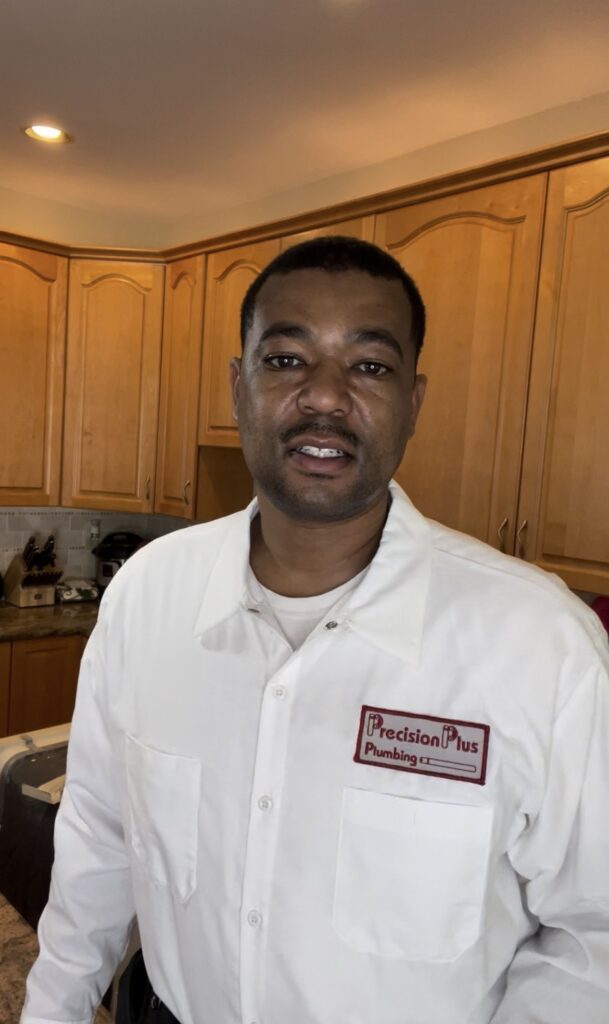
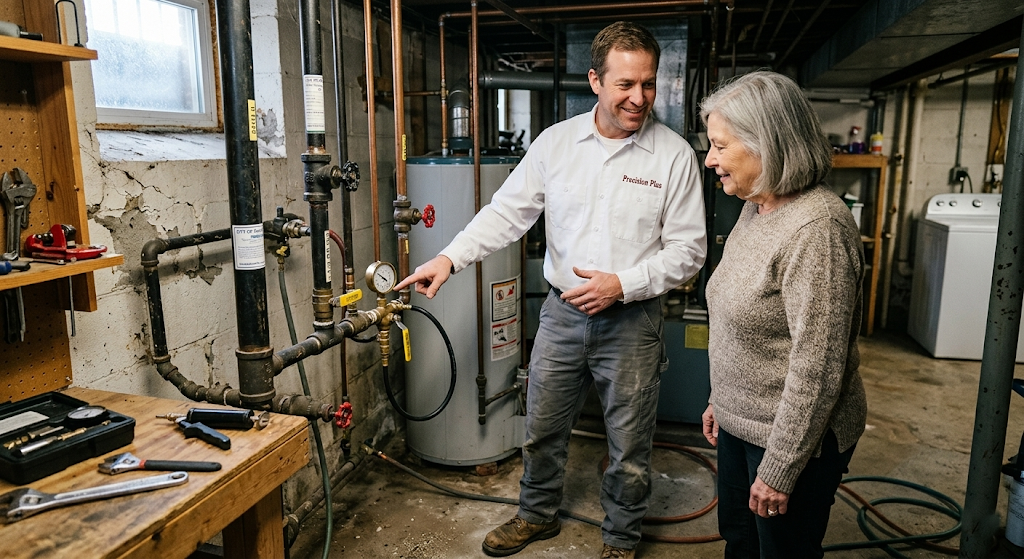
Girard Estate — Multi-Point Failure
A row home with original 1920s black iron piping failed the initial pressure test after a PGW shutoff. Our branch-by-branch isolation found three separate micro-leaks at threaded joints in the basement ceiling run. We replaced the deteriorated fittings, retested, and passed. PGW restored gas next day.
Point Breeze — Post-Renovation Retest
A homeowner's basement renovation contractor pulled a gas permit but never arranged the required pressure test. Six months later, the open permit was flagged. We tested the system, found a loose connection at a relocated gas line, repaired it, passed the retest, and closed the permit with L&I.
Passyunk — Party Wall Leak Discovery
PGW shut off gas to a row home after detecting a leak, but our initial test of the interior piping passed. The issue was a slowly failing fitting where the gas riser passed through the party wall into the basement. We accessed the fitting from the homeowner's side, re-sealed it, and confirmed with a passing retest.
Our Pressure Testing Process for South Philadelphia Row Homes
Certified, documented, and built for row home complexity.
1
System Isolation
We close the gas meter valve and isolate the piping from PGW supply. In row homes, we verify that all appliance connections — including any basement appliances near the party wall — are capped or valved off to create a fully sealed system.
2
Branch-by-Branch Pressurization
For South Philly row homes with multi-branch systems, we pressurize incrementally — testing the main riser first, then each branch to individual appliances. This approach identifies the failing section faster than pressurizing the entire system at once, saving time in older homes with multiple potential leak points.
3
Hold Period Monitoring
The system is held at code-required pressure (typically 3 PSI) for the standard monitoring period. Our technician watches for any gauge movement. Stable = pass. Any drop = a leak exists and we move to detection.
4
Leak Detection (If Test Fails)
If pressure drops, we use electronic combustible gas detectors, thermal imaging, and solution testing at every joint, valve, and connection — including concealed party wall fittings and basement ceiling runs. We pinpoint the exact location before any repair work begins.
5
Repair and Retest
Identified leaks are repaired to current Philadelphia code — fitting replacement, pipe section replacement, or valve installation. After repair, we re-run the pressure test at no additional testing fee. The cycle continues until the system holds and passes.
6
Documentation, PGW Coordination, and Restoration
Passing results are documented with test pressure, hold time, gauge readings, and our license number. For PGW restorations, we submit directly to PGW and coordinate your meter reconnection — typically 24-48 hours.
Benefits of Choosing Precision Plus for Gas Water Heater Repair
Same-Day & Emergency Service
No-hot-water calls are prioritized. Available evenings, weekends, and holidays throughout every Philadelphia neighborhood.
Upfront, Honest Pricing
Written estimate before any work starts. You approve the cost first. No hidden charges and no surprise billing.
All Major Brands Serviced
A.O. Smith, Rheem, Bradford White, Rinnai, State, Kenmore, American Standard, Whirlpool — we repair every major brand of tank-style gas water heater.
Safety-First Approach
Every repair includes carbon monoxide testing, gas connection checks, and T&P relief valve verification before we leave your home.
Parts Stocked on Every Truck
Thermocouples, thermopiles, gas control valves, anode rods, T&P valves, igniters, and supply connectors — on board and ready for same-visit repair.
Locally Owned & Operated
We live and work in Philadelphia. Our business runs on referrals from the neighbors we serve, and we take that responsibility seriously.
South Philadelphia Homeowners Trust Precision Plus for Pressure Testing
Trustindex verifies that the original source of the review is Google. Great service, very professiona,l on time, cleaned up afterwards, very respectable. I would definitely be calling him for all my needs. Before I go to anybody else for anything, i will call Precision Plus first. Five out of five stars for meTrustindex verifies that the original source of the review is Google. Precision Plus Plumbing came out the next day and quickly got to work. They showed real care for our children’s well-being and handled everything with professionalism and compassion. Highly recommend!Trustindex verifies that the original source of the review is Google. Derrick was very efficient and professional. He explained what needed to be done in detail and completed the job in a timely manner. I am very pleased with the result.Trustindex verifies that the original source of the review is Google. Derrick from Precision Plumbing, performed mold testing, was quick, professional and efficient!Trustindex verifies that the original source of the review is Google. Derrick was quick assessing my issues problem solved in no time great job thanks so muchTrustindex verifies that the original source of the review is Google. QUALITY 5 STARSTrustindex verifies that the original source of the review is Google. Great experience! Quick turnaround on a Saturday. Fixed the issue and was a pleasure to work with.
Gas Line Pressure Testing — South Philadelphia Neighborhoods
We provide certified pressure testing across every South Philadelphia neighborhood:
Passyunk Square
Philadelphia, PA
Point Breeze
Philadelphia, PA
Girard Estate
Philadelphia, PA
Whitman
Philadelphia, PA
Packer Park
Philadelphia, PA
Italian Market / Bella Vista
Philadelphia, PA
Newbold
Philadelphia, PA
Grays Ferry
Philadelphia, PA
South Philadelphia
Philadelphia, PA
Center City South
Philadelphia, PA
Whether your pressure test is for a PGW restoration, a permit closing, or a proactive system check — Precision Plus provides same-day certified testing across all of South Philadelphia. For a full overview of all gas leak services we offer in this area, visit our South Philadelphia gas leak detection page.
Serving Every South Philadelphia Neighborhood
Precision Plus Plumbing responds to PGW gas shutoff emergencies across every zip code in South Philadelphia. Whether you’re in a row home in West Philly, a twin in the Northeast, or a brownstone in Center City — we’ll be there same-day.

Derrick Jackson
Founder & Master Plumber
Since opening our doors in 1999, Precision Plus Plumbing has had one goal in mind: save busy homeowners time and frustration.
When you hire Precision Plus, you’re benefiting from a proven local business that knows your home, is familiar with older plumbing, and will educate you on what caused your problem — while discussing options on how to prevent them from happening again.
“We made the decision to provide clients with a unique experience that busy homeowners would be proud of. Our techs show up on time, do not smell like the sewer, and can resolve most problems on the initial service call.”
What started as a commitment to better service has grown into the area’s most trusted name for emergency plumbing, water damage restoration, and mold services — serving Pennsylvania, Delaware, and New Jersey.
Pressure Test Gas Line FAQ — South Philadelphia
Why do gas line pressure tests fail more often in South Philly row homes?
Row homes have more threaded joints, longer multi-branch piping runs, original black iron systems, and concealed fittings along party walls — all of which increase the chance of finding a small leak under test pressure. A fail isn’t unusual in older row homes and typically means one or two aging joints need repair.
Can you test just the section that was repaired, or do you have to test the whole system?
PGW and Philadelphia code require a full-system pressure test — not just the repaired section. This protects you because repair work can sometimes disturb nearby fittings. In row homes, we use branch-by-branch isolation to speed up the process.
How much does a pressure test cost in South Philadelphia?
A standard residential pressure test runs $150 to $350 depending on system size and accessibility. If a leak is found and repair is needed, the repair is quoted separately. If we retest after a repair, there’s no additional testing fee.
What if the test fails — do I pay again for the retest?
No. If the initial test reveals a leak and you hire us to repair it, the retest is included at no additional charge. You only pay the repair cost plus the original test fee.
How long does the whole process take?
A straightforward test with no leaks takes about 30-45 minutes. If a leak is found and repaired on the same visit, expect 2-3 hours total. For complex row home systems with multiple failure points, it may take a full day — but most are completed same-day.
Will you coordinate with PGW to restore my gas after the test passes?
Yes. We submit passing documentation directly to PGW and follow up on your behalf to schedule the meter reconnection. Most PGW restorations happen within 24-48 hours of receiving our paperwork.
I'm selling my South Philly row home — should I get a pressure test done?
It’s smart, especially for pre-war row homes with original piping. A passing test provides documented proof for buyers and can prevent deal delays during inspections. Some buyers’ inspectors will specifically request one for older properties.
Can a pressure test find a leak my neighbor is causing?
The pressure test measures YOUR piping — meter to appliances. However, if gas is migrating from your neighbor’s system through the shared party wall, our electronic detection can identify that the gas source is external to your piping. We then coordinate with the neighbor and PGW to address the source.
More Gas Services in South Philadelphia
Gas Line Pressure is just one of the gas services we provide across West Philadelphia’s row home neighborhoods. Explore our other specialized services below.
PGW Gas Leak Repair
PGW shut off your gas? We repair the leak, pass the pressure test, and coordinate restoration — same day.
Gas Pipe Repair
Corroded, damaged, or aging gas pipes in your South Philly row home? Licensed repair and replacement.
Gas Heater Repair
Gas furnace not firing or producing weak heat? Same-day diagnosis and repair.
Gas Water Heater Repair
No hot water? Pilot light out? Gas water heater diagnosis and repair.
Electric Water Heater Repair
Element failure, thermostat problems, or tripped breakers. Same-day service.
Need a Certified Pressure Test in South Philadelphia? Same-Day Scheduling Available.
PGW compliance, permit inspections, and new installations — row home specialists since 1999.