
That small handle or knob tucked away behind your toilet? It’s arguably the most important plumbing component in your bathroom. Knowing how to use your toilet shut off valve is what separates a minor cleanup from a full-blown, floor-ruining disaster. It’s your emergency brake for a water crisis, and understanding it is non-negotiable for any homeowner.
Your First Line of Defense in a Plumbing Emergency
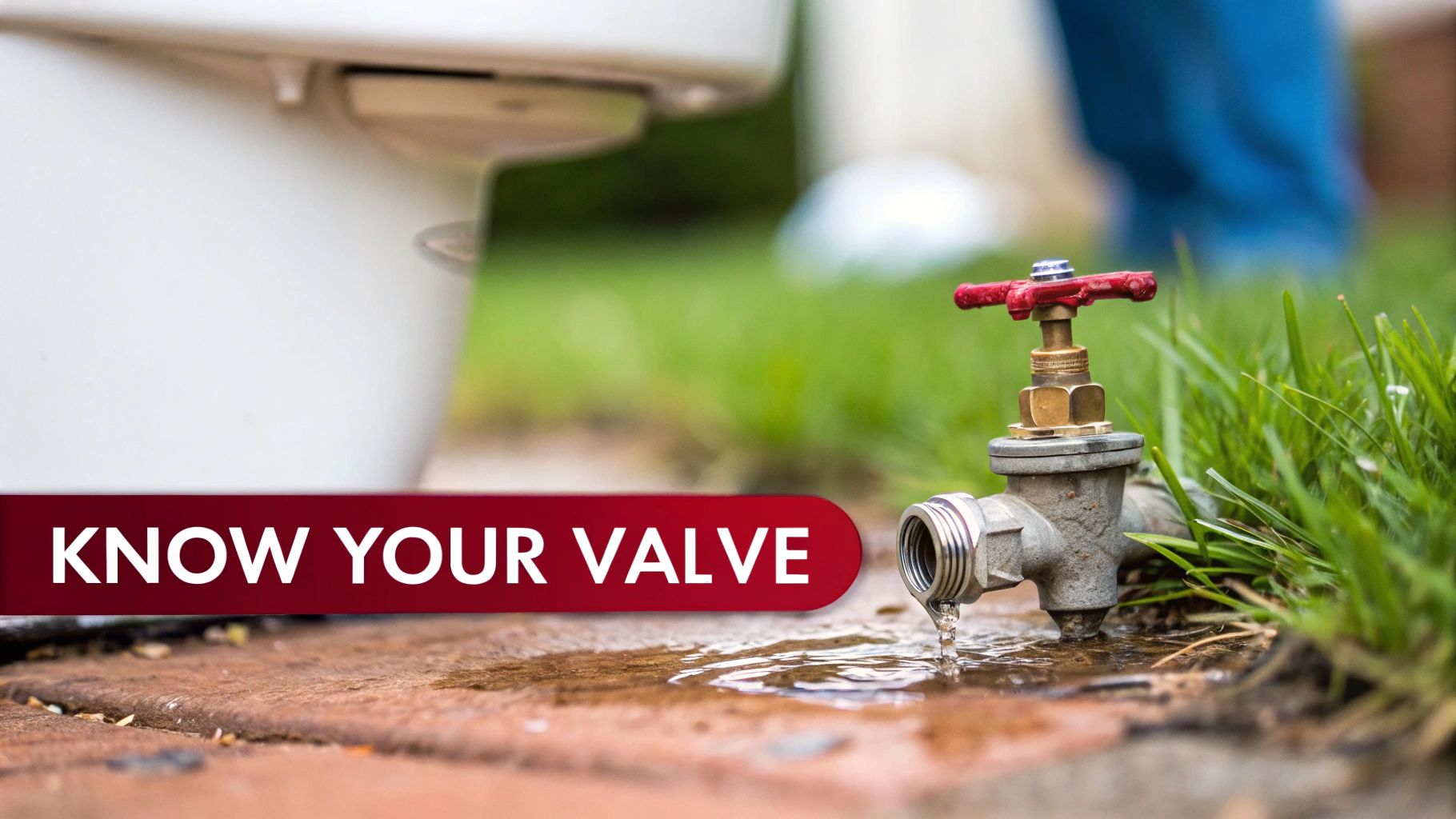
It’s easy to completely forget about the plumbing parts you don’t interact with daily. But the toilet shut off valve, which plumbers often call an “angle stop,” is your immediate line of defense. Its entire job is to cut the water supply to the toilet, which lets you handle repairs or stop an overflow dead in its tracks.
Picture this: it’s 2 AM, and you’re woken up by the sound of running water. You discover your toilet’s fill mechanism has failed, and it’s now dumping water all over your bathroom floor. Instead of panicking, you simply reach behind the toilet, give that little valve a firm clockwise turn, and the water stops. Just like that, you’ve turned a potential catastrophe that could cost thousands into a simple, manageable repair.
Why This Small Valve Is a Big Deal
That little shut off valve is a critical safety feature, and here’s why:
- Emergency Control: It gives you the power to instantly stop a leak or overflow right at the source.
- Painless Maintenance: It isolates the toilet from your home’s water supply, so you can fix things like a faulty flapper or fill valve without having to shut off water to the entire house.
- Damage Prevention: A working valve is the only thing standing between a small puddle and a flooded bathroom that can wreck flooring, subfloors, and even the ceiling of the room below.
Think about it: a pipe bursts behind the toilet in the middle of the night, and water is gushing everywhere. That’s when a reliable shut-off valve becomes a homeowner’s best friend. In fact, homes with modern quarter-turn ball valves can cut water loss by an incredible 70% compared to older, multi-turn valves that are slow and prone to sticking.
But here’s the catch: these valves don’t last forever. Mineral deposits build up over time, causing them to seize. Old rubber seals dry out and crumble, leading to drips. A valve that’s stiff or already leaking is a ticking time bomb.
Of course, if the valve itself fails in a major emergency, you need a backup plan. Knowing how to turn off your water mains is your ultimate safety net. It’s also crucial to know when you have a real crisis on your hands. You can learn more by checking out our guide: https://precisionserviceexperts.com/blog/how-to-tell-if-a-plumbing-problem-is-an-emergency-philadelphia-homeowners-guide/
Identifying Your Toilet Shut Off Valve Type
To properly operate and maintain your valve, you first need to know what you’re working with. Most homes have one of two types.
This quick table will help you identify what kind of shut off valve you have and what to watch out for.
| Valve Type | Appearance | Operation | Common Problems |
|---|---|---|---|
| Multi-Turn (Gate/Globe Valve) | Typically has an oval or football-shaped handle. | Requires multiple full rotations (clockwise) to close completely. | Prone to sticking from mineral buildup; internal washer can wear out, causing leaks. |
| Quarter-Turn (Ball Valve) | Features a short, straight lever-like handle. | A simple 90-degree turn (clockwise) shuts off the water flow. | More reliable and durable, but can be difficult to turn if not operated for many years. |
Knowing the difference is key. A multi-turn valve might feel stuck when it just needs a few more rotations, while forcing a quarter-turn valve past its stopping point can break it. A quick look is all it takes to understand how to act in an emergency.
How to Find and Use Your Toilet Shut Off Valve
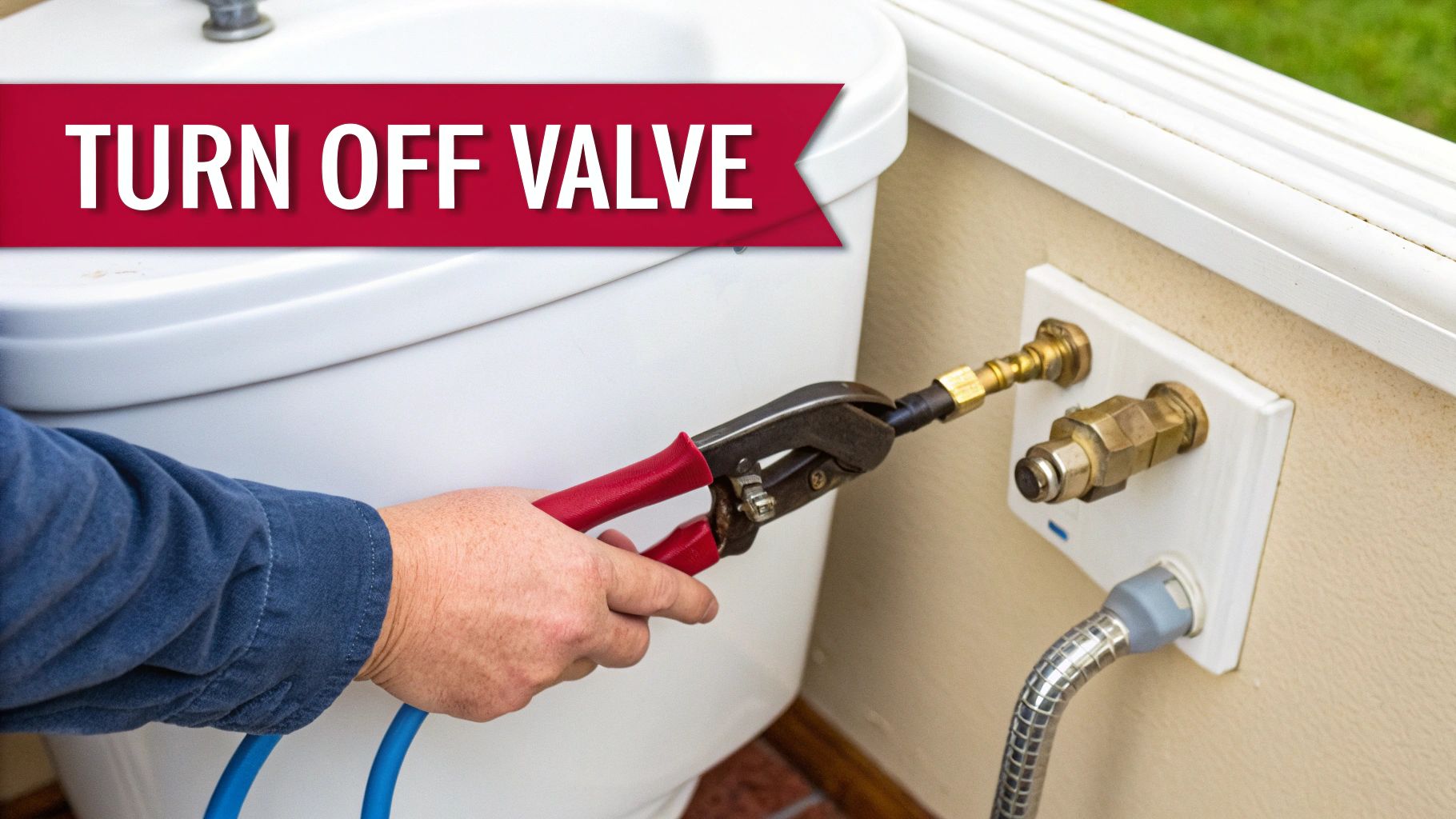
When the water in the toilet bowl starts rising, you don’t have time for a scavenger hunt. Luckily, the shut-off valve is almost always in the same spot. Just look at the wall right behind the toilet, usually down low and to the left side.
You should see a small hose, often a flexible braided steel one, that runs from a pipe in the wall up to the bottom of the toilet tank. The valve is right there, connecting that supply line to the wall. This little knob or lever is your first line of defense against a bathroom flood.
Once you’ve spotted it, stopping the water is simple. The old saying “righty-tighty, lefty-loosey” is all you need to remember. To shut off the water, turn the handle clockwise as far as it will go. This will cut the water supply to the toilet only, so you can still use the sink and shower.
Tackling Common Valve Problems
Of course, things don’t always go smoothly, especially with plumbing that hasn’t been touched in years. You might run into a few snags when you try to turn that valve.
Here’s what to do when the valve puts up a fight:
- The Stuck Handle: If the handle won’t budge, it’s probably seized up from corrosion or mineral deposits. Don’t panic. Grab a pair of pliers, get a firm grip on the handle, and apply slow, steady pressure clockwise. The key is to be gentle—jerking it could snap the valve stem, turning a small problem into a major leak.
- The Spinning Handle: Some older homes have multi-turn valves instead of the modern quarter-turn ones. A quarter-turn valve stops firmly after a 90-degree turn, but these older models can feel like they spin forever. Just keep turning clockwise. You’ll eventually feel it tighten up and stop. Don’t try to force it past that point.
- The Persistent Drip: You’ve turned the valve off completely, but you can still hear a faint trickle of water filling the tank. This is a classic sign of a worn-out washer or seal inside the valve. While it has likely slowed the flow enough to prevent an overflow, it’s a clear signal that the valve is failing and needs to be replaced soon.
Remember, your immediate goal is to stop the flood. Shutting that valve, even if it’s a little leaky, buys you precious time. It lets you figure out what’s actually wrong with the toilet—be it a bad flapper or a clog—without water pouring all over your floor.
Opening the Valve Again
Once you’ve sorted out the toilet problem, getting the water flowing again is easy. Just turn the handle the other way—counter-clockwise (“lefty-loosey”)—until it stops. It’s best to open it all the way to make sure the tank fills quickly and you get a strong, solid flush.
Here’s a pro tip: Get into the habit of turning your toilet shut-off valve once a year. Gently close it, then open it back up. This takes all of 30 seconds, but it works wonders to prevent the mineral buildup that causes valves to seize. That way, you can be confident it will work when you really need it.
How to Spot a Failing Shut-Off Valve Before It’s Too Late
A toilet shut-off valve is your first line of defense in a water emergency, but it’s only helpful if it works when you need it most. A valve that’s seized up or won’t completely stop the water flow is a disaster waiting to happen. Thankfully, they usually give you some subtle clues long before they fail completely.
The trick is to learn how to spot these warning signs. Don’t wait for an overflowing toilet to find out your valve is shot. A quick, proactive inspection can save you from a catastrophic flood and a massive headache.
The Obvious Physical Clues
Often, the most glaring signs of trouble are the ones you can see and feel. Grab a flashlight and take a good, close look at the valve behind your toilet.
- Corrosion is a Killer: See any green or white, chalky-looking gunk on the valve body, handle, or around the pipe? That’s corrosion, and it’s a dead giveaway of a slow, long-term leak that’s eating away at the metal.
- Drips Mean Trouble: Any hint of moisture around the valve handle or the packing nut (the nut right behind the handle) is a bad sign. Even a tiny, slow drip signals that the internal seals are shot.
- A Stubborn, Frozen Handle: You should be able to turn the handle with firm, steady pressure. If it feels completely stuck and won’t budge—even with a little help from pliers—it’s probably seized internally from mineral buildup. Whatever you do, don’t force it. You’ll likely snap the stem right off and create an even bigger problem.
It’s shocking how a simple corroded valve can turn a minor toilet issue into a full-blown flood. In major markets like Greater Philadelphia and New Castle County, DE, shut-off valve failures are behind 28% of all residential water damage claims each year. Even more sobering, national stats show that 1 in 5 homes over 20 years old have shut-off valves that don’t work, leading to an average repair bill of $4,200. You can discover more insights about these market trends and see how they impact homeowners.
When It Looks Fine But Fails Under Pressure
Sometimes, a valve looks perfectly clean on the outside but still fails the moment you try to use it. This is almost more dangerous because it gives you a false sense of security.
The classic performance failure is turning the handle all the way to the “off” position, only to hear water still trickling into the tank. You might hear a faint hiss or notice the water in the bowl continuing to rise slowly. This tells you the internal washer or ball mechanism is too worn out to create a complete seal.
Expert Tip: If your valve doesn’t stop 100% of the water flow, it has failed. Period. It can’t be trusted in an emergency and needs to be replaced as soon as possible. A valve that only mostly works is useless when you’re facing a serious overflow.
If you just see a small weep from the packing nut when you turn the handle, you can sometimes get away with tightening it about an eighth of a turn with a wrench. But if you see heavy corrosion or the valve won’t shut off completely, replacement isn’t optional—it’s essential. This simple check gives you the power to decide if you’re dealing with a minor tweak or if it’s time to call in a pro for a critical upgrade.
So, You’re Ready to Replace That Toilet Shut-Off Valve Yourself
Feeling a little adventurous? For any homeowner who’s not afraid of a little DIY, swapping out a faulty shut-off valve is a great weekend project. It’s a fantastic way to build your plumbing skills and, more importantly, head off a potential water disaster before it happens. With the right tools and a solid game plan, this is one of those fixes that’s totally within reach, and you’ll sleep better knowing your home’s water controls are up to snuff.
First things first, and this is the most important step: shut off the main water supply to your house. You’ll usually find the main valve in your basement, a crawlspace, or maybe tucked away in a utility closet. Give it a firm turn clockwise all the way until it stops. After that, head to the lowest level of your home—like a basement sink—and open a faucet. This lets gravity do its thing and drain the water lingering in your pipes.
Getting Your Gear Together
Nothing kills the momentum of a DIY project faster than an unplanned trip to the hardware store. Before you even think about putting a wrench on that old valve, get all your supplies laid out and ready to go. Trust me, it turns a potential headache into a smooth, straightforward job.
Here’s a quick checklist of what you’ll need:
- Two adjustable wrenches. You could also use a pipe wrench and an adjustable one. The key is having two.
- A new toilet shut-off valve. Do yourself a favor and get a quarter-turn ball valve. It’s a massive upgrade.
- A new toilet supply line. It just makes sense to replace this while you’re at it. They don’t last forever.
- A small bucket and some old towels. You’re going to have some water spill, it’s inevitable.
- A wire brush. Essential for cleaning up the old pipe threads.
A Quick Tip from Experience: Seriously, get the quarter-turn ball valve. Those old multi-turn gate valves are notorious for seizing up or failing internally right when you need them most. Spending a few extra bucks on a ball valve is one of the smartest, simplest upgrades you can make to your home’s plumbing.
Wondering if your valve is actually on its last legs? The signs are usually pretty obvious.
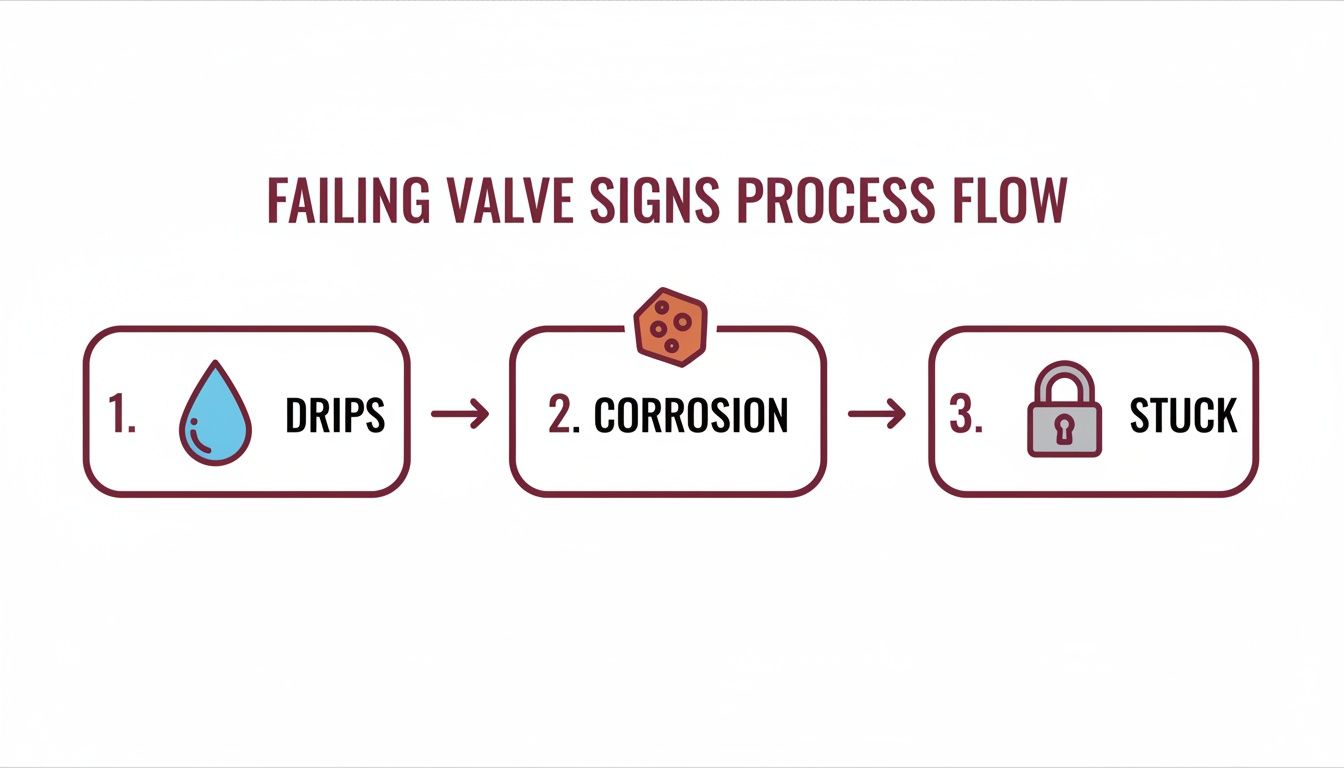
As you can see, if you spot any drips, crusty corrosion, or find the handle is completely stuck, it’s not a matter of if it will fail, but when. It’s a clear signal that the valve is a liability.
Out with the Old, In with the New
Okay, with the main water shut off, go ahead and flush the toilet to get most of the water out of the tank. Have your bucket handy to catch the leftover water as you disconnect the supply line from both the toilet tank and the old valve.
Now, here comes the most critical part of the whole process. Take one wrench and get a solid grip on the stub-out pipe that comes out of the wall. This is your brace. Use your second wrench on the body of the old valve and turn it counter-clockwise to loosen it. I can’t stress this enough: you absolutely must brace that pipe. If you skip this, you risk twisting and breaking the pipe inside the wall, turning a simple repair into a full-blown plumbing emergency.
Once the old valve is off, grab your wire brush and give the threads on the stub-out pipe a good cleaning. Spin your new quarter-turn valve on by hand until it’s finger-tight. Then, using your two-wrench technique again, give it another quarter to a half turn until it feels snug and secure. Don’t go crazy and overtighten it.
Finally, connect the new supply line to the valve and the toilet. Go back to your main water supply and turn it on slowly. Check every single connection point—at the wall, at the toilet—for any signs of a leak.
It might seem like a small component, but these valves are big business. The global market for flush valves, which are closely related, hit US$283 million in 2024. This isn’t surprising, especially when you consider how many building codes now require easily accessible shut-offs. In fact, in some areas like Delaware, a staggering 42% of water damage claims are traced back to the failure of older plumbing parts like these valves. If you’re curious, you can learn more about the flush valve market dynamics and see why making this upgrade is such a smart move.
Smart Maintenance and When to Call a Plumber
The best way to handle a plumbing emergency is to make sure it never happens. A little proactive maintenance on your shut off valve for toilet is surprisingly easy, takes just a minute, and can save you from a world of watery headaches down the road.
Think of that valve like any other mechanical part in your house—it needs to be exercised once in a while to keep it from getting stiff. About once a year, just give the handle a gentle turn clockwise until it stops, then turn it all the way back counter-clockwise to open it up again. This simple twist breaks up any mineral deposits that might be trying to freeze the valve in place, ensuring it’s ready to go when you really need it.
Performing a Quick Visual Inspection
While you’re down there turning the handle, take another 30 seconds to give the valve a quick once-over. You’re looking for a few tell-tale signs of trouble brewing.
- Corrosion: See any green or white crusty stuff building up? That’s a dead giveaway of a very slow leak that’s been eating away at the metal for a while.
- Moisture: Even the smallest hint of dampness or a single, lazy drip from the packing nut on the handle means the internal seals are starting to fail.
- Stiffness: If the handle fights you and is really tough to turn, don’t try to force it. That’s a clear sign it’s already seizing up and could break if you push your luck.
Keeping an eye out for these things is key, but sometimes other issues can pop up. If you notice things are draining slowly, for instance, it’s a good idea to learn how to fix a slow draining toilet before it becomes a bigger clog.
Knowing When to Call a Professional
Being a savvy homeowner means knowing your limits. Trying to tackle a plumbing repair that’s over your head can quickly turn a small drip into a major flood. When it comes to something as crucial as a shut off valve for toilet, you have to know when it’s time to call in the pros.
A broken shut off valve is more than just a hassle; it’s a ticking time bomb for water damage. The second that valve snaps or the pipe connection starts leaking, you’ve lost your main line of defense, and you need an expert—fast.
Don’t hesitate to call a licensed plumber if you run into any of these situations:
- The Valve Snaps or Breaks: You apply a little pressure, and the handle or stem just breaks right off. Now you have a serious leak risk with no easy way to stop it.
- Leaks from the Wall Connection: A drip from the valve handle is one thing. But if you see water weeping from where the pipe comes out of the wall, you could be looking at a much bigger problem inside the wall.
- You’re Uncomfortable with the Main Water Shut Off: To replace the valve, you have to shut off the water to your whole house. If you can’t find the main valve, it won’t budge, or you’re just not confident doing it, it’s time to let a professional handle it.
When these things happen, every minute counts. To help you stay calm and in control, check out our guide on what to do before an emergency plumber arrives in Philadelphia.
Your Questions About Toilet Shut Off Valves Answered
Even something as simple as a toilet shut-off valve can stir up a lot of questions. Getting straight answers is the first step to feeling confident when dealing with your home’s plumbing, whether you’re in the middle of a mini-disaster or just doing a routine check. We’ve pulled together the most common questions our plumbing experts hear every day and are giving you the no-nonsense answers you’re looking for.
What Is the Difference Between a Quarter-Turn and Multi-Turn Valve?
The biggest difference boils down to design, how reliable they are, and just how easy they are to use in a pinch. A quarter-turn valve, which is the modern standard, usually has a short, straight lever for a handle. Just like the name says, you only need to turn it 90 degrees—a quarter of a circle—to completely stop the water. They’re quick, you can tell at a glance if it’s open or closed, and they are far more reliable.
The multi-turn valve is the older style, with that round, ribbed handle you might have seen. To shut it off, you have to crank it through several full rotations. From my experience, these are far more likely to get stuck from mineral buildup or have their internal rubber washers dry out and fail, which is why they often just won’t stop the water completely.
We always recommend upgrading to a quarter-turn ball valve whenever we’re doing any plumbing work. The peace of mind you get from its reliability is invaluable. When you need the water to stop, it actually stops—no questions asked.
My Shut Off Valve Is Leaking from the Handle. What Should I Do?
A slow, steady drip coming from right around the handle’s stem is a really common problem, and it doesn’t always mean you need to replace the whole thing right away. This kind of leak is often caused by a loose packing nut, which is the nut sitting right behind the handle.
Here’s a simple fix you can try first. Grab an adjustable wrench and gently tighten that nut about one-eighth of a turn clockwise. The key here is gently. If you crank down on it too hard, you can make the handle impossible to turn or even crack the valve body. If that tiny adjustment stops the drip, you’re all set.
But if the leak continues, or if you see water weeping from the main body of the valve, that’s a sure sign the internal seals are shot. At that point, a full replacement is the only safe and permanent solution.
How Much Does It Cost to Replace a Toilet Shut Off Valve?
The cost to replace a shut off valve for toilet can swing a bit depending on where you live, how tough the valve is to get to, and what kind of pipes you have. That said, it’s one of the most affordable preventative repairs you can make as a homeowner.
Think of it this way: the cost of having a pro plumber swap out that valve is tiny compared to the thousands you could spend on water damage restoration if it blows out in an emergency. For a licensed technician, a straightforward valve replacement is a quick, routine job. This small investment is truly one of the smartest ways to protect your home from a future flood. Understanding if the cost of emergency plumbing is justified can provide more context on why preventive fixes like this are so important.
When you need guaranteed peace of mind, trust the experts at Precision Plus Plumbing. Don’t wait for a drip to turn into a disaster. Visit us at https://www.precisionserviceexperts.com to schedule your service today.