
The easiest way to see if your sump pump is working is with a good old-fashioned bucket test. Just pour a five-gallon bucket of water into the sump pit. If everything is in working order, the pump should kick on, quietly drain the water away, and then shut itself off. It’s that simple, and it gives you an immediate answer.
Is Your Sump Pump Ready for a Storm? A Quick Check
Your sump pump is one of those out-of-sight, out-of-mind heroes in your home. It sits quietly in the basement, guarding against flooding. But because it’s so unassuming, it’s easy to completely forget about it until a torrential downpour hits—and that’s the absolute worst time to find out something is wrong.
Learning how to quickly check on your sump pump is a basic but critical part of home maintenance. For the 14.6 million homes in the U.S. located in flood-prone areas, it’s not just a good idea; it’s essential. Consider this: between 2018 and 2022, one out of every 60 homeowners had to file a water damage claim. This shows just how often these disasters happen, even when people think they’re protected. You can read more about water damage claim frequency and prevention here.
The Three Main Reasons a Sump Pump Fails
So, what happens if you do the bucket test and get nothing but silence? When a sump pump refuses to kick on, the problem usually traces back to one of three culprits. Figuring out which one you’re dealing with will help you decide if it’s a quick DIY fix or if you need to call in a pro.
- No Power: This is the most common—and thankfully, the easiest—problem to solve. It could be as simple as an unplugged cord or a tripped circuit breaker in your electrical panel.
- A Stuck Switch: The float switch is the trigger. It tells the pump when the water level is high enough to start working. If that switch gets stuck, tangled up, or just plain fails, the pump has no idea it’s supposed to turn on.
- A Clog Somewhere in the System: Dirt, gravel, and other small debris can get sucked into the pump and jam the impeller (the part that actually moves the water). Blockages can also happen further down the line in the discharge pipe, trapping the water even if the pump is running.
You never want to discover your sump pump is broken during a heavy rainstorm. A few minutes of your time for a simple check now can save you a world of headache and give you confidence that your home’s first line of defense against flooding is ready to go.
This quick look gives you a baseline diagnosis. It’s the first step before diving into a more thorough inspection to make sure every part of your system is prepared for whatever Mother Nature throws at it.
Sump Pump Status At A Glance
Use this quick checklist for an immediate health check on your sump pump.
| Check | What to Look For | Status |
|---|---|---|
| Power Source | Is the pump securely plugged into a working GFCI outlet? | ✅ / ❌ |
| Circuit Breaker | Is the breaker in the "On" position and not tripped? | ✅ / ❌ |
| Water Level | Does the pump activate when you add water to the pit? | ✅ / ❌ |
| Float Switch | Does the switch move freely without getting stuck? | ✅ / ❌ |
| Discharge Pipe | Is the pipe clear of debris and draining water away from the house? | ✅ / ❌ |
If you find yourself marking "❌" on any of these checks, it's a clear sign that your pump needs attention right away.
Hands-On Tests Every Homeowner Should Know
Hearing your sump pump kick on is a good start, but it doesn't tell you the whole story. To really be sure your system is ready for the next big storm, you’ve got to get your hands a little dirty. Think of it as giving your home's flood defense system a quick physical.
The best way to do this is with the classic bucket test, but we're going to be a little more deliberate about it. You'll want to pour about five gallons of water into the sump pit. The idea is to simulate rising groundwater, so add the water steadily—not all at once. You want just enough to lift the float switch and trigger the pump, mimicking how it would operate in a real-world scenario.
This quick visual guide breaks down the essential checkpoints: Power, Switch, and Pipe.
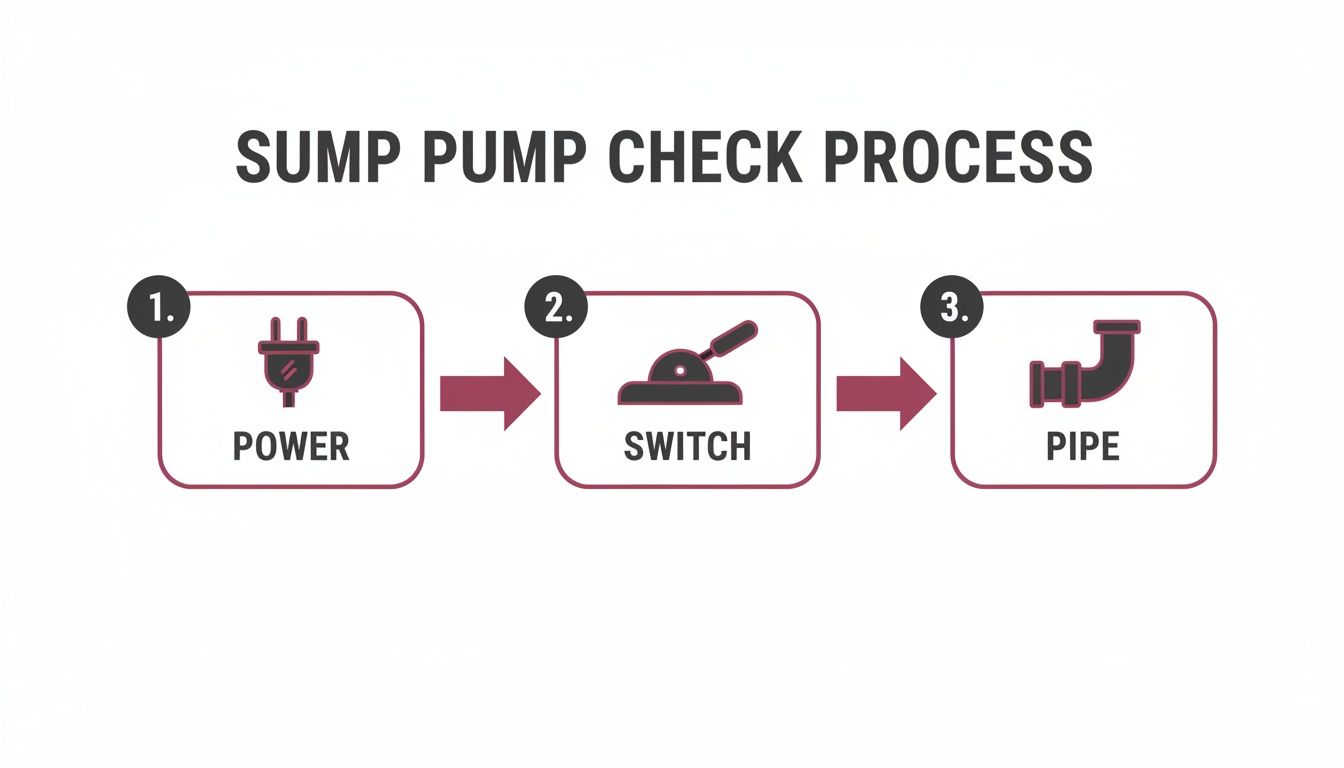
As the infographic shows, a successful test isn't just about hearing the motor. It’s about verifying that the power is on, the switch activates correctly, and the discharge pipe is clear.
Observing the Pump and Float Switch
As you pour the water in, keep your eyes on the float switch. It should rise freely with the water level. Does it look like it's catching on the pump, the basin walls, or any of the wiring? A float that gets hung up is a huge red flag because a stuck switch means the pump never gets the signal to turn on when you need it most.
Once the pump kicks in, listen. A healthy pump will have a consistent, relatively quiet hum. If you hear any rattling, grinding, or loud clanking, you could be dealing with debris in the impeller or a motor that’s on its last legs. You should also see the water level in the pit drop quickly and steadily.
Follow the Water Outside
While the pump is running, head outside and find where the discharge pipe lets the water out. This is a critical step. The pipe should terminate at least 10-20 feet away from your foundation. If it's too close, you're just dumping water right back where it can seep into your basement again.
What you're looking for is a strong, steady stream of water. A weak trickle or a dribble means there's a problem somewhere.
- A powerful flow tells you the pump's impeller is doing its job and the line is clear.
- A weak flow could signal a partial blockage in the discharge line or a failing pump motor.
This is probably the most overlooked step, but it’s absolutely essential for confirming the entire system is working from start to finish.
One of the most common failure points I see is the check valve. After the pump shuts off, listen for a single, soft 'thump' from the discharge pipe. That’s the sound of the valve closing properly, which stops water from flowing back into the pit. If you hear water rushing back in, the valve is failing. That forces your pump to work overtime and will burn it out much faster.
By running through these quick hands-on checks, you’re no longer just hoping your pump works. You’re gaining real, tangible confidence that every single component—from the switch in the pit to the pipe outside—is ready to protect your home.
Learning to Spot Sump Pump Trouble
A sump pump rarely just dies without giving you a heads-up first. It usually sends out some pretty clear distress signals, but you have to know what you’re looking—and listening—for. Think of it like this: your pump has its own language, and it's trying to tell you something's wrong.
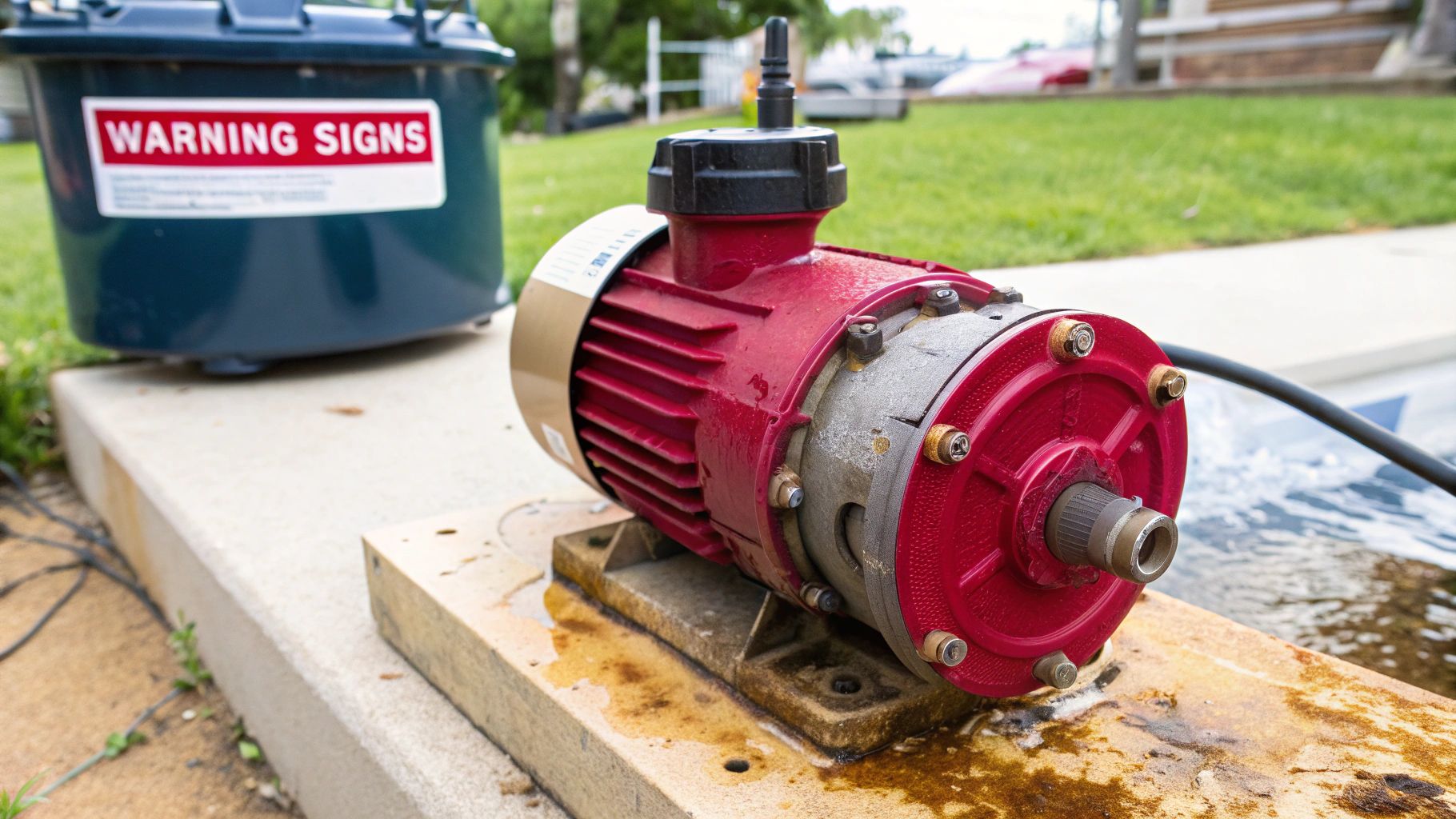
Learning to pick up on these clues is the difference between catching a small problem early and dealing with a flooded basement later. It’s a huge part of knowing how to tell if your sump pump is actually working when you need it most.
Listen for Trouble: What a Failing Pump Sounds Like
The noises your sump pump makes are often the first sign that something is off. A healthy pump has a smooth, quiet hum when it's running. Anything else is a red flag.
- Grinding or Rattling: If you hear sounds like rocks in a blender, it probably means the impeller is jammed. The impeller is the fan that pushes water out, and small rocks or debris can get sucked in. If you let it go, that jammed impeller can completely burn out the motor.
- Loud Humming (But No Water Moving): This is a bad sign. It means the motor is trying to run but can't, either because it’s seized up or the discharge pipe is totally clogged. This can cause the motor to overheat and fail for good.
- Slurping or Gurgling: A little gurgle as the last bit of water is cleared out is normal. But if it's making a constant slurping sound, the pump might be struggling to pull in water or the intake screen could be partially blocked.
A sump pump that kicks on and off every few seconds is a classic symptom of a problem. This is called "short-cycling." It's often caused by a bad float switch or a faulty check valve that allows water to drain back into the pit, tricking the pump into turning on again and again.
Look for Trouble: Visual Red Flags in Your Sump Pit
You don't need to be a plumber to spot trouble. Just taking a quick look into the sump pit can tell you a lot.
The most obvious thing to look for is rust. If you see rust flakes floating in the water or forming on the pump itself, it's a clear sign of corrosion. Over time, that rust will eat away at the pump and cause it to fail.
Another dead giveaway is an oily film on the water's surface. This usually means the motor seals have failed and oil is leaking out. That’s a pump on its last legs.
Ignoring these warnings is just asking for trouble. The impact of water damage on your home can be devastating and expensive, affecting everything from your foundation to your family's health.
When you recognize these sounds and sights, you can take action before the next big storm hits. It’s the best way to protect your home and gain some valuable peace of mind.
Preparing Your Sump Pump For a Power Outage
If there's one time a sump pump is almost guaranteed to fail, it's during a torrential downpour—which, of course, is the exact moment the power is most likely to go out. It's a recipe for a flooded basement.
In fact, power outages are a huge blind spot for many homeowners, contributing to roughly 40% of all sump pump failures. When the lights go out, your primary pump is nothing more than a plastic fixture in a rapidly filling pit.
This is where a battery backup system becomes your single best defense. But like any piece of equipment, it’s only reliable if you know for sure that it works.
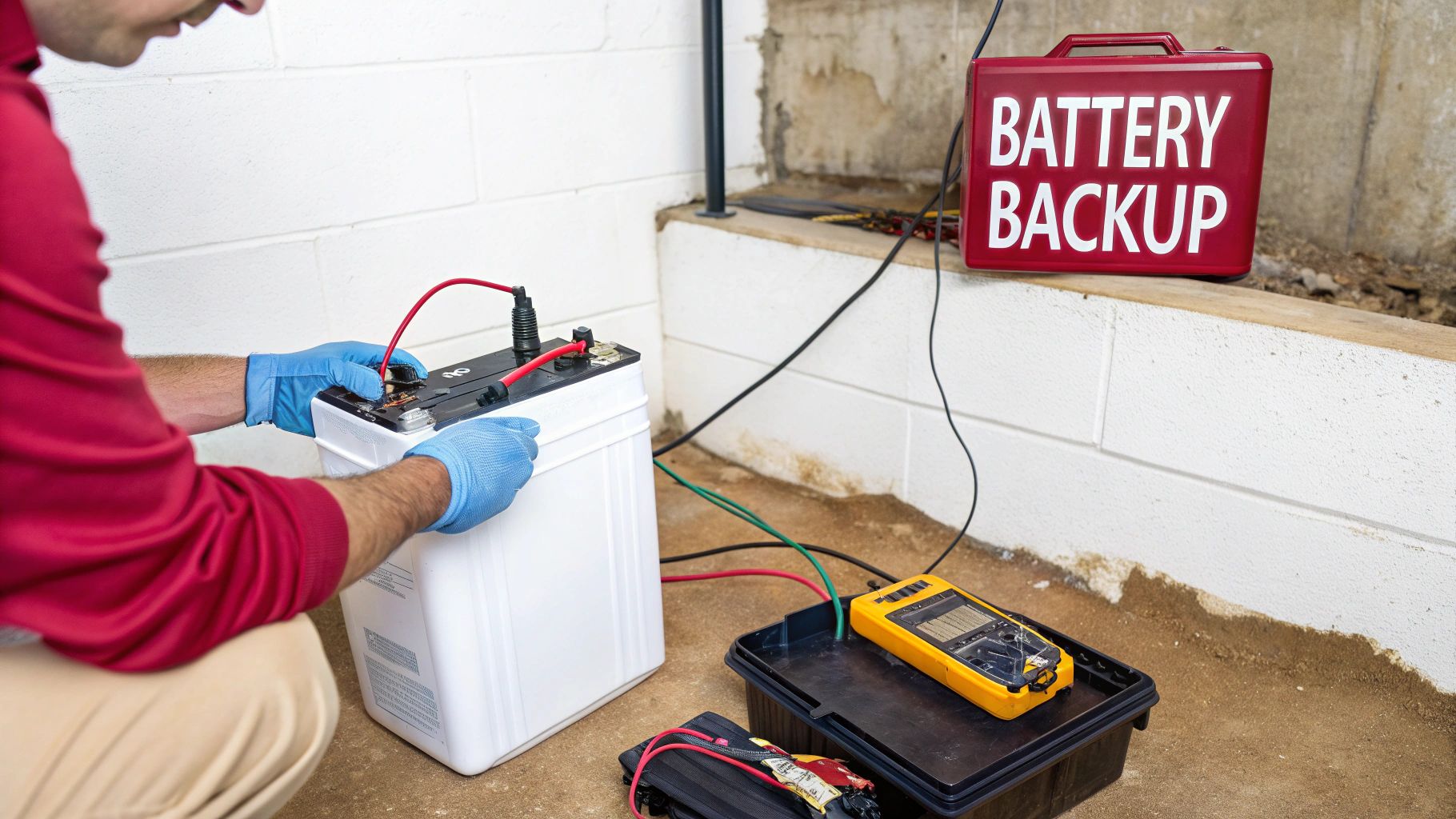
Testing Your Backup Battery System
Giving your backup system a quick check is easy, and you should make it a regular habit. The idea is simple: you want to mimic a power outage to see if the backup pump jumps into action.
Start by unplugging your main sump pump from the wall outlet. This completely cuts its power supply. Then, just like with the main pump test, slowly pour a few buckets of water into the sump pit.
As the water rises and lifts the float switch, you should hear the backup pump kick on. It’s often a slightly different sound, maybe a smaller motor whirring to life. If it starts pumping water out of the pit, you’re in good shape.
One of the most common—and easily fixable—reasons a backup system fails is battery terminal corrosion. Over time, a white, chalky substance can build up and break the electrical connection. Even a fully charged battery is useless if the power can't get out. Simply disconnect the battery and use a wire brush with a baking soda and water paste to scrub the terminals clean.
Once you see the backup pump working, go ahead and plug the main pump back in. You’ll probably hear a beep from the backup unit as it switches from active mode back to charging.
Know Your Battery's Lifespan
That backup battery won’t last forever. Most have a reliable service life of about 3-5 years. Don't wait for a storm to find out yours has aged out. I always tell homeowners to write the installation date directly on the battery with a permanent marker and set a calendar reminder to replace it.
If you use a generator instead of a battery, double-check that you know how to hook it up safely and that it has enough power to handle the pump's startup surge. And while you're thinking about winter preparedness, it's never a bad idea to brush up on how to prevent pipe freezing, another major headache during a long outage. A little bit of prep goes a long way in keeping your home dry and secure, no matter what the weather throws at you.
When to Skip the DIY and Call a Professional
Running a few tests on your sump pump is a fantastic way to stay ahead of trouble. It’s smart, proactive homeownership. But knowing your limits is just as important as knowing how to do a bucket test. Some problems go way beyond a simple fix, and trying to tackle a serious electrical or mechanical issue on your own isn't just a risk to your pump—it's a risk to you and your home.
When you run into the symptoms below, it’s a clear signal that something deeper is wrong. These aren’t just quirks; they’re warnings that it's time to put down the tools and call for backup.
Non-Negotiable Signs You Need a Plumber
Some issues are just too big or too dangerous to handle yourself. Think of these as red flags that scream for a professional diagnosis to avoid a flooded basement or a dangerous electrical situation.
- The pump won’t run at all. You've checked the power, you've made sure the float switch isn't stuck, and still… nothing. A dead motor usually means the problem is internal, like a seized-up component or a total electrical failure inside the unit.
- The circuit breaker keeps tripping. A breaker that trips every time the pump kicks on is your electrical system’s way of sounding the alarm. It’s a dead giveaway of a short or an overworked motor. Just flipping it back on repeatedly is a fire hazard and won't fix the root cause.
- You hear humming, but no water is moving. This is the classic sound of a stuck motor. Power is getting to the pump, but the impeller can't spin. Letting it hum like that will burn out the motor in a hurry.
A sump pit is a wet environment, and mixing DIY electrical repairs with water is a recipe for disaster. Attempting to fix a motor or internal wiring without proper training is incredibly dangerous. Our technicians have the right tools and, more importantly, the expertise to work on these systems safely.
When a Working Pump Still Needs an Expert Eye
Sometimes, the pump is running, but it's acting strangely. These signs might not feel like a four-alarm fire, but they often point to a pump that's on its last legs or not working as efficiently as it should. Catching these early can prevent a catastrophe down the road.
A pump that runs constantly, even when it’s not raining, is a huge red flag. This often points to a bad check valve that’s letting all the pumped-out water flow right back into the pit, forcing the pump to do the same work over and over. It could also mean the pump is simply too small for the job. Either way, it's working itself into an early grave.
Also, take a good look at the pump itself. If it’s old, caked in rust, or you have no idea when it was installed, getting a professional opinion is a wise investment. A technician from Precision Plus Plumbing can spot the subtle signs of wear and tear, diagnose those tricky problems, and make sure your pump is actually the right size for your home. For more insight, take a look at our guide on how to tell if a plumbing problem is an emergency. Making the right call now can save you a world of headache later.
Common Sump Pump Questions Answered
After running through the tests, you probably still have a few questions floating around. That’s perfectly normal. Getting to know the ins and outs of your sump pump will help you catch problems early and give you peace of mind when the rain starts pouring.
Here are some straightforward answers to the questions we hear most often from homeowners.
How Often Should I Test My Sump Pump?
As a general rule, you should test your main sump pump quarterly—about every three to four months. I always tell people it's also a great idea to do a full bucket test right before the rainy season kicks off. You don't want to discover a problem during a downpour.
Beyond that, a quick monthly peek into the sump pit can work wonders. Just look for any obvious debris like leaves, silt, or random small objects that could jam things up and clear them out. If you have a battery backup, give it the same quarterly test to make sure it kicks on and the battery is holding its charge.
What Does It Mean If My Sump Pump Runs Constantly?
A pump that never shuts off is a major red flag that demands immediate attention. When a pump runs nonstop, it's called short-cycling, and it can burn out the motor a lot faster than you’d think.
A few usual suspects are behind this issue:
- A Stuck Float Switch: The switch might be tangled up or simply jammed in the "on" position, constantly signaling the pump to keep running.
- A Failed Check Valve: This little valve is designed to prevent water from flowing back into the pit after it's pumped out. If it breaks, the pump ends up just cycling the same water over and over.
- An Overwhelmed Pump: The pump could be too small for the volume of water it's dealing with. In other cases, there could be an underground plumbing leak creating a constant source of water.
A constantly running pump is a pump that's about to fail. It’s a problem that just can't wait. A pro can figure out quickly if it’s a simple switch adjustment or something more serious like an undersized pump or a broken water line.
Is It Safe to Replace a Sump Pump Myself?
Look, if you have some serious plumbing and electrical skills, it's technically possible. But for most people, replacing a sump pump is a job best left to the professionals. There's a lot more to it than just unplugging the old one and dropping in a new one.
Get the installation wrong, and you could be facing a whole new set of problems. You might accidentally create a leak at a connection point, create an electrical hazard with improper wiring, or even install the wrong size pump for your home’s needs. A professional plumber makes sure every single component—from the check valve to the discharge line—is installed perfectly for reliable, long-term flood protection.
When it's your home's main defense against water damage, professional installation is a smart investment. If you've already had the misfortune of a flood, knowing the steps to take after water damage occurs is absolutely crucial.
Why Does My Sump Pump Make a Gurgling Noise?
A little gurgling is often completely normal! You'll usually hear it right at the end of a pump cycle. It's just the sound of the last bit of water draining from the discharge pipe and air rushing in to take its place.
However, if that gurgling is really loud, constant, or you notice the pump seems to be struggling to clear water, it could be signaling a bigger issue. This might point to a partial clog or a venting problem in the discharge line. A good first step is to check the outside end of the pipe and make sure it's not blocked by mulch, leaves, or even an animal's nest. To keep your pump running smoothly, it's always a good idea to follow some essential sump pump maintenance tips.
If your sump pump is showing any signs of trouble, don't wait for a storm to force your hand. The expert team at Precision Plus Plumbing is ready 24/7 to diagnose, repair, or replace your pump, ensuring your home stays safe and dry. Visit us online to schedule your service today.