
That rotten-egg smell wafting through your house is one you can't ignore. It’s more than just a nuisance; it’s your plumbing system’s way of telling you something is seriously wrong. The good news is that the cause can be as simple as a dried-out drain in a rarely used bathroom. The bad news? It could also point to a much bigger problem, like a damaged main sewer line.
Either way, you shouldn't just live with it.
Why Your House Suddenly Smells Like a Sewer
When you catch a whiff of that foul odor, what you're actually smelling is sewer gas. This is a nasty mix of gases from decomposing waste, and it belongs in one place: the sewer. Your entire plumbing system is built with a series of traps and vents designed specifically to keep these gases out of your living space.
So, if you can smell it, one of those barriers has failed. Finding the source is the first critical step, whether the smell is coming from a basement in Wilmington, DE, a bathroom in Doylestown, PA, or your kitchen sink in Cherry Hill, NJ. For homeowners across our service area—from the historic homes in Chester County, PA, to the growing communities in New Castle County, DE—a few common culprits are usually to blame.
Quick Guide to Common Sewer Odor Causes
Sometimes you just need a quick answer. This table breaks down the most common issues, what you'll likely notice, and how quickly you need to act.
| Potential Cause | Common Symptom | Urgency Level |
|---|---|---|
| Dry P-Trap | Smell is localized to one unused drain (e.g., guest bathroom, floor drain). | Low: Often a simple DIY fix. |
| Broken Toilet Seal | Odor is strong around the base of a toilet; the toilet may feel wobbly. | Medium: Needs repair to prevent leaks and gas escape. |
| Clogged Vent Stack | Gurgling drains, slow draining, and odor in multiple rooms. | High: Affects the whole system; call a professional. |
| Sewer Line Clog | Multiple drains are backed up; smell is strong and persistent. | Urgent: Potential for a sewage backup. Call immediately. |
| Damaged Sewer Line | Persistent odor, sinkholes in the yard, lush green patches of grass. | Urgent: A serious structural and health hazard. |
While this table is a great starting point, understanding the "why" behind each issue helps you know what you're dealing with.
The Most Frequent Culprits in Local Homes
The age and style of houses in our local service areas often lead to predictable plumbing issues. Whether you’re in a classic stone house in Delaware County, PA, a newer build in Bucks County, PA, or a colonial in Newark, DE, the fundamentals of plumbing don't change.
Here are the problems we see most often:
A Dry P-Trap: This is, by far, the most frequent and easiest problem to solve. That U-shaped pipe under every sink and floor drain is designed to hold a small amount of water, which acts as a physical barrier against sewer gas. If a drain isn't used for a while—like in a guest bathroom or basement—that water evaporates, leaving a wide-open path for odors.
A Failed Toilet Seal: At the base of every toilet is a wax ring that creates an airtight seal against the floor drain. These rings can degrade over time, get damaged during installation, or fail if the toilet becomes loose. This small gap is all sewer gas needs to seep into your bathroom.
Blocked Plumbing Vents: Your plumbing system needs to breathe. Vents, usually sticking out of your roof, allow sewer gas to escape and regulate air pressure so your drains flow freely. When these vents get clogged with leaves, snow, or even a bird's nest, the gas has nowhere to go but back into your house through the nearest drain.
Since 1999, we've helped thousands of homeowners in New Castle County, Delaware, New Jersey, and Pennsylvania's Bucks, Montgomery, Delaware, and Chester Counties solve this exact problem. Trusting a local expert who understands regional building codes and common issues is the fastest way to get your home smelling fresh and clean again.
This guide will walk you through how to pinpoint the source of the sewer smell in your house, from simple fixes you can try yourself to knowing when it's time to call in a pro. We're here to give you the clear answers and reliable solutions you expect from a plumber who knows your neighborhood.
The Most Common (and Simplest) Reason for a Sewer Smell
Before you start picturing your walls being torn open or your front yard in West Chester getting dug up, let’s talk about the single most common culprit behind that awful sewer smell. Nine times out of ten, the cause is surprisingly simple, and it has nothing to do with a major plumbing disaster. The problem is almost always a dry P-trap.
You know that U-shaped pipe under every sink in your house? That's a P-trap. Its one and only job is to hold a small plug of water, 24/7. This little bit of water acts as a physical barrier, blocking gases from the main sewer line from creeping up your drains and stinking up your home.
It’s an incredibly simple and effective design—right up until that water is gone.
How a Forgotten Drain Becomes an Open Sewer Vent
The water sitting in a P-trap can't stay there forever; it eventually evaporates. In the drains you use every day, like your kitchen sink or master shower, this is never a problem. You’re constantly running water and refilling the trap without even thinking about it.
The issue pops up in the drains that are rarely, if ever, used. This is a classic scenario in homes all over our service areas.
- The Guest Bathroom: That half-bath in your Montgomery County home that only gets used during the holidays is a prime suspect.
- The Basement Floor Drain: Think about that round drain in the floor of your Bucks County basement. Has it seen a drop of water since the last time the water heater was replaced?
- The Unused Tub or Shower: Maybe you have a spare tub in an in-law suite in your Wilmington home or a finished basement that sits empty most of the year.
When the water in these traps finally evaporates, that protective seal vanishes. What’s left is a direct, open pipeline from the city sewer or your septic tank straight into your house. That foul, rotten-egg smell has an open invitation to come inside.
Think of it this way: a dry P-trap is like leaving a window wide open, allowing sewer gas to pour into your living space. This is often why the smell seems to appear out of nowhere, even when nothing is broken.
The #1 Cause of "Mystery" Sewer Odor Calls
This isn't just a hunch; it’s what we see in the field every single day. When a homeowner from Newark, DE to Norristown, PA calls in a panic about a sudden sewer smell, the first thing we check is the P-traps. Industry-wide, well over 40% of all sewer smell complaints are traced back to this one simple issue. As noted in resources like Envirosight's blog on drain odors, this is a frequent, yet often overlooked, problem.
The good news? Diagnosing and fixing it yourself is incredibly easy.
Your 5-Minute Fix: The P-Trap Test
Before you even think about calling a plumber, grab a pitcher of water and try this. It costs nothing and will only take a few minutes.
- Do a Quick Walk-Through: Go through your house and identify every single drain. Don't forget sinks, showers, tubs, and especially those easy-to-miss floor drains in the basement, laundry room, or garage.
- Pour Water Down Each Drain: For sinks and tubs, run the faucet for about 30 seconds. For floor drains, slowly pour about a half-gallon of water (a small bucket or large pitcher will do) directly into the drain.
- Ventilate and Wait: Open a few windows to air out the house, then give it an hour or two.
If the smell goes away and stays away, congratulations—you’ve found the culprit! To keep it from happening again, just make a habit of pouring water into those forgotten drains once a month. This simple routine keeps the traps full and the sewer gas out.
If the smell lingers or comes right back, it's a sign that the problem is something more serious. Now, it's time to dig a little deeper.
What to Do When the Smell is Coming from the Toilet
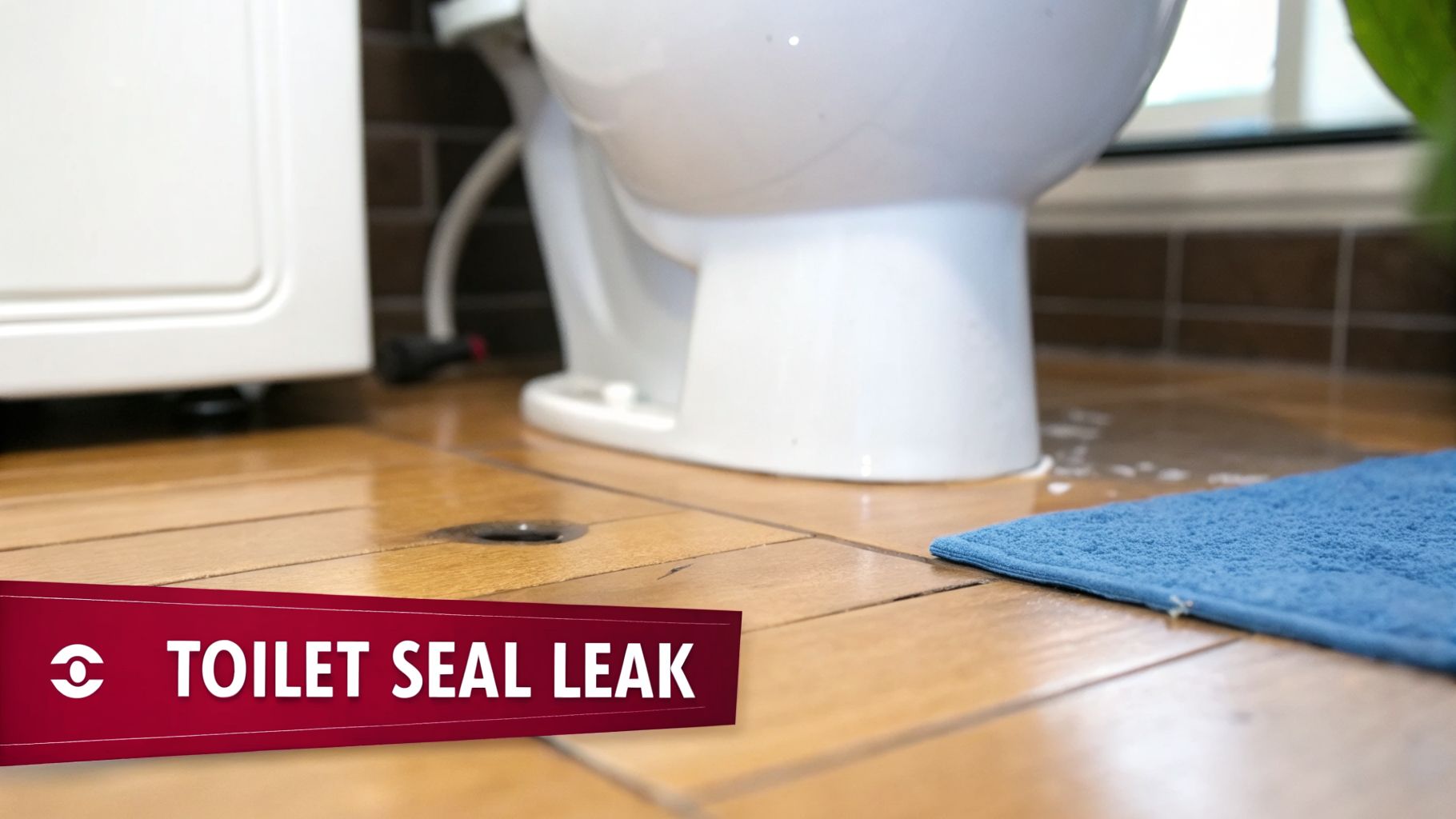
So, you've topped up all your P-traps with water, but that nasty sewer odor is still hanging around. If the smell seems to be strongest in one of your bathrooms, it’s time to look at the toilet itself.
Every toilet has a crucial seal at its base called a wax ring. This simple, donut-shaped ring of wax sits between the bottom of your toilet and the drainpipe in the floor, creating an airtight barrier. It’s the single component preventing a direct path from the main sewer line right into your home.
When that seal fails, even with a tiny crack, sewer gas has an open invitation. In our experience, a bad wax ring is one of the most common reasons for a sewer smell in a house, especially in the older homes scattered across Delaware County and Chester County, PA.
Telltale Signs of a Failing Wax Ring
Unlike a dry P-trap, you can’t fix a broken toilet seal by just running some water. This is a physical problem, and it has some very specific clues. If you spot any of these, the wax ring is almost certainly your culprit.
- A Nasty Smell Right at the Toilet's Base: Get close to the floor (as unpleasant as that sounds) and take a sniff. If the odor is noticeably stronger right where the toilet meets the tile, that’s your first major clue.
- Water on the Floor: See any moisture or small puddles forming around the base of the toilet? That’s a dead giveaway. If water is seeping out, you can bet sewer gas is, too.
- A Wobbly Toilet: A toilet should feel like it's part of the floor—absolutely solid. If yours rocks or shifts at all when you sit down, that movement is slowly destroying the wax seal below.
That pungent smell right at the toilet base is a classic sign of a failed wax seal. In fact, most plumbers would rank this in the top three causes of indoor sewer odors. We see it all the time in Chester County, PA, and New Castle County, DE, where homes can be decades old. It’s not uncommon for these original seals to fail after 10-15 years. A rocking toilet is the fastest way to kill a seal; every little wobble cracks it further, letting that hydrogen sulfide gas escape. You can learn more about how toilet seals contribute to plumbing emergencies from other home service experts.
Why Replacing a Toilet Seal Isn't a DIY Job
On the surface, swapping out a wax ring might seem straightforward. But it's a job where a little inexperience can lead to big problems. The process means shutting off the water, draining the toilet, unbolting it, and lifting a very heavy and awkward porcelain fixture completely off the floor.
That’s where things often go wrong for homeowners.
A professional plumber will not only replace the ring but will also inspect the toilet flange—the fitting on the floor—for damage. They'll set the new wax ring perfectly, then carefully bolt and shim the toilet until it's perfectly level and will never rock again. It’s a meticulous process that guarantees a lasting, leak-proof seal.
In the beautiful historic homes of Delaware County, PA, or along the Delaware River in New Jersey, where floors have often settled over a century, getting that toilet perfectly level is an art form. One wrong move on your own could mean a worse leak, serious water damage to your subfloor, or even a cracked toilet. To get a result that’s guaranteed to be free of leaks and odors, this is one repair you’ll want to leave to the pros.
Alright, you’ve checked the P-traps under every sink and made sure the toilet isn’t wobbling on a bad wax ring. But that awful sewer smell is still hanging in the air, maybe even in multiple rooms.
When the odor is that widespread, it’s a sign that the problem isn't with one specific fixture. It’s time to look at the two heavy hitters of your plumbing system: the vents and the main sewer line itself.
Your Plumbing’s Snorkel: A Clogged Vent Stack
Every drain system needs to breathe. Think of your plumbing vents as a snorkel. A vent stack is a pipe that runs up through your walls and out the roof, and it does two crucial things. It lets nasty sewer gas escape outside, and just as importantly, it lets air in to equalize pressure when water rushes down the drain.
Without that incoming air, a flushing toilet or draining tub creates a vacuum. That suction can literally pull the water right out of your P-traps, breaking the water seal that keeps sewer gas out of your home.
Here in leafy areas like Montgomery County, PA, and across our New Jersey service regions, these vents are wide open to trouble. We see it all the time.
- Debris: Leaves, acorns, and twigs easily fall in and create a blockage.
- Nests: Birds and squirrels think an open pipe is a great place to build a home.
- Ice: During our cold Pennsylvania and New Jersey winters, frost can build up and completely seal the vent opening shut.
When the vent is clogged, gas can’t get out, so it backs up into your house. You’ll also hear some classic telltale signs: gurgling sounds from your drains and sinks or tubs that drain very slowly. If you’re hearing gurgles and smelling that odor in more than one spot, a blocked vent is a top suspect.
The Nightmare Scenario: A Main Sewer Line Problem
This is the one nobody wants to hear. The most serious—and unfortunately, common—cause of a persistent sewer smell is a problem with your main sewer line. This is the single, large-diameter pipe that carries all of your home’s wastewater away to the municipal sewer or septic system.
A clog, break, or collapse in this line isn’t just an inconvenience; it’s a full-blown plumbing emergency that needs professional help, fast.
In many of our established neighborhoods, from towns in Southern New Jersey to suburbs like Media, PA, the pipes themselves are the problem. Homes built in the mid-20th century often have old cast-iron or clay sewer lines that are simply at the end of their service life, making them incredibly fragile.
Tree roots are, by far, the biggest enemy of these older pipes. They sense the moisture and nutrients inside and will force their way through the tiniest crack. Once inside, they expand and can completely shatter the pipe.
A blocked or damaged sewer line is the nightmare cause of sewer smells, forcing raw sewage and toxic gases back up into your home. This is a huge issue in older suburbs, where aggressive tree roots are known to invade 80% of cracked lines. In places like Bucks County and Chester County, pipes from the 1960s-70s are often made of brittle clay, which doesn’t stand a chance.
Red Flags of a Main Line Failure
So how can you tell if the main line is the culprit? The symptoms are usually impossible to ignore and get worse quickly.
- Multiple Fixtures Are Backing Up: If flushing a toilet makes water bubble up in the shower, or running the sink causes the toilet to gurgle, the blockage is in the main line they all share.
- Suspiciously Green Patches in the Yard: Notice a spot on your lawn in Wilmington that's suddenly extra green and lush, right above where the sewer line runs? You've found a leak. Raw sewage is a powerful, if unwanted, fertilizer.
- Soggy Ground or Sinkholes: A serious break will saturate the soil, creating constant puddles or even a depression in your yard as the soil washes away.
- An Unavoidable, Pervasive Odor: This isn't a faint whiff. A main line break creates a powerful, constant sewer smell inside and outside your house that you just can’t get away from.
Figuring out what's wrong with a buried sewer line isn't a guessing game. The only way to know for sure is with a professional video camera inspection. We feed a high-resolution camera down the line to get a clear look at the problem, whether it's invasive roots, a collapsed section, or a simple blockage. This is the critical first step to figuring out the right fix, and you can learn about modern, no-dig solutions in our guide to trenchless sewer line replacement.
Knowing When to Call an Emergency Plumber
So, you’ve done the basic detective work. You’ve run water down the unused drains to fill the P-traps, and you’ve even rocked the toilet to make sure it’s not loose. But that foul, unmistakable sewer smell is still hanging in the air.
This is the moment where your DIY checklist ends. When the simple fixes don’t solve the problem, it’s a clear sign that something more serious is going on, and it's time to call in a professional. It’s the smartest—and safest—move for your family and your home.
Don't just write it off as a nuisance. That persistent odor is a serious health concern. Sewer gas isn't just smelly; it’s a nasty cocktail that includes hydrogen sulfide, which can cause headaches and nausea, and even methane, which can be flammable in high enough concentrations. A strong, lingering smell is your home's way of telling you to get help.
Red Flags That Demand Immediate Attention
Some plumbing symptoms aren't subtle hints; they’re screaming for help. If you notice any of the following, it’s time to stop troubleshooting and call for 24/7 emergency service. These are urgent warnings of a potentially significant problem.
- The Smell Is Everywhere: An odor contained to one bathroom might just be a bad toilet wax ring. But when that smell seems to be in every room of your New Jersey home, you're likely dealing with a bigger issue, like a blocked main vent stack or a crack in your main sewer line.
- Gurgling From Multiple Drains: Flush a toilet upstairs in your Bucks County house and hear a gurgling protest from the shower drain downstairs? That's a classic sign of a major clog. Air is getting trapped in your plumbing lines and is desperately trying to find a way out.
- Several Drains Are Slow or Stopped: One slow sink is an annoyance. But if the kitchen sink, the laundry drain, and a downstairs bathroom all start draining sluggishly at the same time, it’s a dead giveaway that the main sewer line they all connect to is blocked.
- Water Backing Up in Weird Places: This is a big one. If running the dishwasher causes water to bubble up in your basement floor drain, you have a serious main line backup. The wastewater has no path to the sewer and is coming back up through the lowest point in your home.
This chart can help you make a quick diagnosis based on the clues your house is giving you.
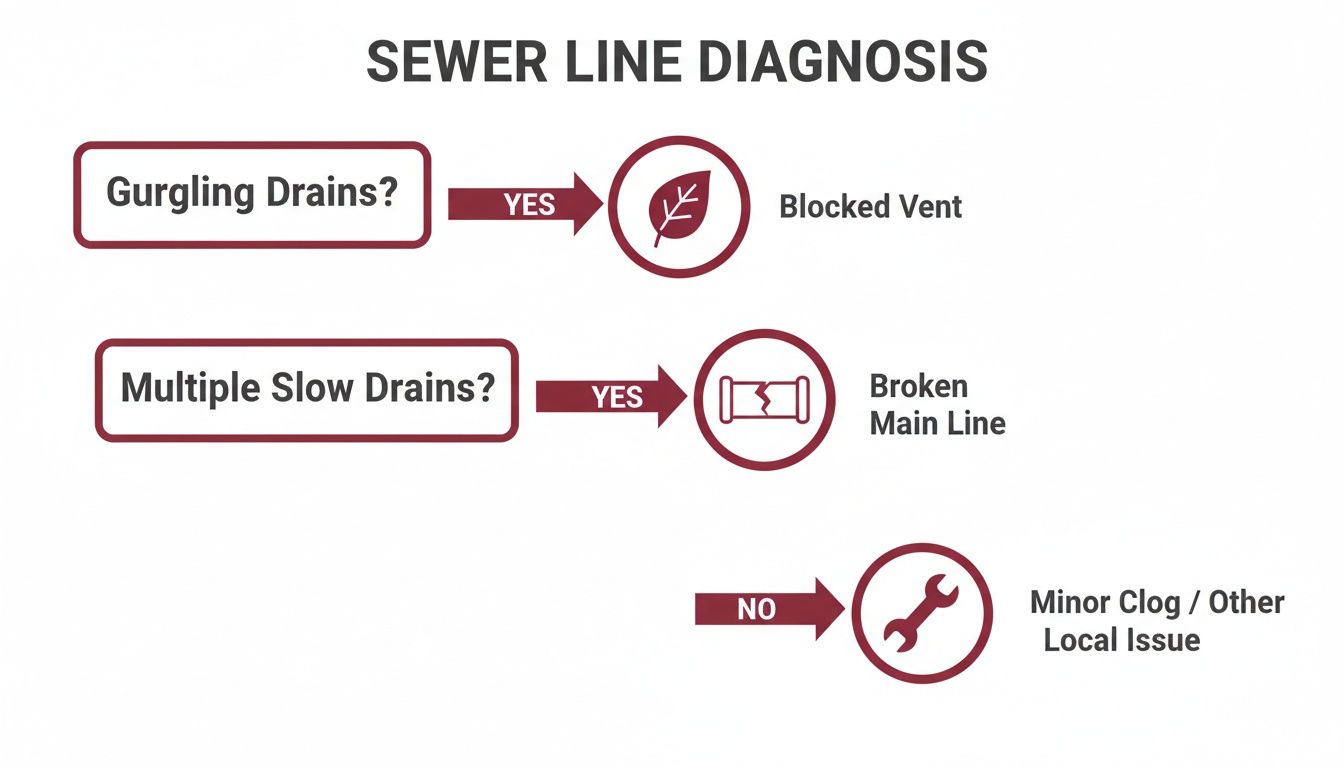
As you can see, gurgling sounds often point back to a venting problem, while widespread slow drains are a strong indicator of a main line sewer issue.
Why Calling a Pro Is the Smart Play
Picking up the phone to call a plumber isn’t giving up; it’s making a smart, strategic decision to protect your home. For homeowners across our service areas—from New Castle County, DE, to Pennsylvania's Chester and Montgomery Counties—a sewer gas problem can go from bad to worse in a hurry.
Your family’s well-being is what matters most. Continuous exposure to sewer gas is hazardous, and trying to tackle a main line break or a major vent blockage yourself can easily lead to thousands of dollars in water damage or a catastrophic sewage backup inside your house.
An emergency plumber brings the two things you don't have: years of experience and specialized diagnostic gear. We use tools like in-line video cameras to see exactly what’s happening inside your pipes, eliminating the guesswork. Whether it's aggressive tree roots in a South Jersey backyard or an old, collapsed clay pipe under a historic home in Delaware County, PA, a professional inspection gives you clarity.
You’ll know exactly what you’re up against. To get a better sense of what qualifies, check out our guide on how to tell if a plumbing problem is an emergency.
Don't wait for a weird smell to turn into a full-blown disaster. If the simple fixes aren't cutting it, it’s time to let a professional take it from here.
Proactive Maintenance to Prevent Future Odors
Alright, so you’ve gotten rid of that awful sewer smell. The last thing you want is for it to come creeping back. Shifting from constantly reacting to plumbing problems to proactively preventing them is how you keep your home smelling fresh and avoid those middle-of-the-night plumbing emergencies.
This is especially true for us here in the Delaware Valley, with the charming but often temperamental plumbing in our older homes. But don't worry, this isn't about becoming a master plumber overnight. It’s more like a simple health and wellness plan for your home's drains—a few smart habits can stop most odor issues before they even start.
Your Practical Prevention Checklist
The cheapest way to keep your plumbing healthy is to build good habits. These tips are universal, whether you're in a historic rowhome in Wilmington, DE, or a newer build out in Chester County, PA.
- Run Water in All Drains Monthly: This is the easiest trick in the book. Once a month, just run water for 30-60 seconds in all your sinks, tubs, and showers. Pay special attention to the ones you don't use often, like in a guest bathroom or basement. For floor drains, pouring in a gallon of water does the same thing. This keeps the P-traps full, maintaining that all-important water barrier against sewer gas.
- Be Mindful of What You Flush: Your toilet is not a magic portal. It’s designed for two things: human waste and toilet paper. So-called "flushable" wipes, paper towels, cotton swabs, and feminine hygiene products are notorious for causing nasty, expensive clogs.
- Clean Drain Stoppers and Pop-ups: Take a look at your sink and tub stoppers. See that gunk? That’s a mix of hair, soap scum, and other grime that not only smells bad on its own but also acts as a seed for a bigger clog down the line. Pop them out and give them a good cleaning every so often.
The Value of a Professional Plumbing Inspection
While your daily habits are your first line of defense, nothing beats a professional set of eyes for catching serious problems early. This is a non-negotiable for homes with older plumbing, which we see all the time across Montgomery, Delaware, and Bucks Counties. Think of an annual or biennial inspection as a small investment to protect a very large one—your home.
A good plumber can spot things an untrained eye will always miss. We're talking about subtle pipe corrosion, the beginning of root intrusion we can see with a camera, or a toilet flange that’s about to fail. It’s all about preventing a $5,000 catastrophe with a $200 check-up.
For more on keeping your drains flowing smoothly, we put together a detailed guide on how to prevent drain clogs with even more strategies.
And once your plumbing is squared away, you might be thinking about other ways to keep your home smelling its best. For a broader look, you can find great tips on how to eliminate general house odors and create a consistently pleasant living space. Working with a local expert means you can stop putting out fires and start focusing on your home's long-term health.
Your Sewer Smell Questions Answered
Over the years, we've heard just about every question imaginable from homeowners in New Castle County, DE, and across our Pennsylvania and New Jersey service areas about strange sewer smells. Here are the answers to the questions we get asked most often.
Is the Sewer Smell in My House Dangerous?
That’s a fair question, and the honest answer is yes, it can be. That rotten egg smell is usually hydrogen sulfide, a component of sewer gas. Even at low levels, prolonged exposure can lead to headaches, dizziness, and nausea.
More seriously, sewer gas also contains methane. In high enough concentrations, methane can become flammable. If you're dealing with a strong, persistent odor, don't take any chances. Open your windows to get fresh air circulating and call a professional plumber to assess the situation right away.
Why Does My Basement Smell Like a Sewer?
If you're smelling sewer gas in a New Jersey or Pennsylvania basement, the most common culprit is a dry P-trap in a floor drain. It’s the first thing we check and the easiest fix. Just pour a gallon of water down the drain to refill the trap and restore the water barrier.
If that doesn't do the trick, we have to look deeper. It could be a problem with your sump pump, a cleanout plug that isn't properly sealed, or even a crack in the main sewer line under your foundation. These are all jobs for a pro.
Don't just get used to a sewer smell. Think of it as a warning light on your car's dashboard—it’s your plumbing system telling you a critical barrier has been breached. Ignoring it will only lead to bigger, more expensive headaches down the road.
Can I Use Drain Cleaner to Fix the Smell?
Please don't. A sewer gas odor isn't something you can fix with a bottle of chemicals. That smell means there's a break in the system—like a dry trap, a bad toilet seal, or a cracked vent pipe—not a simple clog of hair and grease.
Here’s the thing about drain cleaners: they’re incredibly harsh. Using them is not only ineffective for this problem, but you also risk seriously damaging the older cast-iron and clay pipes we see all the time in Chester and Delaware County homes. You could easily turn a simple repair into a massive pipe failure. While you're tackling household odors, learning how to get rid of home odors in general can offer some great strategies for a fresher home.
How Much Does It Cost to Fix a Sewer Smell?
The cost really runs the gamut because it depends entirely on the source of the problem. Pouring water into a dry P-trap costs you nothing. Even having a professional replace a toilet's wax ring is a fairly low-cost, routine job.
On the other hand, repairing a broken main sewer line is a much more involved project and a more significant investment. This is why we never guess. We use tools like video camera inspections to show you exactly what’s wrong, so you get a precise diagnosis and a firm, upfront quote before we start any work.
If a mysterious sewer smell is making your house feel less like a home, don't wait for it to get worse. The experts at Precision Plus Plumbing have been serving New Castle County, DE, New Jersey, and Pennsylvania's Bucks, Montgomery, Delaware, and Chester Counties since 1999, providing 24/7 emergency service to pinpoint and solve the problem fast. Contact us today for a reliable diagnosis and a solution you can trust at https://www.precisionserviceexperts.com.