
That awful, rotten-egg smell wafting up from your basement is a clear signal that something’s wrong. To figure out how to get rid of the sewage smell in your basement, you’ll need to play detective. The good news is, the culprit is often something simple, not always a major plumbing catastrophe for homeowners in New Castle County, DE or the surrounding Philadelphia suburbs.
Diagnosing That Unmistakable Basement Sewer Smell
When that sewer odor hits, it’s easy to assume the worst. But more often than not, the cause is a minor issue you can track down yourself. It all starts with knowing the common failure points in your basement’s plumbing.
Think of it this way: your plumbing has several built-in defenses to keep sewer gas out of your house. When one of them fails, you get that smell. The usual suspects are floor drains, cleanout plugs, and the vent pipes connected to your system. A cracked sewer line is the big-ticket fear, but a simple dry floor drain is a far more common problem in homes from Wilmington to Doylestown.
Pinpointing the Odor Source
Before you do anything else, trust your nose. Different problems create slightly different odors, which can give you some great clues.
- Is the smell more musty and stagnant, like swampy water? Take a look at your sump pump pit.
- Does it smell like a sharp, gassy odor that comes and goes? That could point to an issue with a plumbing vent.
- Is it a persistent, strong sewage smell that’s impossible to ignore? This often leads directly to a drain or the main sewer line itself.
The flowchart below can help you start narrowing down the possibilities.
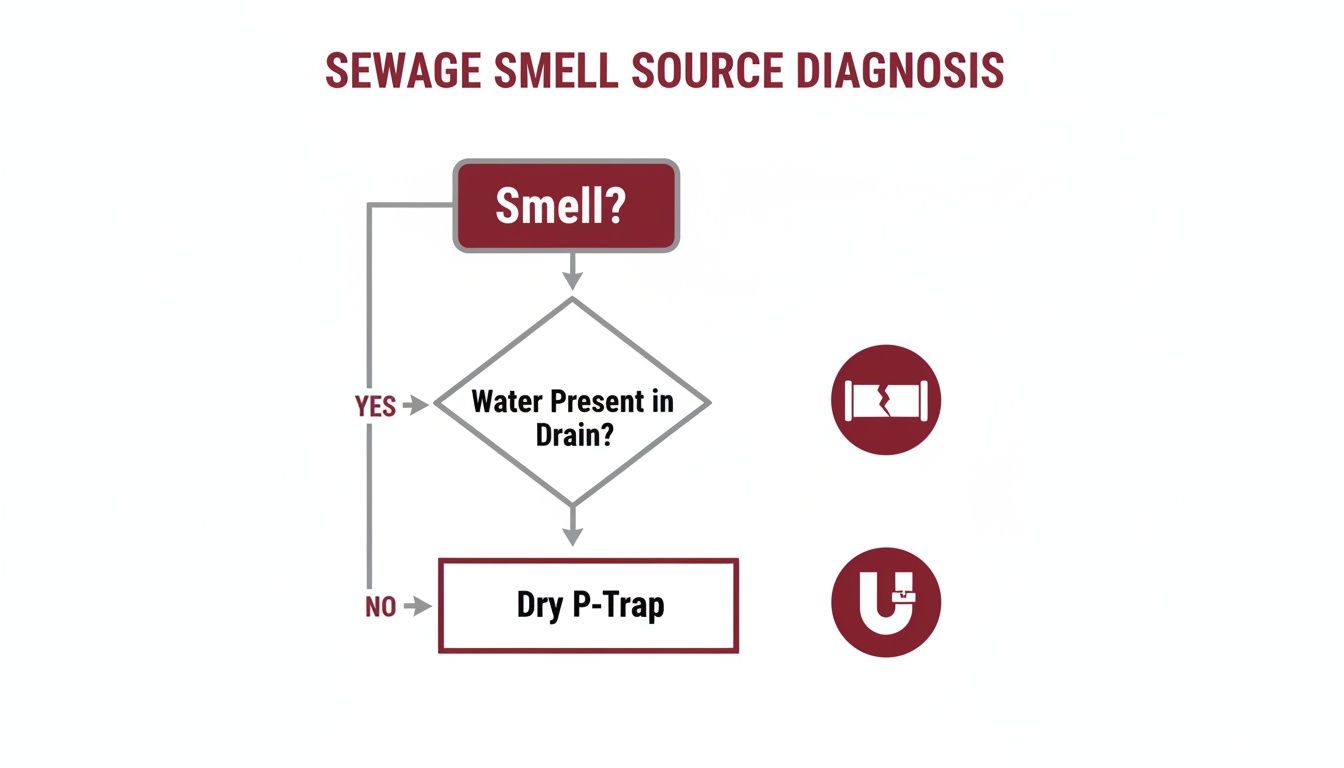
As you can see, checking whether there’s water near the source of the smell is a key first step. It’s the simplest way to tell if you’re dealing with a dry trap or a more involved leak.
The Most Common and Overlooked Culprit
Let’s talk about the P-trap. That little U-shaped pipe you see under every sink and floor drain is your home’s first line of defense against sewer gas. Its only job is to hold a small amount of water, which creates a seal that blocks gas from coming up the pipe.
But what happens when a drain isn’t used for a while—a common scenario for basement floor drains or guest bathrooms? That water simply evaporates.
Once the water is gone, the seal is broken, and sewer gas has a direct, open path into your home. This is, without a doubt, one of the leading causes of those mystery sewage smells. The fix is often shockingly simple: pour a gallon of water down the drain. For extra credit, add a tablespoon of cooking oil on top to slow evaporation. This simple trick often eliminates the smell within hours.
If you’ve tried this and are still dealing with an odor, you can discover more insights about fixing sewage smells to explore other potential issues.
Your Immediate Safety Checklist for Sewer Gas
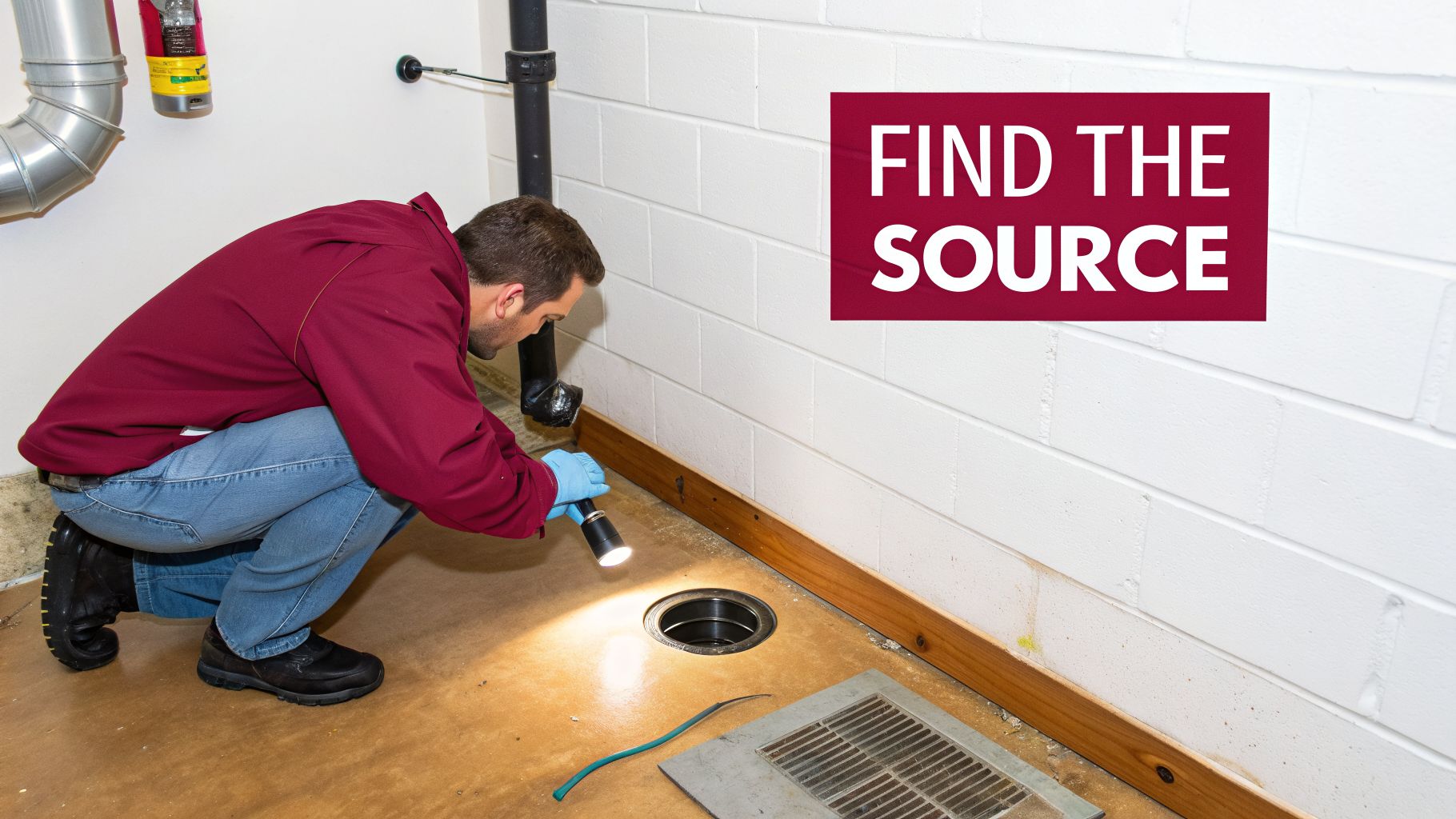
When you catch a whiff of that unmistakable rotten-egg smell, your first thought might be to find the source. But before you play detective, you need to switch gears to safety. That odor is a big red flag for sewer gas, a nasty mix that includes harmful gases like hydrogen sulfide and methane. Protecting your family has to be priority number one.
The very first thing you need to do is get some fresh air moving. Throw open any basement windows and doors that lead outside. If you have box fans, set them up in the windows facing out—this will actively pull the contaminated air out of the basement instead of just stirring it around. This is a critical step for everyone, but especially if you’re in a more densely populated area like Chester County, PA, where you want to contain the issue fast.
Eliminate Ignition Sources
Here’s the most dangerous part: sewer gas contains methane, which is incredibly flammable. If enough of it builds up in a closed-off basement, you’re looking at a serious risk of fire or even an explosion. You have to remove any and all potential sparks immediately.
- Kill the pilot lights. Check your water heater, furnace, or any gas fireplaces in the basement and turn them off.
- No open flames. This means no lighters, no matches, and absolutely no smoking or lighting candles anywhere near the area.
- Don’t touch light switches. It sounds small, but a tiny spark from flipping a switch is all it takes to ignite the gas. Grab a flashlight to see what you’re doing.
- Leave appliances alone. Don’t plug anything in or unplug anything until the basement has been completely aired out.
Crucial Takeaway: Sewer gas isn’t just a bad smell—it’s a genuine health and safety hazard. Even at low levels, exposure can trigger headaches, dizziness, and nausea. At high concentrations, it can be toxic. Always treat a sewage smell like the emergency it could be.
Protect Your Family and Pets
Keep the basement off-limits until you’ve found and fixed the problem. These gases are heavier than air, so they tend to pool near the floor. This puts small children and pets at the highest risk since they’re closer to the ground. For a full picture of the potential dangers, it’s worth reading up on the health risks of sewage backup in your basement.
After you’ve secured the area and made it safe, you can move on to figuring out where the smell is coming from. And remember, if the smell is overpowering or anyone starts to feel sick, get everyone out of the house immediately and call a professional plumber from a safe distance.
DIY Fixes for Common Basement Odor Problems
Alright, now that you’ve aired out the space and made sure it’s safe, it’s time to play detective and fix the problem. You’d be surprised how often that sewage smell is caused by something you can handle yourself, without needing to call in a professional.
For many homeowners we’ve helped in areas from Cherry Hill, NJ, to Newark, DE, the solution is often simpler and cheaper than they feared. Let’s walk through the most common culprits.
The Easiest Fix: Re-Priming a Dry P-Trap
If you have a floor drain or a basement bathroom that doesn’t get much use, this is the very first thing to check. Every drain has a U-shaped pipe, the P-trap, designed to hold a small amount of water. This water acts as a barrier, blocking sewer gas from creeping into your home.
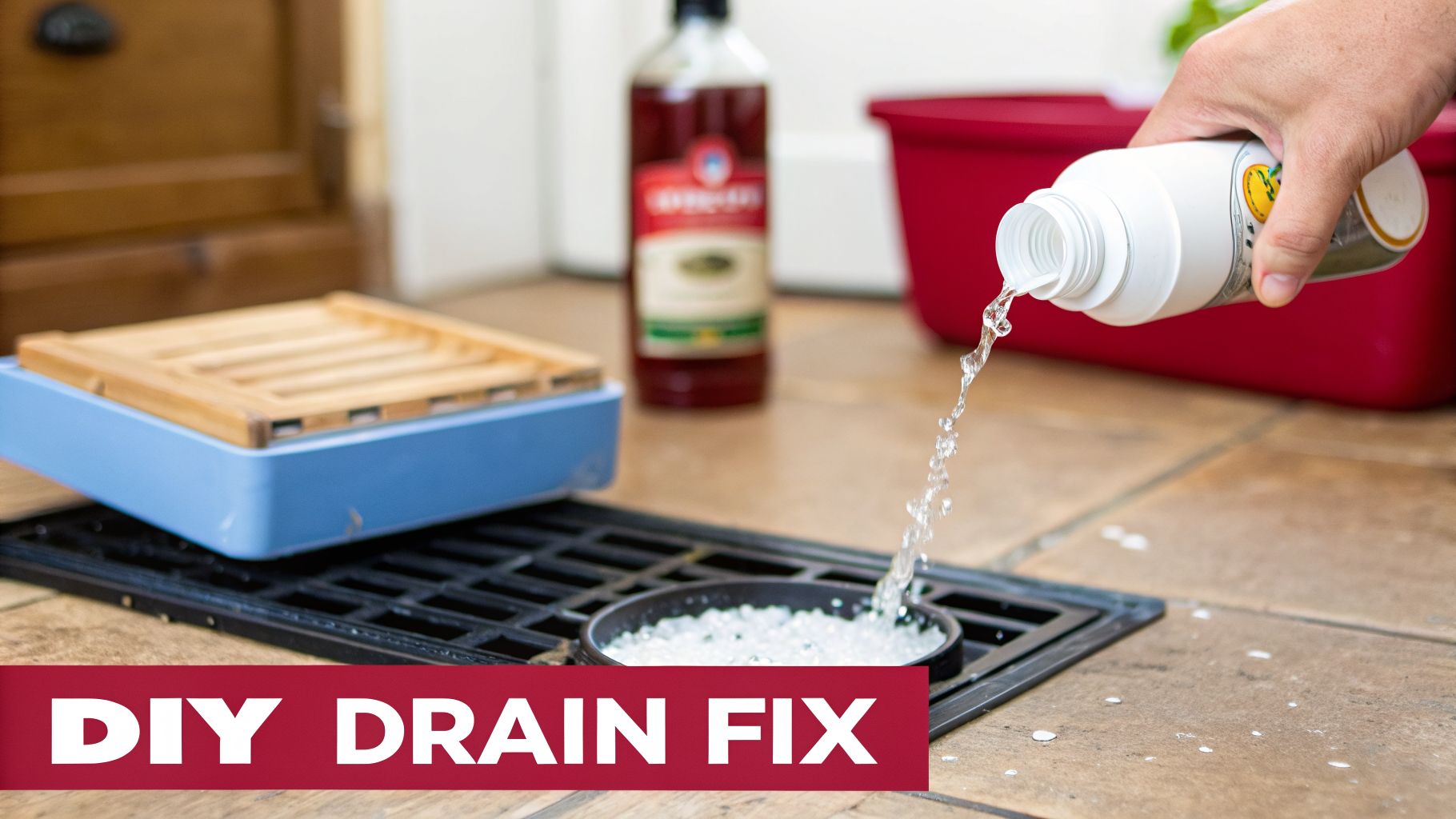
When a drain isn’t used for a while, that water simply evaporates. The fix couldn’t be easier. Just pour about a gallon of water down the drain to restore the barrier.
To really make it last, especially for a drain you know you won’t use for months, follow that up with a couple of tablespoons of mineral oil. The oil sits on top of the water and slows evaporation way down. Give it an hour or two with the windows open, and you should notice a major improvement.
Tackling Sludge in Your Floor Drain
If refilling the trap didn’t do the trick, your next suspect is a buildup of gunk. Over time, hair, soap residue, and other organic grime can collect in the drain and start to decompose, creating a nasty sludge with a smell all its own.
You can usually break this down with a few household staples. You’ll just need:
- Baking soda
- White vinegar
- A pot of boiling water
- A stiff brush (an old toilet brush works perfectly)
- Rubber gloves
First, put on your gloves and give the drain opening a good scrub to clear away any visible gunk. Then, pour about a cup of baking soda directly into the drain and follow it immediately with a cup of white vinegar. You’ll get a satisfying fizzing reaction—that’s the combo working to dissolve the sludge. Let it sit for 15-20 minutes, then very carefully pour a gallon of boiling water down to flush it all away.
A Word of Caution from the Field: Steer clear of harsh chemical drain cleaners. We’ve seen them do serious damage to pipes, especially in the beautiful older homes common throughout Montgomery County and Bucks County, PA. This baking soda and vinegar trick is much safer on your plumbing and just as effective for routine clean-ups.
The Toilet Test: Checking the Wax Ring
Is the smell strongest right around the base of a basement toilet? If so, the culprit is likely a failed wax ring. This ring forms the airtight seal between the bottom of your toilet and the main sewer pipe. If it dries out, cracks, or gets knocked loose, sewer gas has a direct path into your basement.
Here’s a quick test: Face the toilet and gently try to rock it from side to side. If you feel any movement or wobbling at all, it’s a dead giveaway that the seal is broken.
Replacing a wax ring is a bit more involved but definitely a manageable DIY project. It means turning off the water, draining the toilet, unbolting it from the floor, and swapping the old, failed ring for a new one.
After you’ve tried any of these fixes, the final step is to disinfect. A simple solution of one part bleach to ten parts water is perfect for wiping down the floor and any surfaces near the drain. This kills any lingering bacteria and helps get rid of that last bit of odor.
To make things even clearer, here’s a quick guide you can use to match the symptoms you’re noticing with the right solution.
DIY Sewage Smell Source and Solution Guide
| Potential Source | What to Look For | DIY Solution | Estimated Time |
|---|---|---|---|
| Dry P-Trap | A rarely used floor drain, sink, or shower; smell is faint but constant. | Pour 1 gallon of water into the drain, followed by 2 tbsp of mineral oil. | 5 Minutes |
| Drain Gunk | Smell is strongest right at the drain opening; slow-draining water. | Clean with a brush, then use baking soda, vinegar, and boiling water. | 30 Minutes |
| Failed Wax Ring | A toilet that rocks or moves; strong odor localized around the toilet base. | Tighten toilet bolts. If that fails, replace the wax ring. | 1-2 Hours |
| Sump Pump Issues | Standing water or musty, rotten smells coming from the sump pit. | Clean the pit, check the pump’s function, and ensure the lid is sealed. | 1 Hour |
This table should help you quickly diagnose and address the most common issues. Remember, starting with the simplest fix—the P-trap—can often save you a lot of time and effort.
When You Absolutely Need a Professional Plumber
Look, we get it. Most of the time, a weird smell in the basement is a quick fix you can handle yourself. But there are certain lines you just don’t cross with DIY plumbing. Trying to tackle a major sewer issue on your own can turn a headache into a full-blown, wallet-draining catastrophe.
This is especially true for anyone living in the beautiful older homes around here, like in Delaware County or Bucks County, PA. Those charming houses often come with aging plumbing systems that demand a professional’s delicate touch.
If you’ve already tried the simple fixes—cleaning the drain, refilling the P-trap—and that unmistakable sewage smell is still hanging around, that’s your cue. The problem is deeper than you can reach, and it’s time to call for backup.
Warning Signs of a Serious Plumbing Problem
Your home has a way of telling you when something is seriously wrong. These aren’t subtle hints; they’re your plumbing system’s version of a smoke alarm. Don’t ignore them.
You need to call a plumber, and fast, if you notice any of these:
- Gurgling Sounds: Hear a weird gurgle from your toilet or drains when you run the washing machine? That’s a classic sign of a main sewer line clog or a serious venting problem. The air in your pipes has nowhere to go.
- Water Backing Up: One slow drain is an annoyance. But if flushing a toilet makes water bubble up in the shower, you have a much bigger issue. This points directly to a blockage in the main line that all your fixtures share.
- Visible Water Damage: Any new water stains, damp spots, or outright moisture on your basement floors or walls near your pipes is a code-red situation. It could be a cracked sewer line leaking raw sewage into your home’s foundation or behind the drywall.
- A Smell That Won’t Quit: You’ve cleaned everything, poured water in the traps, and even tried a drain cleaner. If that powerful, foul odor is still just as strong, a professional is the only one who can sniff out the hidden source.
Why You Shouldn’t DIY Major Sewer Issues
Attempting to clear a main line clog or fix a cracked pipe without the right equipment is a massive gamble. You can easily wedge a blockage tighter or cause a pipe to rupture completely, multiplying the cost and the mess. If your DIY efforts aren’t cutting it, you might need an emergency plumber to get things under control quickly.
A professional plumber doesn’t just guess; they diagnose. Using tools like a video camera inspection, they can look directly inside your sewer lines to pinpoint the exact location and nature of the problem—whether it’s tree roots, a collapsed pipe, or a major blockage.
That kind of precision is something you just can’t get with a rented drain snake. A proper diagnosis is the only way to be sure the problem is fixed right the first time.
If you’re facing a significant backup, you can learn more about how professionals handle these emergencies by checking out our sewage cleanup services near you. Picking up the phone isn’t admitting defeat—it’s the smartest move you can make to protect your home.
Proactive Maintenance to Prevent Future Sewage Smells
Once you’ve finally gotten rid of that sewage smell, the absolute last thing you want is a repeat performance. Honestly, the best way to deal with that awful odor is to make sure it never shows up in the first place. A simple, proactive maintenance routine is your strongest defense, saving you from future headaches and the cost of an emergency plumbing call.
For homeowners from Wilmington, DE, all the way to the Philadelphia suburbs, these small habits can keep your plumbing system healthy and your basement smelling fresh. It’s all about getting ahead of the problem instead of just reacting to it.
Build a Plumbing Health Checklist
Think of your plumbing system like your car—it needs a little TLC every now and then to run smoothly. Folding a few key tasks into your regular home maintenance can make a world of difference.
First, make a habit of priming your P-traps. Any floor drains, basement showers, or sinks that don’t see much action? Just pour a gallon of water down them once a month. This simple step keeps the water barrier full, which is what blocks sewer gas from sneaking into your home.
Also, pay close attention to what you’re sending down the drains. Your toilet is only meant for human waste and toilet paper, period. Things like wipes (even the “flushable” ones), cooking grease, and coffee grounds are famous for creating stubborn clogs that lead to nasty backups and smells.
Pro Tip: Ditch the harsh chemical drain cleaners. They can be really tough on older pipes. Instead, try a bio-enzyme drain cleaner. These products use natural bacteria to digest organic gunk without harming your plumbing. Using one quarterly is a great way to prevent the sludge buildup that causes so many drain odors.
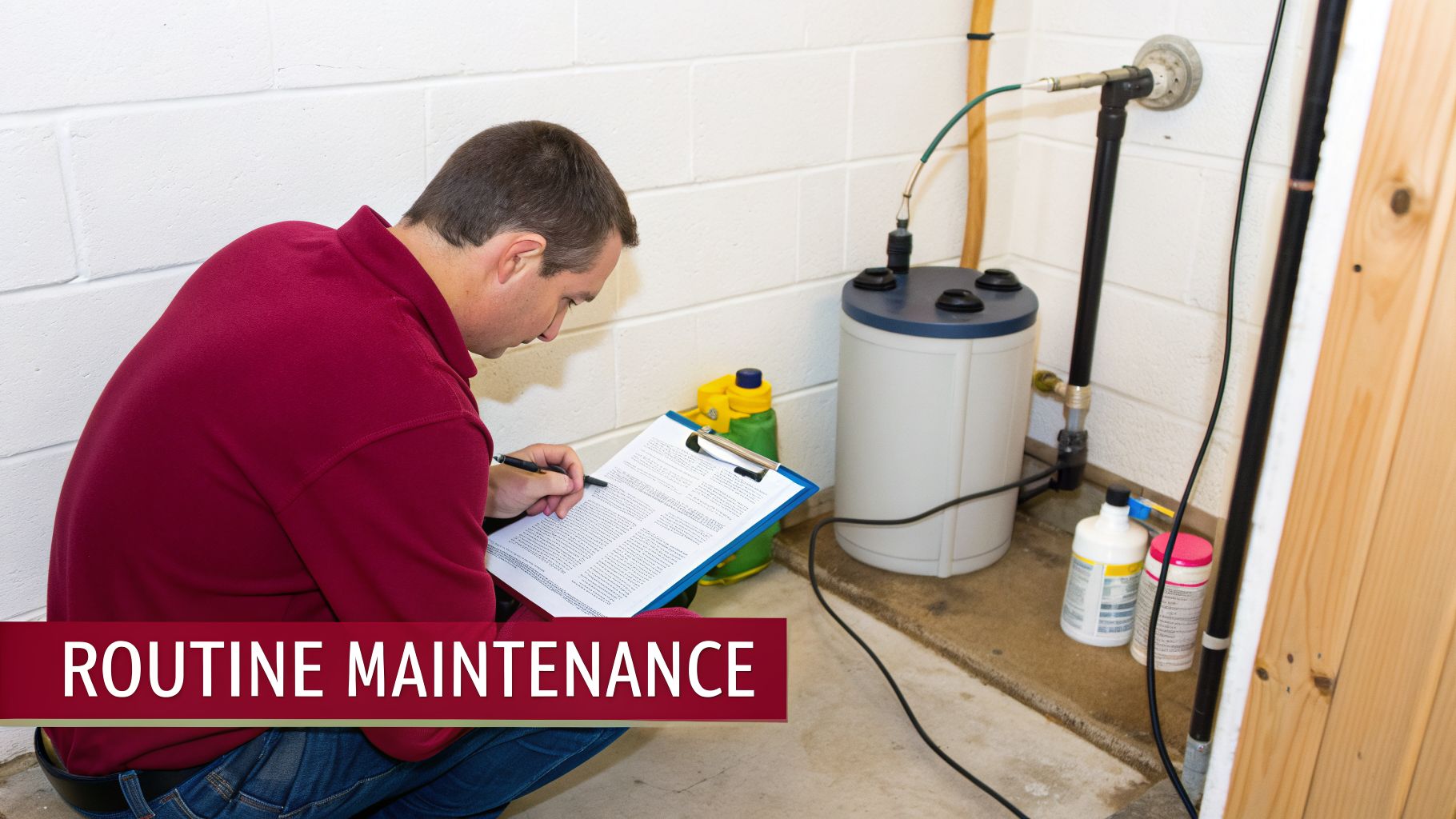
Maintain Your Sump Pump and Ejector Pit
In our service area, from South Jersey to Chester County, we get our fair share of rain, and many homes rely on sump pumps and sewage ejector pits. While they’re essential, they can also become major sources of foul odors if they’re not maintained.
A properly sealed lid on your sump pump or ejector pit is non-negotiable. If the lid is cracked, loose, or just not sitting right, it’s an open invitation for smells to escape. Give it a quick check every season and make sure the gasket isn’t worn out.
Beyond the lid, the pit itself needs some attention. Stagnant water and debris sitting in the bottom of a sump pit can create a musty, swamp-like smell. We’ve laid out the whole process in our complete sump pump maintenance checklist to help you keep it clean and working as it should.
For an even stronger defense against moisture and the smells that come with it, make sure your basement is sealed from the outside. To stop water-related problems before they start, it’s worth learning how to waterproof basement walls properly. It’s another powerful layer of protection.
By adopting these simple habits, you can dramatically cut the risk of ever having to deal with a sewage smell in your basement again. A little effort now goes a long way in making sure your home stays a clean, safe, and pleasant-smelling place to be.
Frequently Asked Questions About Basement Sewer Odors
Dealing with that awful sewage smell in your basement always brings up a lot of questions. Over the years, we’ve heard just about all of them from homeowners in New Jersey, New Castle County, and the Philly suburbs. Here are the answers to a few we get asked most often when helping people get rid of sewage smell in the basement for good.
How Quickly Should a Sewage Smell Disappear After a Fix?
So, you think you’ve fixed the problem. How long until the smell is actually gone? It really hinges on what the cause was.
If it was just a dry P-trap, you’re in luck. After you pour some water down the drain and get some fresh air circulating, you should notice a significant improvement within just a few hours.
For bigger jobs, like clearing out a nasty clog or swapping out a bad wax ring on a toilet, you’ll need a bit more patience. It can often take 24 to 48 hours for the air to completely clear. If that smell is still hanging around after two days, it’s a red flag. It usually means the original fix didn’t take, or you’ve got a second, hidden problem on your hands. That’s when it’s time to bring in a professional.
Are Chemical Drain Cleaners a Good Idea for Sewage Smell?
This is a big one. We get it—you want a fast solution. But we always tell homeowners to stay away from harsh chemical drain cleaners. They might seem like a quick fix, but these products can do a real number on your plumbing, especially the older pipes common in many Chester County and Delaware County homes. They often just eat away at the clog a little, masking the smell for a short time without ever solving the root cause.
A much better approach is to use a bio-enzyme cleaner. These products use natural bacteria and enzymes to break down organic waste without damaging your pipes. For stubborn clogs that a bio-cleaner can’t handle, your best bet is to call for a professional drain cleaning. It’s the safest and most effective way to protect your plumbing system.
A Quick Word on Safety: That sewer smell isn’t just unpleasant; it can be a genuine health risk. Sewer gas contains things you don’t want to breathe, like hydrogen sulfide, methane, and ammonia. Even low-level exposure over time can lead to headaches, dizziness, nausea, and irritate your lungs. It’s so important to ventilate the area immediately and fix the source to keep your family safe.
Why Does My Basement Only Smell Like Sewage When It Rains?
We hear this all the time, especially around our service areas in Delaware County, PA and New Jersey. When a heavy storm rolls through, the ground becomes saturated with water. This puts a massive amount of pressure on the municipal sewer lines and your home’s own sewer lateral, which can literally push sewer gas right back up through your drains.
But that’s not the only possibility. A rainy-day smell could also be a clue that:
- You have cracks in your foundation that are letting in groundwater and odors from the saturated soil.
- Your sump pump system is overwhelmed and can’t keep up, causing water to back up.
If that sewage smell is a reliable guest every time it rains, it’s a smart move to have a local professional come out and inspect your home’s drainage and sewer connections.
If you’ve tried the DIY route and the odor is still lingering, or if you’re dealing with a smell you just can’t pinpoint, don’t let it get worse. The expert technicians at Precision Plus Plumbing are on call 24/7 to diagnose and permanently resolve any plumbing issue in New Castle County DE, Bucks County PA, Montgomery County PA, Delaware County PA, Chester County PA, and New Jersey. Contact us today for guaranteed service and peace of mind.