
When you realize there's no hot water, it's easy to jump to the worst-case scenario. But before you start picturing a massive repair bill, take a deep breath. More often than not, the fix for a dead electric hot water heater is surprisingly simple and something you can handle in just a few minutes, no special tools required.
The two most common culprits are a tripped circuit breaker or a safety reset button that's been triggered. Let's walk through how to check these first.
Your First Steps When The Hot Water Disappears
That jolt of ice-cold water mid-shower is a universally unpleasant surprise. While your mind might immediately go to a catastrophic failure, the reality is often much less dramatic. A brief power surge from a storm, for instance, could have tripped the breaker without you even noticing. The breaker did its job protecting your appliance, and now you just need to reset it.
By tackling the easiest potential problems first, you can often solve the issue yourself and avoid the cost of a service call. This quick diagnostic process will show you where to look.
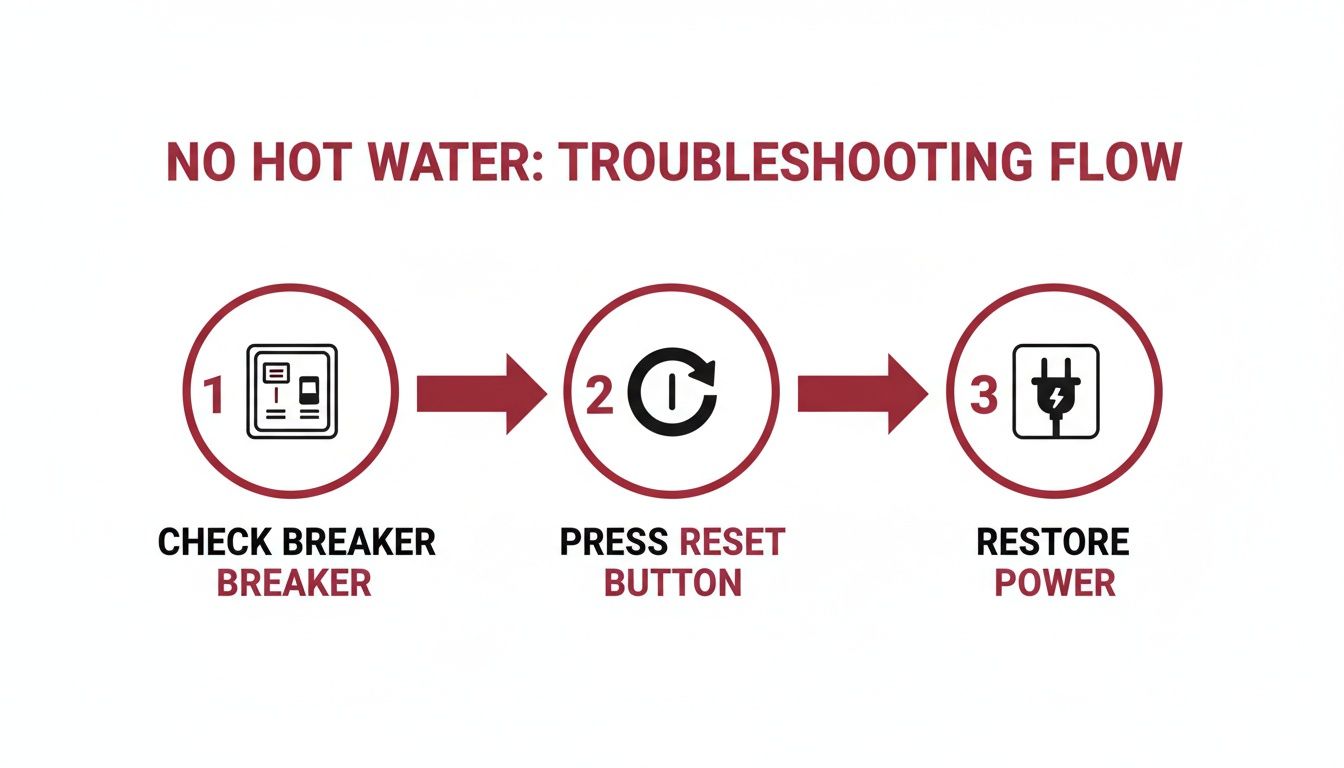
As you can see, the path is logical: start with the power source before ever touching the heater itself.
First, Check Your Circuit Breaker
Your first stop should always be your home's main electrical panel. Don't even look at the water heater yet.
Scan the rows of breakers for the one that controls the water heater. It's almost always a large, double-pole breaker—meaning it takes up two slots and has two switches connected by a bar. The label might say "Water Heater," "WH," or something similar.
If that breaker's switch is flipped to the "OFF" position or looks like it's stuck in the middle, you've found your problem. To fix it, you have to push the switch firmly all the way to "OFF" first, then flip it back to "ON." Just that simple reset is often all it takes to get the power back on.
Next, Find And Press The Reset Button
If the circuit breaker was fine, the next thing to check is the heater's own safety switch. It’s a high-temperature cutoff that trips if the water inside the tank gets too hot, shutting the unit down to prevent a dangerous situation.
To access it, you first must go back to the electrical panel and turn the water heater's breaker completely off. Safety is non-negotiable here.
Once the power is off, look for small access panels on the side of the tank, usually one for the upper heating element and one for the lower. Carefully remove the upper panel (you might need a screwdriver). Inside, you'll see a small, usually red, button.
Safety First: Never open the access panel without first shutting off the power at the circuit breaker. Once the panel is open, press the red reset button firmly. You should hear or feel a distinct "click," which tells you it has been reset.
These quick checks are crucial because a malfunctioning water heater can lead to serious issues. In fact, water heater failures account for 20% of all residential water loss incidents, with the average repair running into the thousands.
This article assumes your water is completely cold. However, if you're dealing with lukewarm water or find your hot showers are getting shorter, the problem might be different. A situation where a water heater not providing enough hot water often points to a single failing heating element rather than a total power failure. And in any plumbing emergency, it helps to be prepared; our guide on what to do before an emergency plumber arrives can be a huge help.
Digging Into Faulty Heating Elements And Thermostats
Alright, so you've tried the breaker and hit the reset button, but you're still getting the cold shoulder from your shower. This usually points to a problem with the guts of the unit: the heating elements and thermostats. When an electric hot water heater stopped working, these parts are the most common culprits, and testing them is the next logical step for a confident DIYer. It sounds more intimidating than it really is.
Most electric heaters have two sets of these components—one at the top and one at the bottom. The upper element and thermostat do the initial heavy lifting, tackling the cold water as it first enters the tank. Once the top half is hot, the system switches power to the lower element, which gets the rest of the water up to temperature and keeps it there. If either of these components fails, you’ll get anything from lukewarm water to no hot water at all.
How To Safely Test The Components
Before you even think about laying a hand on the heater, let’s talk safety. This is non-negotiable. Head to your circuit breaker panel and kill the power to the water heater. To be absolutely sure, use a non-contact voltage tester right at the heater's wiring. Don't proceed until you're 100% certain it's dead.
Once you’re sure the power is off, here’s what you do:
- Get Access: Pop off the two metal access panels on the side of the tank. You'll probably have to move some insulation out of the way. Behind them, you’ll see the thermostat and the two screws where the heating element is wired.
- Disconnect the Element: Carefully disconnect the two wires from the screws on the heating element.
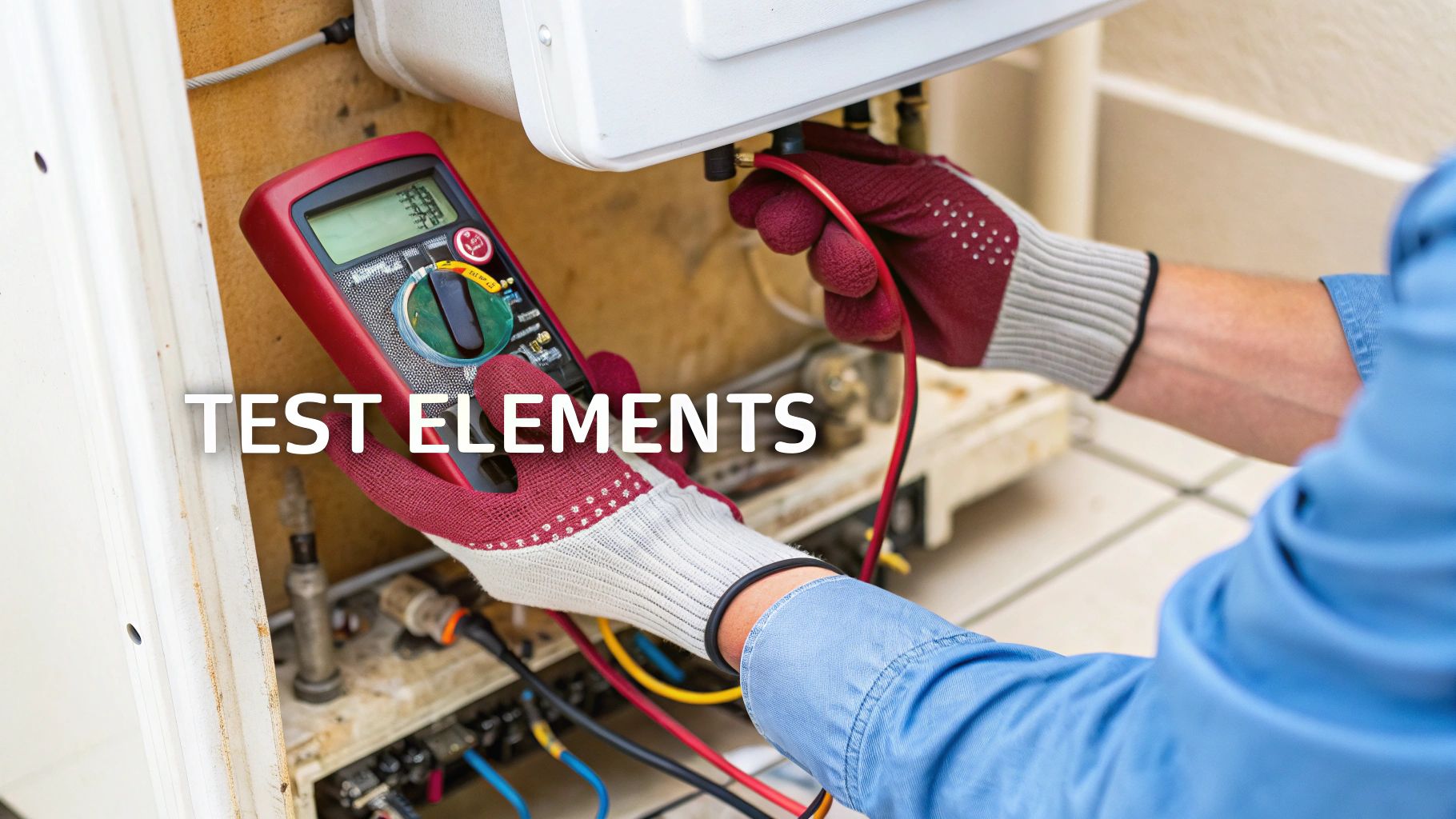
- Test with a Multimeter: Set your multimeter to the lowest ohms setting (look for the Ω symbol). Touch one probe to each of the two screws on the element.
A good, working element should give you a reading somewhere between 10 and 30 ohms. If your multimeter screen doesn't change (showing infinite resistance) or it reads zero, the element is fried. It's time for a replacement.
Expert Tip: A failing element doesn't always just quit. Sometimes it becomes a massive energy vampire. A corroded element can force the heater to run constantly just to keep up, leading to a sudden, painful spike in your electricity bill.
What About The Thermostats?
Testing the thermostats follows a similar process. With the power still off, you'll use your multimeter to check for continuity.
For the upper thermostat, touch the probes to the top two screw terminals. A healthy thermostat should show a closed circuit, which means you'll get a reading close to zero ohms. You can then do the same for the terminals on the lower thermostat.
A bad thermostat or element will absolutely wreak havoc on your energy bill. Water heating already makes up around 18-20% of a home's energy costs. A malfunctioning unit can easily push that closer to 30% as it struggles to do its job. In my experience, a failing part can cause an older tank to run 30-50% longer, adding a surprise $15-$40 to your monthly bill. You can learn more about how these issues snowball by checking out these insights on failing water heaters.
If your tests point to a bad part, congratulations—you’ve found the problem. Replacing an element or thermostat is a manageable job for many, but it does require draining the tank completely. If that sounds like more than you want to get into, or if you're just not comfortable with the electrical work, this is the perfect time to call in a pro.
How Sediment Buildup Can Silently Kill Your Water Heater
Sometimes, the reason your electric hot water heater stopped working has nothing to do with a bad part. The real culprit could be a hidden enemy that’s been growing for years: sediment.
If you live in an area with hard water, you've got a lot of dissolved minerals like calcium and magnesium. Over time, these minerals settle at the bottom of your tank, creating a thick, rock-like layer of scale. This isn't just a little grit; it can become a solid barrier.
That layer of buildup is a massive problem. It acts like insulation, separating the lower heating element from the very water it’s trying to heat. The element has to work overtime, running constantly just to push heat through that mineral scale. Eventually, this constant strain causes the element to overheat and burn out completely, leaving you with no hot water at all.
Telltale Signs of a Sediment Problem
Long before your water heater gives up the ghost, it usually sends out a few warning signs. If you can catch these early, you might just save yourself from a future of ice-cold showers.
Have you heard any strange noises from the tank lately? Popping, rumbling, or even a crackling sound are classic giveaways. This happens when small pockets of water get trapped underneath the sediment, flash-boil into steam, and then violently bubble up through the scale. You’re literally hearing your water heater struggle.
Another major red flag is water that just isn't as hot as it used to be. Or maybe you find yourself running out of hot water much faster than before. When the lower element is buried under a layer of mineral scale, it can't heat the water at the bottom of the tank. This makes the entire unit incredibly inefficient, giving you lukewarm showers and a higher electric bill for your trouble.
Pro Tip: The best defense is a good offense. Flushing your tank once a year is the single most effective thing you can do. Draining the tank clears out all that accumulated gunk, letting the heating elements do their job and seriously extending the life of your heater.
Is It a Broken Dip Tube Instead?
There’s another issue that can fool you into thinking your heater has failed, though it's less common: a broken dip tube. This simple plastic tube has one job—to guide cold water entering the tank down to the bottom where the heating element is.
If that tube cracks or breaks off, the incoming cold water dumps right in at the top. It immediately mixes with the hot water waiting there, creating a lukewarm blend that comes out of your tap. It feels just like a failing water heater, but the elements might be working perfectly fine.
So, if you’ve already flushed the tank and your elements test out okay, checking the dip tube should be your next move. It's a quick inspection that could solve the mystery.
Recognizing When It Is A Real Emergency
Losing your hot water is a major hassle, but some situations are much worse than just a cold shower. Being able to spot the difference between a simple fix and a genuine emergency can literally save your home from thousands of dollars in water damage.
Sure, no hot water is the problem you're trying to solve, but you need to keep an eye out for more serious warning signs. These red flags point to a much bigger issue: the structural integrity of the tank itself is at risk. This isn't about swapping a part; it's about heading off a potential catastrophe.
Unmistakable Signs Of A Pending Failure
If you notice any of the following, you need to act immediately. These are not "wait until morning" problems.
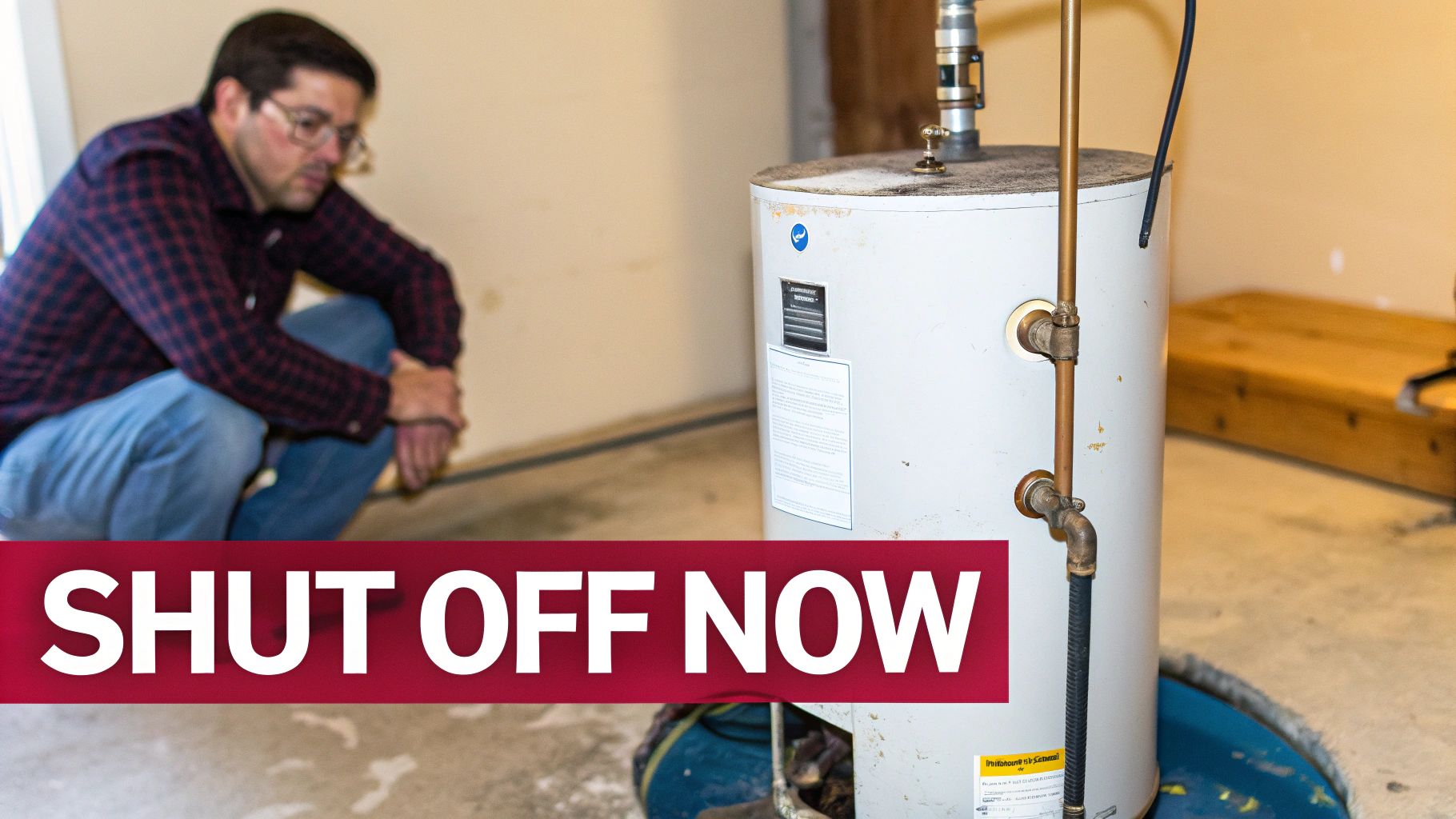
- Pooling Water: This is the most glaring sign. Any water—even a small puddle—collecting around the base of the heater means the tank has a breach. It could completely rupture at any moment.
- Severe Corrosion: Take a close look at the outside of the tank. Do you see heavy rust streaks or paint that's bubbling, especially around the seams or where the pipes connect? That’s a classic sign the metal is failing from the inside out.
- Rusty or Discolored Water: If your hot water suddenly turns brown and smells metallic, the inside of your tank is likely corroding away and getting ready to fail.
These symptoms mean the tank itself is giving up. A full rupture can dump 40 to 60 gallons of water into your home in minutes, leading to devastating flooding.
A small, slow leak can turn into a full-blown tank failure in a heartbeat. Water heater failures are a top cause of residential water damage, and the average insurance claim for one is over $4,000. Time is of the essence.
What To Do In An Emergency
If you see any of those warning signs, don't wait. Your immediate goal is to cut the water and power to prevent things from getting worse.
- Shut Off The Power: Head to your circuit breaker panel and find the breaker that controls the water heater. Flip it to the OFF position. This immediately removes any shock hazard.
- Turn Off The Water Supply: Look for the cold water pipe going into your heater—it should be clearly labeled. There will be a shutoff valve on this pipe. Turn it clockwise as far as it will go. This stops more water from filling the tank.
Once you’ve done this, the next call you make should be to an emergency plumber. If you're on the fence about whether your situation qualifies, it's always better to be safe. You can learn more about how to tell if a plumbing problem is an emergency to help you decide.
Making The Smart Choice Between Repair And Replacement
So, you’ve figured out what’s wrong. Now you’ve hit a fork in the road. Are we talking about a simple, cheap fix, or is this the final warning shot from a water heater that's about to give up the ghost?
Making the right call here can save you a ton of headaches and money down the line. It really boils down to a few key things.
First and foremost, how old is the heater? Your typical electric tank heater is built to last somewhere between 8 to 12 years. If your unit is only, say, three or four years old and just needs a new $50 heating element, repairing it is a no-brainer. You should still have plenty of good years left in it.
But the calculation gets a lot different if you're dealing with an older unit. Pouring a few hundred bucks into a 12-year-old heater is a gamble. Sure, you might fix today's problem, but you're basically waiting for the next component to fail, which could happen in a matter of months.
Analyzing The Cost And Benefit
I always tell people to think of it like this: a minor repair on a new appliance is an investment in its lifespan. A major repair on an old one is often just throwing good money after bad. You have to weigh the cost of the repair against how much life you realistically expect to get out of the unit afterward.
A good rule of thumb is the 50% rule. If the repair bill is more than half the cost of a brand-new water heater, replacement is almost always the smarter financial move.
Let's say a pro quotes you $450 to replace a bad thermostat and a corroded element. If a new, more efficient model costs $800, you're already past that halfway point. It just makes more sense to put that money toward a new unit that comes with a fresh warranty and better energy-saving features.
The Hidden Savings Of Replacement
When your electric hot water heater stopped working, it's easy to get tunnel vision and only focus on the immediate bill. But a new water heater isn't just an expense; it's an opportunity for a serious upgrade that can pay you back over time.
Modern water heaters are miles ahead in energy efficiency compared to models from a decade ago. That upgrade can directly translate into lower monthly utility bills, and those savings really start to add up.
Here’s a quick checklist to help you decide:
- Unit Age: Is it over 10 years old? If so, replacement should be at the top of your list.
- Repair History: Has it turned into a money pit with multiple repairs over the last couple of years? That's a huge red flag.
- Repair Cost: Does the fix cost more than 50% of a new unit?
- Performance Issues: Even before it quit, was it struggling with sediment buildup or giving you lukewarm showers?
This can feel like a high-pressure decision, especially when you’re stuck with cold water. Don't hesitate to consult with professional plumbing companies. A good technician can give you an honest assessment of your heater's condition and lay out the costs for both repairing and replacing it. They’ll help you make an informed choice.
To get a better handle on all your options, you can explore our dedicated guide to water heater services.
Your Top Questions About Water Heater Failures, Answered
When the hot water suddenly cuts out, your mind starts racing. What broke? Can I fix it? What’s this going to cost me? I get these questions all the time from homeowners in a panic. Here’s a rundown of the most common issues and what they really mean.
How Long Should An Electric Hot Water Heater Last?
You can generally expect an electric tank-style water heater to last somewhere between 8 and 12 years. That said, I've seen some units give up the ghost much sooner and others soldier on for a bit longer. The biggest factors are your local water quality and how well the unit has been maintained.
If you've been flushing the tank once a year to clear out sediment, you're giving it the best possible chance to reach that 12-year mark. But once a heater gets past a decade, you're on borrowed time. The risk of a leak or a major component failure goes up dramatically, and it often makes more sense to replace it rather than pour money into an aging unit.
Can A Bad Thermostat Trip My Circuit Breaker?
It sure can. In fact, a shorted-out thermostat is one of the most common culprits behind a breaker that keeps tripping. When the thermostat fails, it can create a dead short, drawing a massive amount of electricity and forcing the breaker to do its job and cut the power.
The same thing happens when a heating element burns out and makes contact with the inside of the tank. If you reset the breaker and it immediately snaps off again, that’s a red flag.
A Quick Word on Safety: If your breaker won't stay on, stop what you're doing. That’s the system telling you there’s a serious electrical fault. Flip the breaker to the "off" position and call in a professional. It's simply not worth the risk.
Why Is My Water Only Lukewarm?
Ah, the classic lukewarm water problem. Nine times out of ten, this points to a failed lower heating element. Most electric heaters have two elements, an upper and a lower.
The top one heats the water at the top of the tank first, giving you that initial burst of hot water. Then, the bottom element kicks in to heat the rest of the 40 or 50 gallons in the tank. When that lower element dies, you get that brief shot of hot water followed by a disappointing, tepid flow.
Less common, but still possible, is a broken dip tube. This plastic tube is supposed to direct incoming cold water to the bottom of the tank. When it breaks, cold water dumps in at the top, mixing with the hot water and creating that same lukewarm effect.
Can I Replace The Heating Elements Myself?
This really comes down to your personal comfort level with both plumbing and electrical work. If you know your way around a multimeter and aren't intimidated by draining a tank, it's a project that can be done yourself.
But let's be clear about what’s involved. It means:
- Shutting off the power at the breaker panel and double-checking that it's dead with a voltage tester.
- Draining the entire tank, which is a slow process involving 40 to 60 gallons of water.
- Having the right element wrench and the exact replacement part for your model.
If any of that sounds daunting, my honest advice is to call a plumber. A small mistake here can lead to a big leak, an electrical hazard, or a fried new element. It’s one of those jobs where being 100% confident is a prerequisite.
When your hot water disappears, you need help fast. For 24/7 emergency service in the Greater Philadelphia region, trust the experts at Precision Plus Plumbing. We solve over 90% of issues on the first visit. https://www.precisionserviceexperts.com